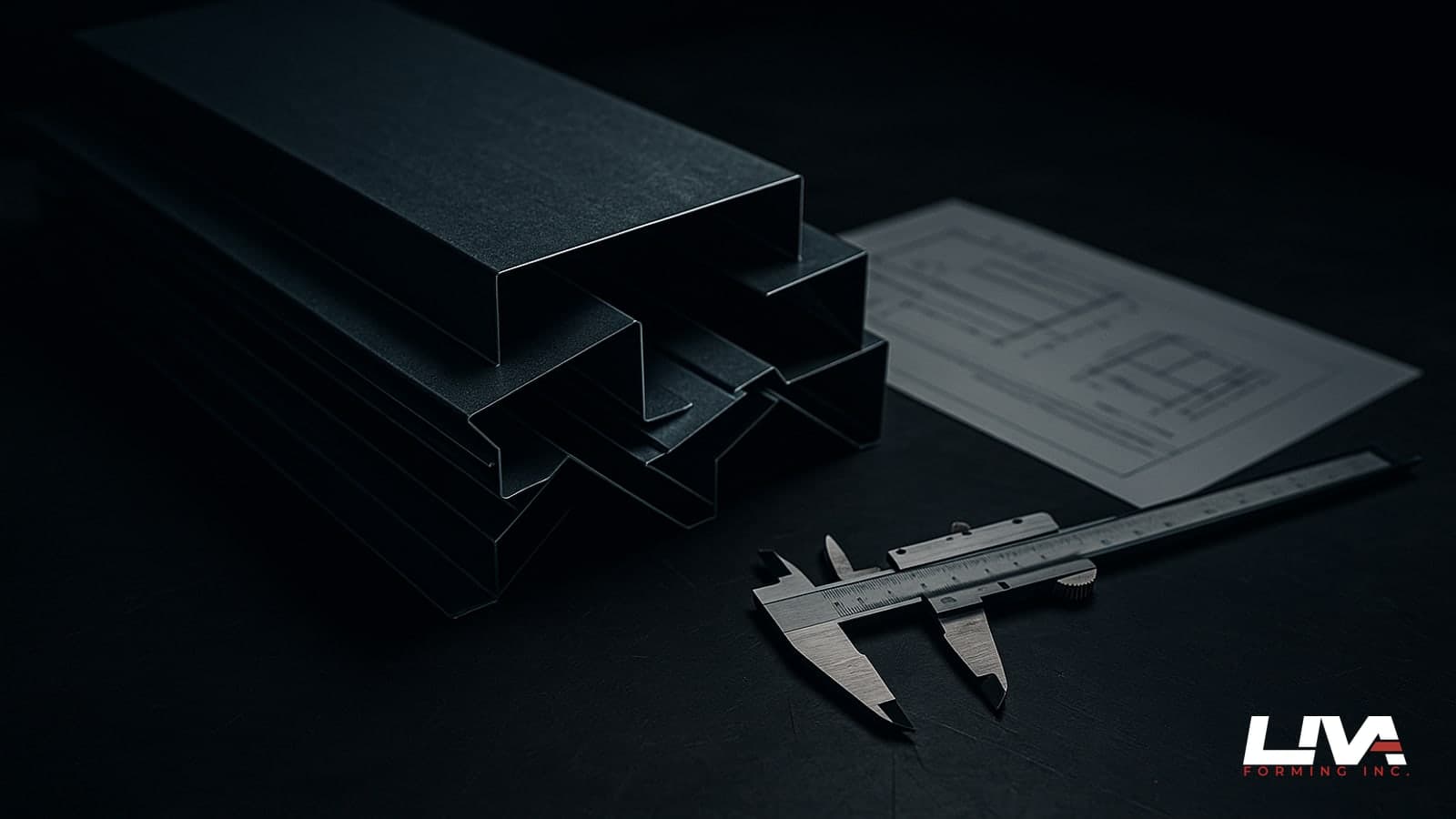
Every week somebody calls asking "what's your price per foot on flashing." Fair question. Wrong question. Custom metal flashing cost BC contractors actually pay comes from the developed width of the part, not how long the run is. A guy ordering 200 feet of a simple 4-inch drip edge can pay less per foot than a guy ordering 40 feet of a wide, multi-bend parapet cap. Length is the easy number. Girth is the number that runs the brake.
I've been running press brakes and slitters in Delta for over twenty years, and pricing custom flashing is still the conversation nobody on the design side quite expects. So let's break down what actually moves the number on your quote, and what you can send us to get it right the first time instead of the third.
Girth, not length, sets the base rate
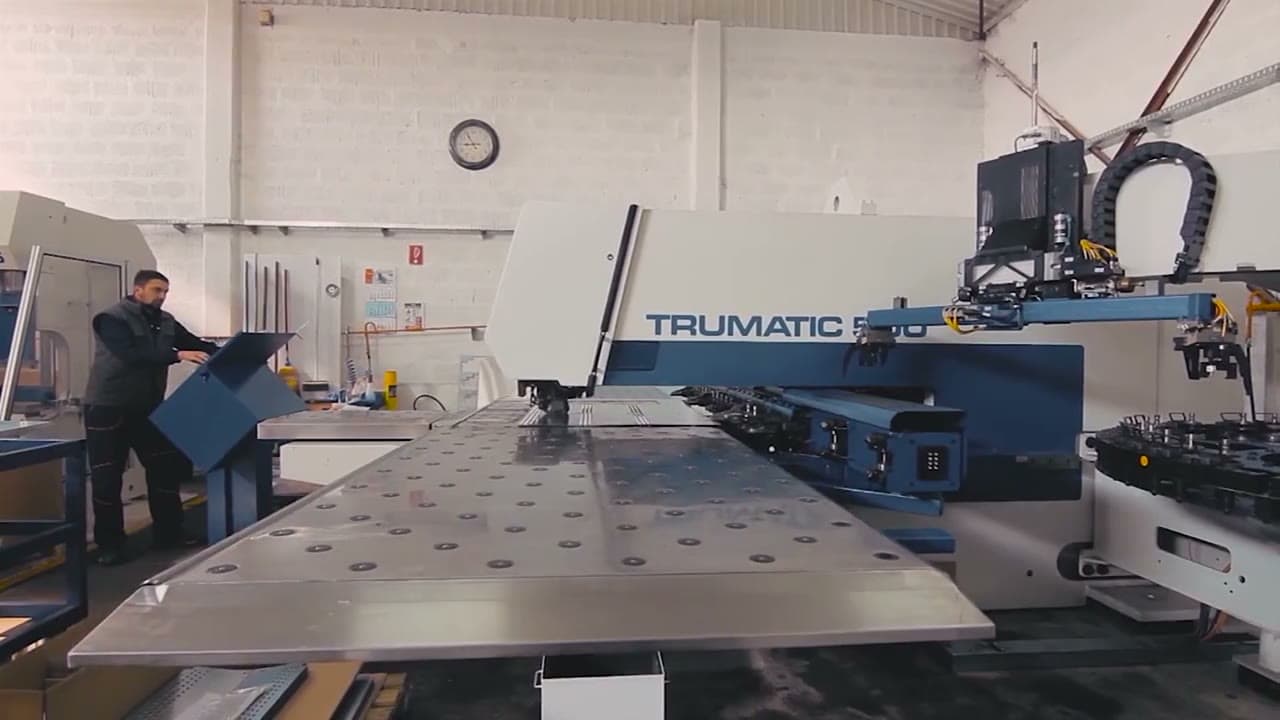
Girth is the flat-out width of your profile before it gets bent. A simple L-flashing might have a 6-inch girth. A parapet cap with a hemmed drip edge, two cleats and a back leg can run 22 inches or more of flat stock before it ever sees the brake. That girth determines how much coil we feed per linear foot, how many passes the sheet takes across the shear and brake, and how much material waste we eat on every run.
So when someone asks for "the cheapest flashing," the honest answer is: tell me the profile first. A 24-inch girth counterflashing detail on a masonry job, the kind we talk about in our through-wall and counterflashing guide for masonry, is going to cost more per foot than a plain step flashing every single time, even if the step flashing job needs three times the pieces. Girth is why two "10-inch flashings" from two different jobs can price 40% apart.
This is also where a lot of estimators get burned. They quote based on a rough sketch that shows length and maybe a bend angle, but no dimensioned flat pattern. We can't price girth we can't see. That's the single biggest reason quotes come back higher than expected on rework.
Thickness and coating: where the overspend and the underspend both live
Gauge is the second lever, and it's the one people fight us on the most. Everyone wants 26 gauge because it's cheaper per pound. Fine, on a short drip edge with wide fastening, 26 gauge is plenty. But on a parapet cap taking wind uplift on a Surrey flat roof, or a long fascia run in North Vancouver where oil-canning shows under raking light, 26 gauge will oyster-shell on you within a season. We wrote a longer comparison in 24 vs 26 gauge flashing: when the extra thickness is worth it if you want the numbers, but the short version is: the wrong gauge doesn't just fail early, it costs you a callback and a re-order, which is always more expensive than paying for 24 gauge up front.
Coating is the flip side. Guys spec Kynar on every job because it's "the good one." Sometimes that's the right call, especially on a coastal White Rock or Tsawwassen elevation with heavy UV and salt air. But on an interior courtyard soffit that nobody sees from the street, polyester saves real money and won't chalk out before the building does something else to it first. We go deep on that trade-off in Kynar vs polyester finish on custom flashings. Material choice between galvanized, aluminum, stainless and Galvalume also swings price hard, and that's its own conversation covered in our Galvalume vs aluminum vs stainless flashing material piece.
Bottom line: overspending on gauge and coating in the wrong spot doesn't buy you durability, it just buys you a bigger invoice. Underspending in the wrong spot buys you a leak. The trick is matching thickness and finish to exposure, not to habit.
Bend count and radius work: every hit on the brake costs something
A flat piece of trim with one bend is fast. Load, hit, done. A profile with five bends, a hem, and a return leg means the operator is re-positioning stock five separate times, checking angle each time, and watching for spring-back on every hit. More bends means more setup time and more chance of a part getting bumped to reject pile. That's not padding on our end, that's just the physics of a press brake.
Radius work is its own category. True radius flashing, the kind you need wrapping a curved parapet or a bay window head, usually can't be done on a standard brake at all. It needs either a segmented bend approach or a roll former set up for the curve, and that setup time gets charged whether you order 6 pieces or 60. If your project has radius elements, flag them on the drawing early, because pricing them as an afterthought after the straight runs are already quoted is how projects blow their flashing budget.
Kick-out flashings and step flashing runs sit in a middle zone: not many bends, but tight tolerances where a sixteenth of an inch off means the piece doesn't shed water past the wall assembly. If you're detailing roof-to-wall intersections, our pieces on kick-out flashing at roof-to-wall junctions and custom step flashing at roof-to-wall intersections both walk through why stock pieces fail there and what a proper custom order looks like.
Minimum batch and setup: why ten pieces cost more per piece than a hundred
This is the one that surprises GCs the most. Ten pieces of a custom profile can cost more per piece, sometimes a lot more, than a hundred pieces of the same profile. Setup on the brake, programming the bend sequence, dialing in the first article for tolerance, that's all fixed cost. It doesn't care if you need ten pieces or a thousand. Spread across a hundred pieces, setup cost disappears into rounding. Spread across ten, it's most of the invoice.
We see this constantly on renovation and heritage work, where a contractor needs a short run of a very specific fascia or soffit profile to match an existing building. That's real, necessary work, and we do plenty of it, including the kind of matching detail covered in soffit and fascia metal trim for BC heritage rebuilds. Just go in knowing the per-piece number will look high next to a big production run, because it is high, for legitimate reasons.
Practical tip if you're managing a phased project: batch your flashing orders where you can. If three houses in a Coquitlam townhouse project need the same drip edge profile, order all three houses' worth in one production run instead of three separate call-ins three weeks apart. You pay setup once instead of three times. Same total pieces, meaningfully less total cost.
Rush charges are a real line item, not a bluff
Everybody wants their flashing yesterday. We get it, weather windows in the Lower Mainland close fast and a siding crew standing around waiting on trim is money bleeding out of somebody's schedule. But rushing a job means bumping it ahead of other booked work, sometimes running the brake after hours, sometimes eating a coil change we didn't plan for that day. That has a cost, and we put it on the quote as its own line rather than burying it in the unit price, because that's the honest way to show it.
Standard lead time on a custom run out of our Delta shop is typically five to ten business days depending on gauge and coating availability. Need it faster? Say so up front. A rush request that comes in after we've already scheduled the coil is a lot more disruptive, and more expensive, than one flagged at order time. We cover typical timelines in more detail in custom flashing lead time in Vancouver: what to expect.
What to send us to get an accurate number the first time
Every wrong quote traces back to missing information. Here's what actually gets you a real number instead of a range that moves twice:
- A dimensioned profile, either a cross-section sketch or a photo of the existing detail with a tape measure in frame. We need the flat pattern, or enough to build it.
- Material and gauge preference, or tell us the exposure (coastal, high wind, sheltered) and we'll recommend one.
- Finish and colour, including whether it needs to match existing siding. Colour matching has its own process, detailed in color-matching custom flashings to existing siding in BC.
- Quantity, and whether it's a one-time order or the first of several phases.
- Any radius, return leg, hem, or cleat details called out separately from the main bend.
- Your real deadline, not a padded one. We plan better around a true date than a guessed-early one.
If you've got engineered drawings, send the PDF as-is. If you've got a hand sketch on the back of a delivery slip, send that too, seriously, we've priced off worse. For a fuller breakdown of what a spec package should include, see how to order custom metal: drawings, specs, and what we need. And once a quote comes back, our piece on how to read a metal fabricator's quote explains what each line item and gauge code actually means, so you're not guessing at your own paperwork.
Where the shop fits into all this
All of the above, girth, gauge, bends, batch size, timeline, gets handled through our custom fabrication service, where we run everything from simple L-flashing to full radius parapet caps on press brake and roll former equipment in Delta. We're not a big-box distributor pushing stock profiles. We build to your drawing, your building, your exposure.
Most contractors around Metro Vancouver, whether you're in Burnaby, Richmond, Abbotsford or Mount Pleasant, want the same thing: a number they can trust before material shows up on site, and a piece that fits the first time it's held up to the wall. That's the whole game with custom flashing pricing. Nail the girth, pick the right gauge and finish for the exposure, batch what you can, flag radius and rush needs early, and send us a real dimensioned sketch. Do that and the quote we send back will be the quote you actually pay.
Got a sketch, a photo of an existing detail, or a full drawing set sitting in your inbox right now? Send your sketch for a quote and we'll get real numbers back to you fast, same-day in most cases out of our Delta shop.
Frequently asked questions
What actually determines custom metal flashing cost in BC?
The biggest driver is girth, the flat-out width of the profile before bending, not the linear length ordered. A wide, multi-bend profile like a parapet cap can cost more per foot than a long run of simple drip edge. Gauge, coating, number of bends, batch size and rush timing all add on top of that base girth cost.
Why does a small order of ten flashing pieces cost more per piece than a hundred?
Setup work, programming the bend sequence, dialing in the brake, and checking the first piece for tolerance, is a fixed cost that doesn't shrink with fewer pieces. Spread across a hundred units it barely shows up in the unit price. Spread across ten units it can be most of the invoice, which is why short custom runs price higher per piece.
Is 26 gauge or 24 gauge cheaper for custom flashing?
26 gauge costs less per pound and works fine on short runs with wide fastening, like a basic drip edge. But on exposed parapet caps or long fascia runs facing wind and sun, 26 gauge can oyster-shell and oil-can within a season, leading to a costly re-order. Matching gauge to exposure avoids paying twice.
What information should a contractor send to get an accurate flashing quote?
Send a dimensioned profile or a photo with a tape measure showing the flat pattern, material and gauge preference or the exposure conditions, finish and colour including any siding match needed, exact quantity and whether more phases are coming, any radius or hem details, and the real deadline. Missing details are the main reason quotes change after the first pass.