Friday afternoon, a siding contractor calls from Coquitlam: "I need 180 LF of Z-flashing by Tuesday morning, 24ga prefinished Galvalume in Cascadia Charcoal Slate. Can you do it?" Three of his crew are sitting at the supply yard waiting for an answer, and the GC has already pushed the date once.
That call is the normal rhythm of custom flashing work in the Lower Mainland. The answer depends on five or six details most contractors don't think about until they're trying to book a job. This article gives the honest numbers on custom flashing lead times a Vancouver shop can actually hit, not the marketing version. What 24-48 hours really means, what pushes a job to 3-5 days, what stretches it past a week, and what you can do on your end so a tight schedule doesn't turn into a callback.
The honest numbers, BC mid-2026
Here is what a working BC shop with two press brakes and a small coil inventory can realistically turn around right now:
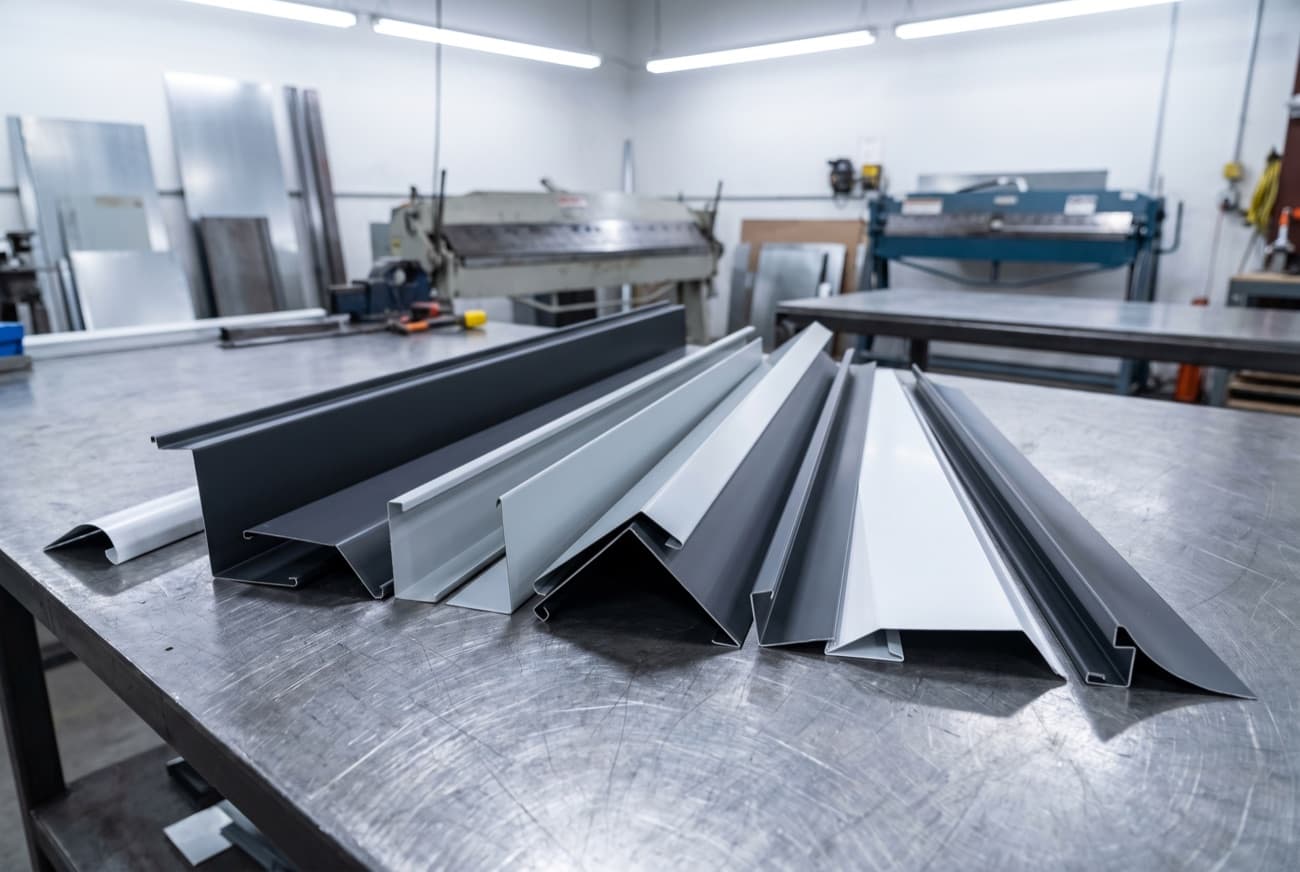
- Standard bends, in-stock material: 24-48 hours after drawing approval. That means 24ga prefinished Galvalume in a common color (white, charcoal, slate grey, a few popular Cascadia tones), simple Z-flashing, drip edge, J-channel, head flashing. Less than 200 LF, pickup at the shop.
- Custom color, same metal, same gauge: 3-5 business days. The bends are still a half-day job, but the coil has to come in. Most BC color houses run a 2-3 day cycle on prefinished material, sometimes faster if your color is already on a queued run.
- Specialty material (24ga prefinished aluminum, 22ga steel, copper, stainless): 5-10 business days. These coils aren't sitting in everyone's racks, and the suppliers run them less often.
- Volume jobs (1,000+ LF): add 2-3 days to whichever bucket above applies. It's a coil-availability and press-brake-queue conversation, not a single number.
Anyone in BC quoting you 24 hours on a custom color in copper is either sitting on dead stock or telling you what you want to hear. Both end the same way: a missed Tuesday.
Where the time actually goes
If you've never watched a custom flashing job move through a shop, here's the breakdown for a typical 300 LF job.
Drawing review: 15 minutes if the RFQ is clean, up to 2 hours if it isn't. Most of that time is the foreman texting the contractor for missing dimensions. More on that below.
Material confirmation: 10 minutes if it's stock, half a day or longer if it has to be ordered. A quick call to the supplier confirms gauge availability, color batch, coil width. Coastal coil supply tightened up after the rail disruptions in 2024, so even "common" colors now need a check.
Press brake scheduling: depends entirely on what's ahead of you. A walk-in 80 LF job slots into a gap easily. A 600 LF job with three different profiles needs a dedicated half-day.
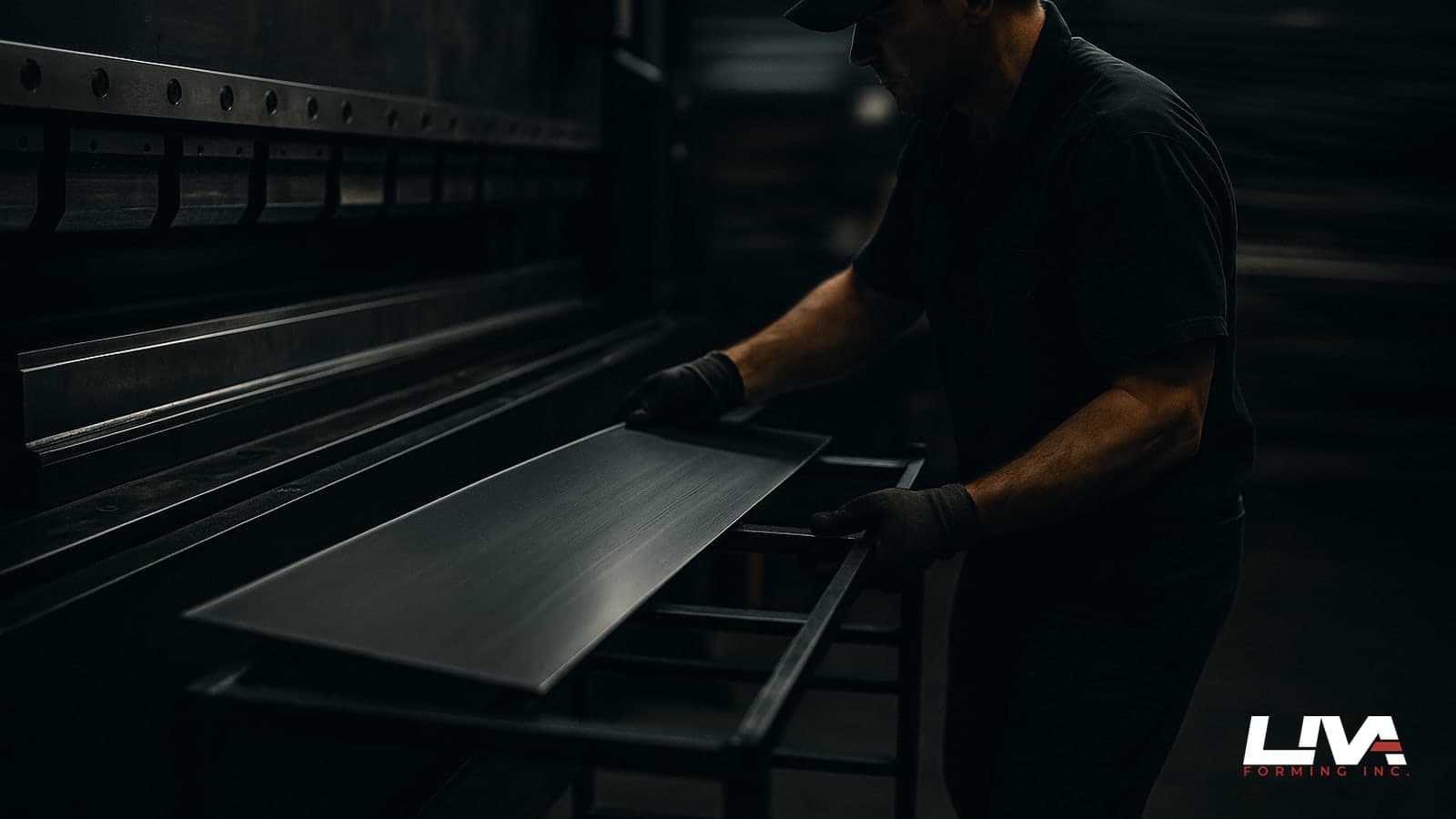
Production: simple bends run 80-120 LF per hour on a press brake once the operator is set up. Setup itself is 20-30 minutes per profile change.
Packaging and dispatch: small jobs are bundled and tied. Long pieces (over 10') need crating, which adds an hour and changes the delivery vehicle.
When a shop quotes 24-48h, they're betting that none of those steps slip. Stock material, clean drawing, gap on the brake. That's the best case.
What "ready to quote" looks like
The fastest way to short-circuit lead time is sending an RFQ a shop can quote without bouncing back to you. After 20 years of pressing metal for BC siding crews, the difference between a 4-hour quote and a 2-day quote is almost always information density at the start.
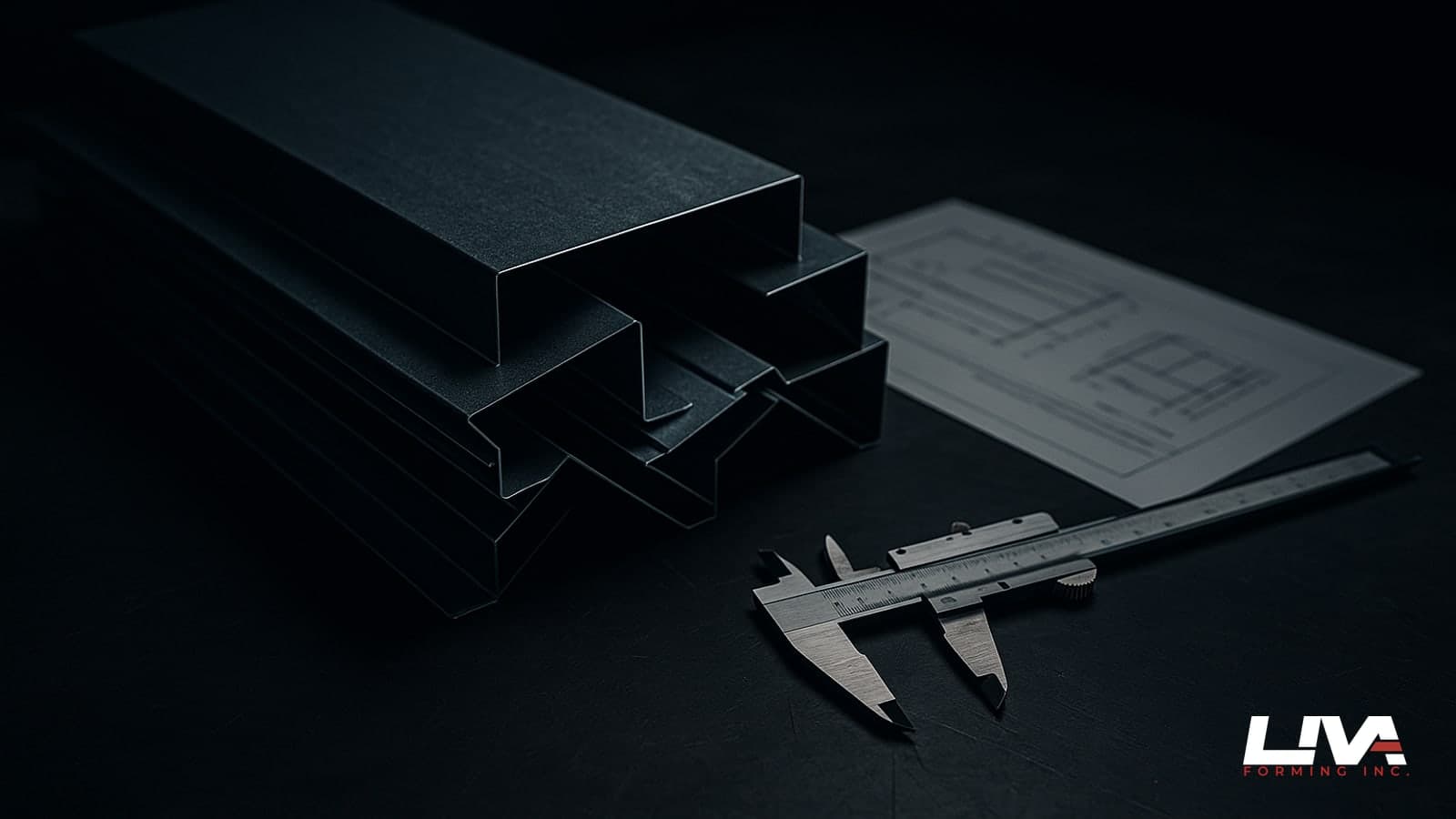
A ready-to-quote RFQ has all of this:
- Bend profile: a hand sketch, photo of a sample, or a PDF
- Bend angles for each leg
- Leg lengths in inches (or mm, but pick one)
- Gauge: 24, 26, or thicker if you know
- Material and finish: "24ga prefinished Galvalume, Cascadia Charcoal Slate" not "grey metal"
- Length per piece: usually 10' or 12', sometimes shorter for crating
- Total LF or piece count
- Pickup or delivery, with the delivery address
- Date you need it on site
A napkin sketch with that information beats a polished CAD drawing with no gauge call-out. The shop doesn't care how the dimensions arrive, only that they're there.
What bounces back, every time: "match my siding" without a swatch or color name, photos with no scale or dimensions, "the usual J-channel" from a contractor we've never worked with, and quotes that go silent on whether it's steel or aluminum.
Three jobs from the last two months
Mount Pleasant heritage rebuild
A 1920s house addition needed drip edge that read as aged copper without the cost of actual copper. The contractor sent a photo of the existing roofline and asked for a match. We sent two prefinished steel samples and a powder-coat sample for comparison. Total elapsed: 6 business days. Four of those were the contractor walking the samples past the heritage consultant. The actual production was a single afternoon.
That's a useful lesson. On heritage work, the bottleneck is almost never the metal. It's approval cycles. If you can pre-stage the sample review with the consultant or architect, you save days.
Surrey townhome row
3,200 LF of J-channel and one window head profile, in stock white prefinished aluminum, 26 gauge, for a 14-unit townhome row. Drawings landed Monday morning, material was already on the floor, brake had a window Thursday. Pickup Friday afternoon. Five business days for a job that size, no rush charges, no drama.
What made it move: the contractor had ordered the same profile from us six months earlier, so we had the bend program saved. He sent one updated drawing with the new dimensions and we ran it.
Port Coquitlam light industrial
280 LF of 22ga prefinished steel Z-flashing for a roof-to-wall transition on a small commercial building. The gauge was the issue. 22ga prefinished isn't a daily-stock item, so we had to bring in a coil. Drawings approved on a Tuesday, coil arrived Friday, production Monday, delivery Tuesday afternoon. Seven business days end to end.
If the same job had been 24ga we could have hit it in 48 hours. The contractor knew that going in and built the schedule around it.
What pushes a job past 5 days
A short list, in order of how often it bites BC contractors:
- Custom color that isn't in the coil rack. Even popular Cascadia colors aren't always in inventory in every gauge. A specific tone like Cascadia Spring Moss in 24ga prefinished aluminum can mean a coil order.
- Material thicker than 24 gauge. Less common stock, longer supplier turnaround.
- Long pieces over 10'. Crating, freight, and a heavier truck. Adds a day on dispatch.
- Quote sitting unapproved over a weekend. A Friday quote that gets approved Monday afternoon has already lost three production days.
- Mid-job profile changes. The shop has to re-program the brake, pull a new coil, sometimes re-quote. Adds at least a day.
The first one is the one most contractors get wrong on planning. Color choice locks lead time. If the color isn't picked when the quote goes out, the clock doesn't start.
How to shorten lead time without paying a rush fee
Most BC shops will move a job up the queue for a 25-50% premium on the labor portion, but only on the bend side and only if material is already in. Nothing speeds up a coil delivery.
The cheaper path:
- Send drawings as photos with dimensions, not phone descriptions. Even a 30-second iPhone photo of a hand sketch with leg lengths written on it beats a five-minute phone call.
- Lock the color before you send the RFQ. Pick from a Cascadia book, a manufacturer's RAL chart, or send a physical sample. Don't ask the shop to choose.
- Bundle multiple jobs into one PO. Three small flashings on one drawing run faster than three separate emails over a week.
- Stay flexible on gauge. If 26ga vs 24ga isn't a structural call, the shop can sometimes hit your date with the gauge that's already on the floor.
- Approve quotes the day they arrive. The 24-hour clock doesn't start until approval, not when you sent the RFQ.
For repeat profiles, after the first two or three jobs we usually skip the formal RFQ. A text with the profile name and the LF count is enough. That's where the partnership math starts working for both sides. A shop that knows your jobs can quote and queue in minutes, not days.
Current BC pricing context
Rough numbers to set expectations, mid-2026:
- 24ga prefinished Galvalume Z-flashing, stock color: $4-6/LF
- 24ga prefinished aluminum drip edge: $3.50-5/LF
- 26ga prefinished steel Z-flashing, stock color: $2.80-4/LF
- 24ga prefinished steel head flashing, custom color: $5-7/LF
- 22ga prefinished steel custom profile: $7-10/LF
- 16oz copper drip edge: $14-22/LF
- Custom-color setup fee on jobs under 100 LF: $40-80 one-time
- Delivery within the Lower Mainland: $60-180 depending on length and vehicle
These are real numbers from BC fabrication shops doing custom siding work, not catalog prices. Volume past 500 LF on a single profile typically drops the per-LF rate 8-15%.
What we ask repeat partners to do differently
After a contractor has run three or four jobs through the shop, the workflow shifts. We keep their bend programs saved. We know the colors they prefer. We have their delivery address and gate codes in the file. New jobs from those contractors quote in under an hour and usually slot into the next available brake gap, not the next available scheduled slot.
That's the entire reason a custom shop exists. Stock catalogs are for one-off buyers. A working shop wants the contractor who's going to call back next month with another 200 LF.
If you're doing siding work in the Lower Mainland and you want to start that kind of working relationship with a fabricator, head to send your sketch for a quote with one of your current jobs. Send a drawing, a photo, or even a sketch on a job-site notepad. We'll respond with a real lead time, not a marketing number, and we'll tell you on the same call what you can change about the spec if you need it faster. For more on what we make day-to-day, the custom flashings page covers the profiles and materials we run most often.
Frequently asked questions
What lead time is realistic for standard custom flashing in the Lower Mainland?
Standard bends in stock material run 24-48 hours after drawing approval. That covers 24ga prefinished Galvalume in a common color, simple profiles like Z-flashing, drip edge, J-channel and head flashing, under 200 LF and picked up at the shop. The clock starts at approval. Not when you sent the RFQ. It also assumes nothing slips: stock material, a clean drawing and a gap on the brake.
Why does a custom color or specialty metal add days?
The bending isn't the slow part. Coil is. A custom color in the same metal and gauge takes 3-5 business days because the coil has to come in, and most BC color houses run a 2-3 day cycle on prefinished material. Specialty material like 24ga prefinished aluminum, 22ga steel, copper or stainless runs 5-10 business days. Volume jobs of 1,000+ LF add 2-3 days on top.
What does a ready-to-quote flashing RFQ include?
Start with the bend profile as a sketch, sample photo or PDF. Then angles for each leg, leg lengths in one unit, gauge, material and finish spelled out, length per piece, total LF or piece count, pickup or delivery address, and the date you need it on site. A napkin sketch with all of that beats CAD with no gauge call-out. "Match my siding" with no swatch bounces back.
Can I shorten lead time without paying a rush fee?
Usually. Shops will move a job up the queue for a 25-50% premium on labor, but only if material is already in, because nothing speeds up a coil delivery. The cheaper path starts with locking the color before the RFQ goes out. Send dimensioned photos instead of phone descriptions, bundle small jobs into one PO, stay flexible on gauge when it isn't structural, and approve the quote the day it arrives.