Short answer: no, there isn't a hard minimum order for custom sheet metal in BC. Not at our shop in Delta, anyway. We'll run one piece if that's what you need. But "no minimum" and "no fixed cost" are two different things, and that's where a lot of contractors get confused on the phone before they even book a quote. There's a minimum order custom sheet metal bc shops deal with every day, and it's really a minimum charge, not a minimum quantity.
Here's the thing nobody tells you up front: every job that touches a brake or a roll former has a setup cost baked in, whether you're ordering one piece or three hundred. That setup cost doesn't care about your piece count. It cares about how many times we have to change tooling, reprogram a bend sequence, or swap coil. So a single custom flashing can cost almost the same to set up as a run of twenty identical ones. That's not us padding the invoice. That's just how press brakes and roll formers work.
Why setup has a fixed cost no matter how small the job is
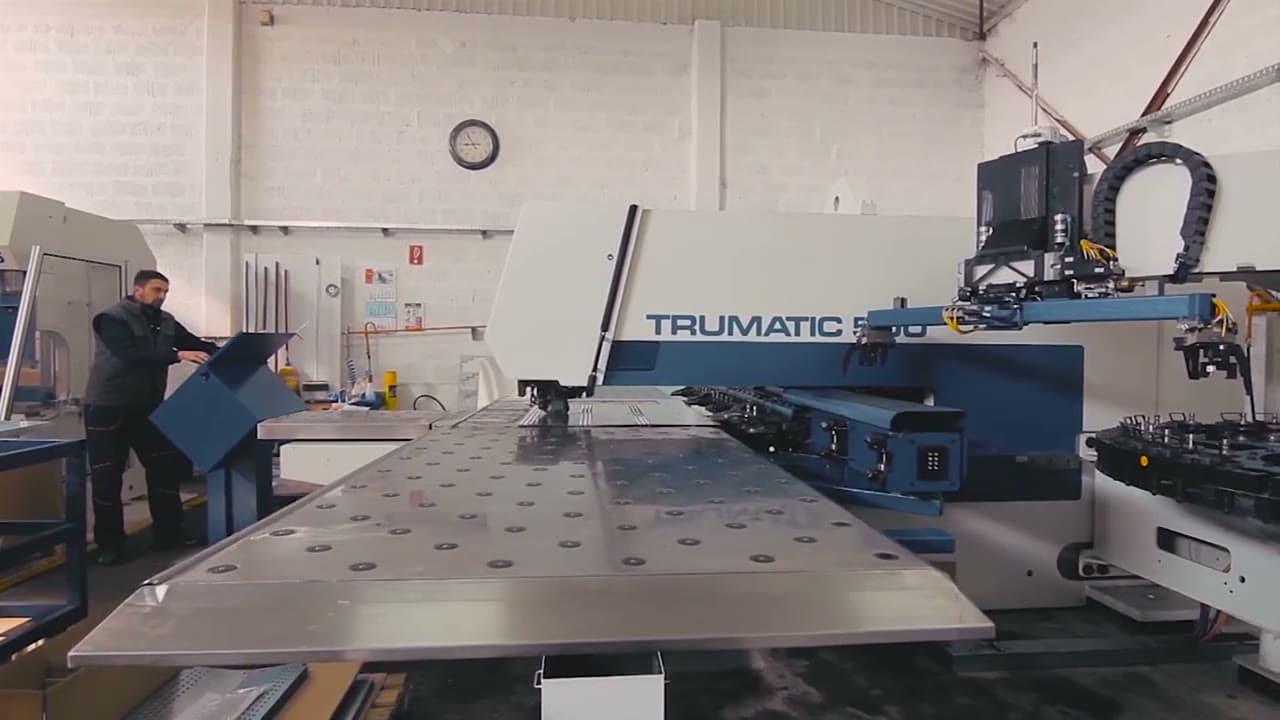
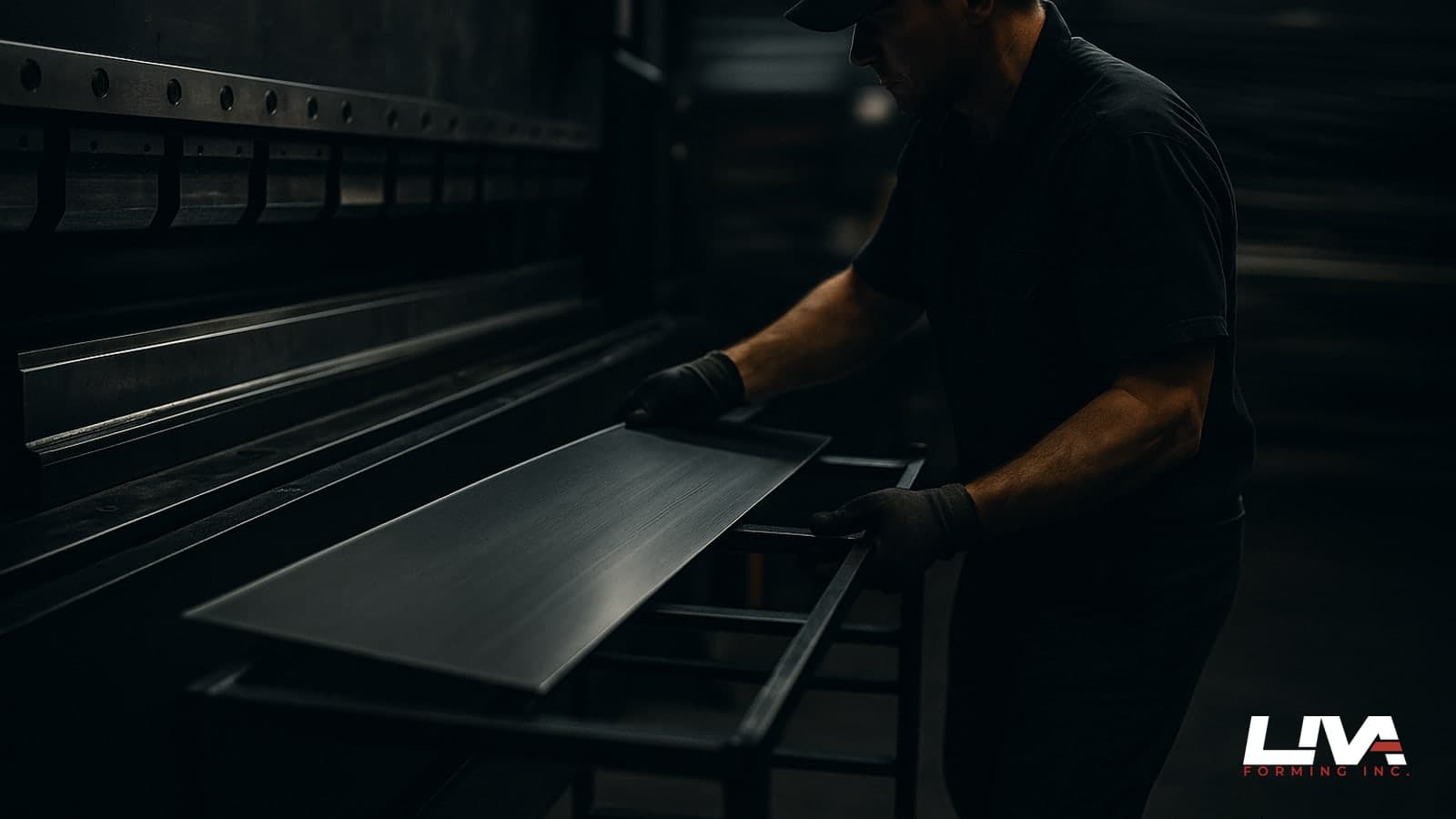
Picture the floor for a second. A press brake job starts with pulling the material, setting the back gauge, dialing in tonnage for the gauge and alloy, running a test bend, checking the angle with a protractor or a template, adjusting, running another test bend. That's 20 to 40 minutes before a single saleable part comes off the machine. On a roll former it's worse, because you're threading material through multiple stations and tweaking rollers until the profile comes out true.
Now multiply that setup time against one part versus fifty parts. One part eats the whole 30 minutes of setup labour. Fifty parts spread that same 30 minutes across the batch. Same shop rate, wildly different cost per piece. This is why a single custom step flashing can run you $45-65 as a one-off, while the same profile in a run of 50 might land at $8-12 each. It's not that the second order is "cheaper metal." It's that the setup got divided fifty ways instead of one.
We quote a flat shop minimum on small jobs for exactly this reason, usually somewhere in the $75-150 range depending on the bend complexity and whether we need a custom die. That covers labour, not greed. If you've read how a fabricator's quote breaks into line items, you've probably already seen a setup or "programming" charge sitting separate from the material line. Same idea here.
One order with five line items beats three separate orders
This is the part that actually saves contractors money, and most don't think to ask for it. If you need step flashing, a parapet cap, and some custom drip edge for the same job site, don't call us three times over three weeks. Bundle it into one order with five or six line items. We set up the brake once, run everything through in sequence, and you pay one shop minimum instead of three.
I've had GCs in Surrey call Monday for flashing, Wednesday for fascia trim, and Friday for a kick-out piece they forgot about. Same job, same address, three invoices, three setup charges. If they'd sent one list on Monday we'd have knocked 15-20% off the total just from setup efficiency alone. Nobody's fault, just how the math works when the scope trickles in instead of arriving whole.
So before you call, walk the job in your head. What's the full list of custom metal this project needs? Step flashing, counterflashing, J-channel, reveals, caps. Get it on one page, even a rough sketch, and send it over as one package through our fabrication service. One setup. One delivery window. Fewer invoices for your bookkeeper to chase.
Adding to an existing order: cheaper than you'd think
Say you ordered 40 pieces of custom parapet cap for a flat roof job in Burnaby two weeks ago, and now the GC wants 12 more for a phase two section nobody mentioned at the time. Do you pay full setup again?
Depends on timing. If the job's still open on our floor, same gauge, same finish, same bend profile, we can often run the addition as a top-up with a partial setup charge, sometimes none at all if the brake program's still loaded and the coil's still on the shelf. If it's been two months and the job's closed out, material's been put away, program's archived, then yeah, you're closer to a fresh setup. Worth asking "is this job still active?" before assuming it's a clean add-on. We'll tell you straight either way.
This matters more than people think on phased projects. Townhome complexes in Coquitlam or Abbotsford that roll out in blocks of 8-10 units at a time are the classic case. If you know more units are coming, say so at the first order. We can structure the run to make future top-ups cheaper, sometimes even holding a die setup for a few weeks if the schedule's tight.
The single replacement piece: don't panic, don't overthink it
Every contractor eventually has this moment: a flashing piece got dinged on install, or an inspector flagged a short counterflashing leg on a masonry tie-in in White Rock, and now you need exactly one replacement part. You don't want to wait for a "proper" order and you definitely don't want to pay a big setup fee for one piece on a job that's otherwise done.
Two options here. If we still have your original cut file or program from the initial order, a single reorder piece is fast and cheap, sometimes same-day if you catch us in the morning. That's the advantage of staying with the shop that cut the original run; we're not starting from a photo and a guess. Read more on how that turnaround actually works in our piece on flashing lead times in Metro Vancouver, because "same-day" gets thrown around loosely and it doesn't mean the same thing everywhere.
If it's a different shop's original work and you've lost the spec, we'll need a quick field measurement or a photo with a tape in frame. Takes an extra 10 minutes on our end but it's not a big deal. Either way, one replacement piece almost never triggers full custom pricing logic the way a from-scratch order does, because there's no design time involved, just cut and bend.
When stock profile beats custom, full stop
I'll talk myself out of a sale here, because it's the right call more often than fabricators like to admit. If your project needs standard J-channel, standard drip edge, or a common gauge of flat stock in a stock colour, and the dimensions match what's sitting on a supplier's shelf in Richmond or Langley, buy the stock profile. Don't pay for custom tooling and a shop minimum to recreate something that already exists off the rack.
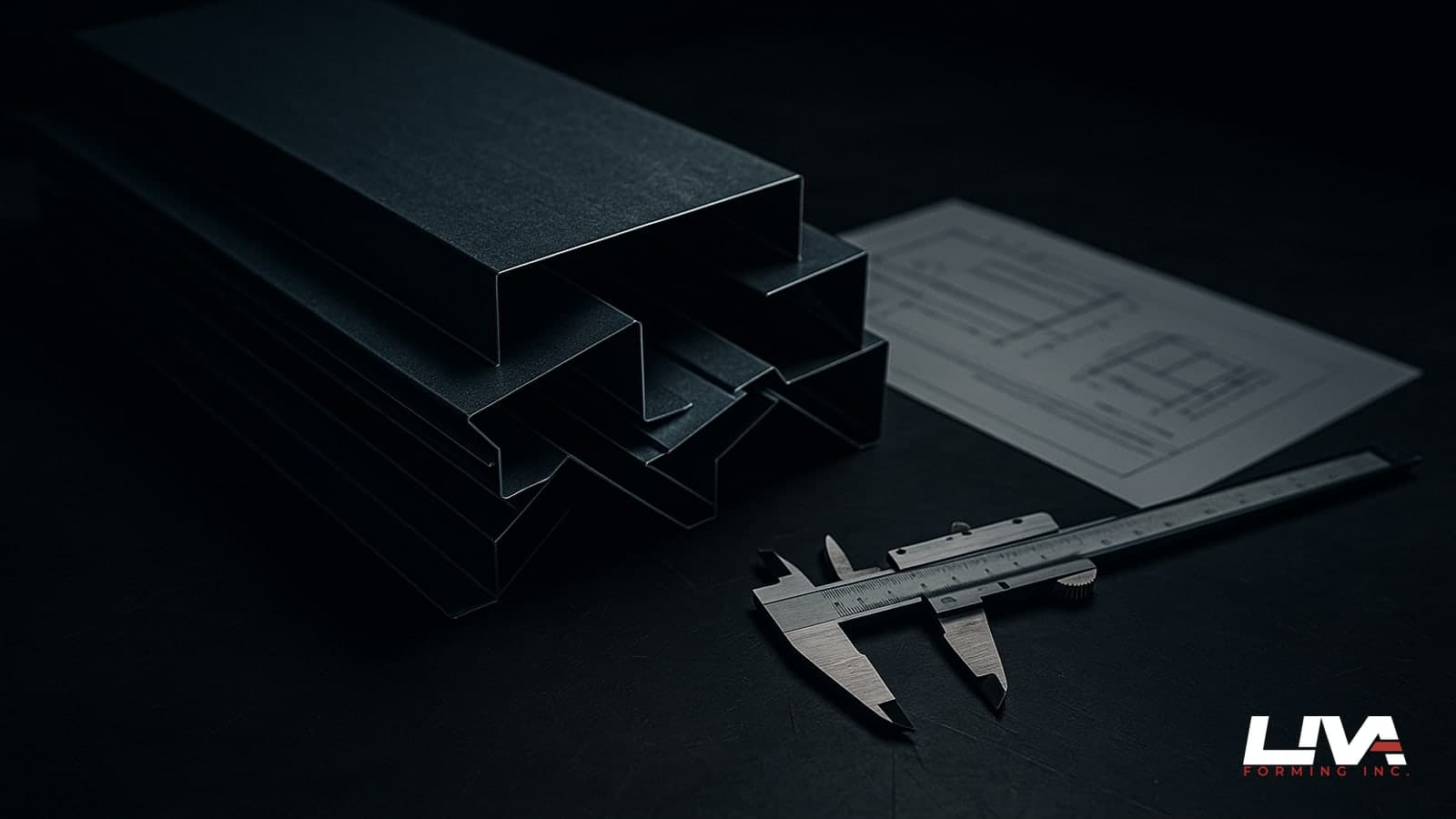
The crossover point is usually about geometry, not price alone. Standard profiles work fine on straightforward eave lines, square corners, consistent wall assemblies. Custom makes sense the moment you've got an odd reveal depth, a non-standard parapet height, a tricky through-wall detail, or a colour that has to match existing siding that's already installed and weathered. We cover this tradeoff in more depth in custom vs standard metal flashings, worth a read if you're on the fence for a specific job.
Rule of thumb I give contractors: if you can walk into a building supply in Burnaby and find the exact profile on the shelf, go buy it. If you're describing something with your hands because it doesn't quite exist yet, that's a custom order, and that's when setup cost and minimums actually come into play.
What this means for your next order
Nobody's turning away a one-piece order. We'll run it. But understanding where the setup cost sits changes how you plan a project. Bundle everything you can see coming into one submission. Flag phased work up front so we can structure the die setup smart. Keep your spec file with us if you might need a reorder down the line. And don't be afraid to buy stock when stock genuinely fits; that's not us losing a sale, that's us keeping your budget where it should be.
If you've got a mixed list, odd profile, or just one stubborn replacement piece, send your sketch for a quote and we'll tell you straight whether it's a custom run or a five-minute stock fix.
Frequently asked questions
Is there a minimum quantity to order custom sheet metal in BC?
No, most shops including ours in Delta will run a single custom piece. There's no hard minimum quantity. What exists instead is a shop minimum charge, usually $75-150, that covers the fixed labour of setting up a press brake or roll former. That setup cost is the same whether you order one part or fifty, so small orders carry a flat fee rather than a bigger per-piece price.
Why does a one-piece custom flashing order cost so much more per unit than a batch?
Setup time on a press brake or roll former runs 20-40 minutes regardless of order size, covering back gauge settings, tonnage, test bends, and profile checks. One piece absorbs that whole setup cost alone, while a run of fifty spreads it across every part. That's why a single custom step flashing might run $45-65 while the same profile at 50 units drops to $8-12 each.
Can I add more pieces to an order I already placed without paying full setup again?
Often, yes, if the job is still active on the shop floor with the same gauge, finish, and bend profile. The brake program and material may still be set up, meaning the add-on needs little or no new setup charge. If the job closed out weeks earlier and the program was archived, a top-up order is treated closer to a fresh setup. Always ask whether the original job is still open before assuming a cheap add-on.
Should I order custom metal or just buy a stock profile from a supplier?
Buy stock when the dimensions, gauge, and colour match what's already on a supplier's shelf, especially for straightforward eave lines and standard J-channel or drip edge. Go custom when you've got an odd reveal depth, unusual parapet height, a tricky through-wall detail, or a colour match to existing weathered siding. If you can find it off the rack, stock is the cheaper and faster call.