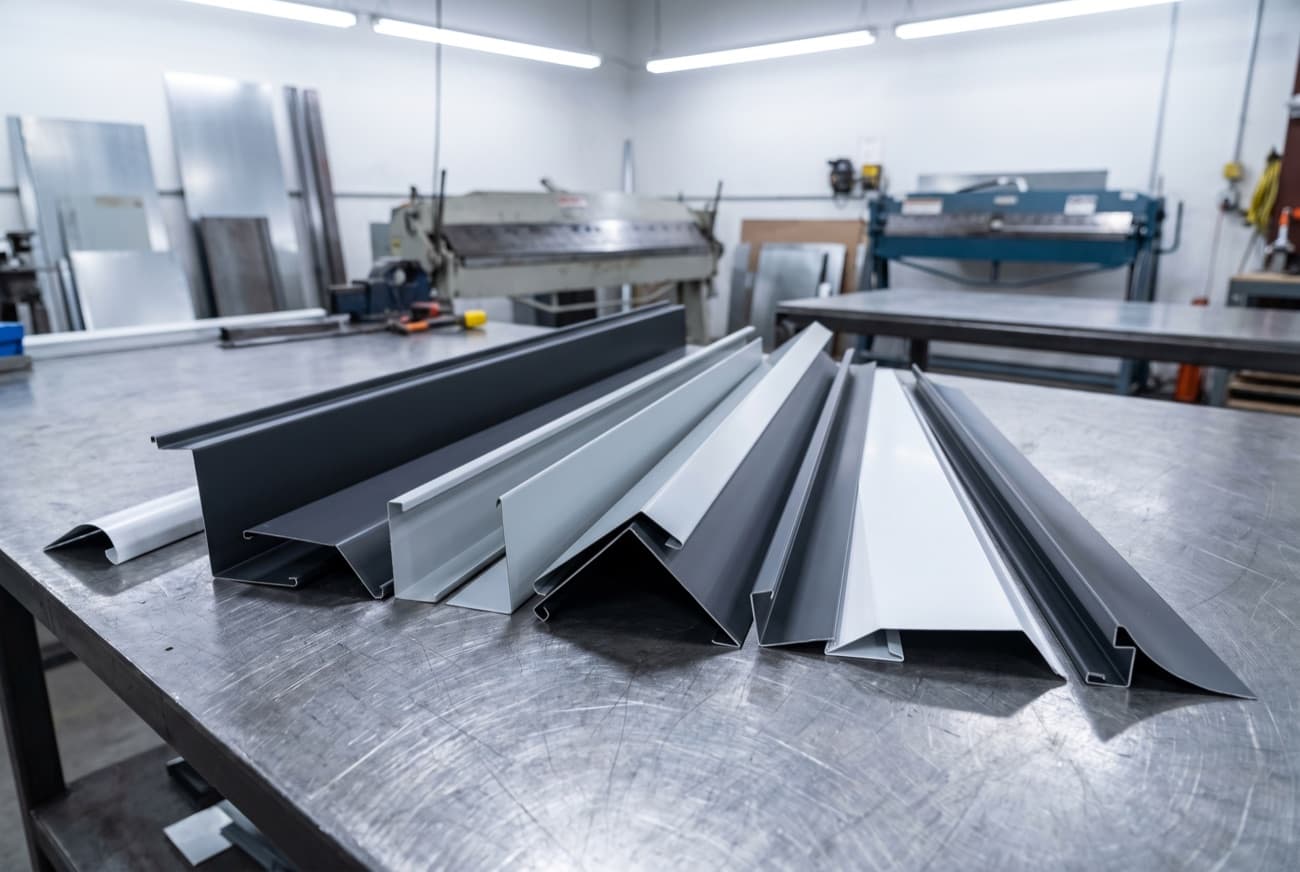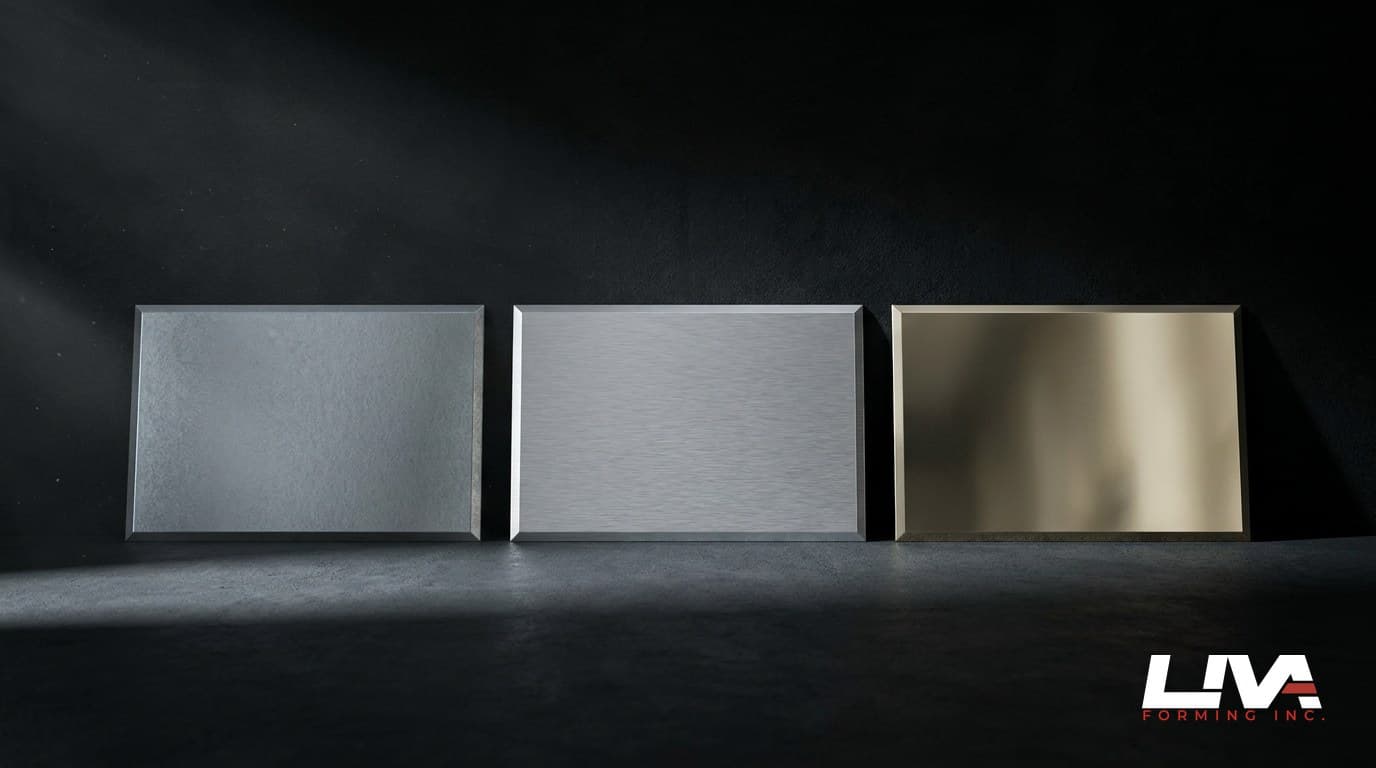
Picking the right flashing material BC contractors keep asking about is less about the brochure spec sheet and more about what we see come back as a callback two winters later. We've been bending metal for siding crews, roofers, and GCs across the Lower Mainland for twenty-plus years, and the answer to "Galvalume, aluminum, or stainless?" depends on three things: where the building sits, what gauge you actually need, and what the painter or installer is going to do to the edges after we deliver.
This guide is the version of the conversation we'd have at the counter if you walked into the shop in Delta with a set of drawings and a budget you were trying to defend.
Why this choice matters more on the BC coast than it does in Calgary
Lower Mainland exposure is its own animal. South-facing elevations in White Rock or Richmond get UV in summer that fades cheap polyester coatings inside five years. Anything within two kilometres of the salt water (Tsawwassen, North Vancouver's waterfront blocks, parts of Steveston) picks up chloride deposition that quietly chews through bare galvanized in a way you don't see in the Okanagan or in Alberta.
Then there's freeze-thaw inland. Abbotsford, Mission, the Fraser Valley pockets that drop below zero a dozen nights a winter. Coatings that survive coastal humidity sometimes fail in inland cycles because expansion and contraction at edge cuts pulls paint off the substrate.
So the material question isn't really "which is best." It's "which is least likely to come back as a complaint on this specific job."
Galvalume: the default for most BC siding work
Galvalume is steel sheet coated with a 55% aluminum / 43.5% zinc / 1.5% silicon alloy. The aluminum gives it long-term corrosion resistance; the zinc gives it sacrificial protection at cut edges. For most flashing material BC siding contractors are running on residential and light commercial, this is the sheet we ship.
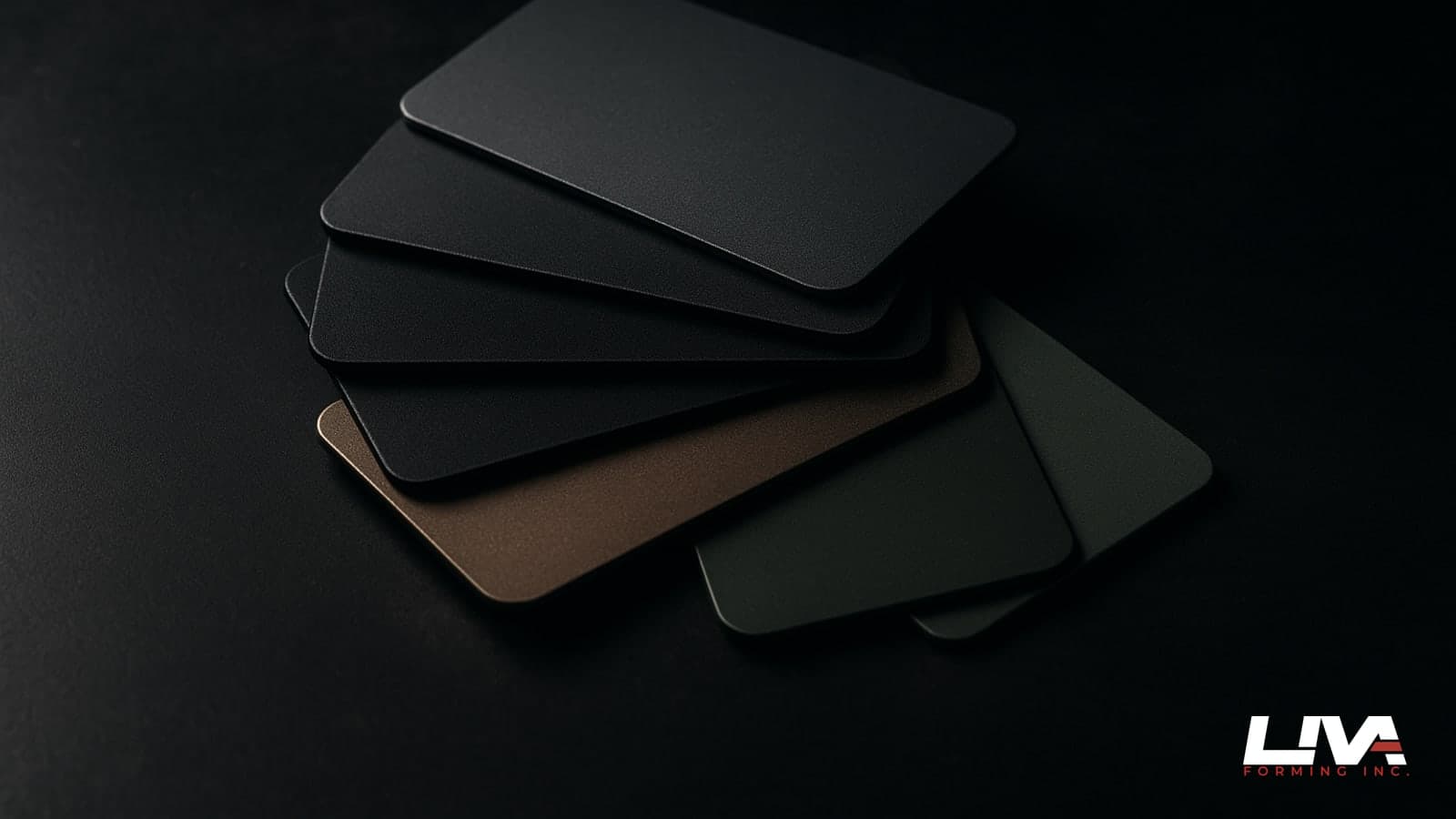
Current 2026 pricing in our shop: 24-gauge prefinished Galvalume runs roughly $4-6 per linear foot for standard flashing profiles in stock colours (charcoal, black, bone white, hartford green). Bump to a custom Cascadia or RAL match and you're looking at $6-9 per LF depending on coil minimums. Bare Galvalume (no paint, mill finish) sits around $3-4 per LF when we have it on the rack.
Where it wins:
- 24ga is the sweet spot for J-channel, drip edge, head flashings, and most window and door trims
- Prefinished PVDF (Kynar 500) coatings carry 30-40 year film integrity warranties from Vicwest, Westform, and the other coil suppliers we use
- It bends cleaner than aluminum at tight radii (good for hemmed edges and Z-flashings with a sharp return)
- Available in 26ga if budget is tight, 22ga if you need a stiffer face for a long unsupported run
Where it loses:
- Cut edges in salt-spray zones will show red rust within 8-12 years. Not a structural problem in 24ga, but it looks bad on a dark colour
- Don't use it in direct contact with treated lumber, copper, or anywhere standing water sits against the panel
- Avoid against PT 2×4 strapping unless there's a slip sheet, since copper-based preservatives accelerate corrosion at the contact point
For a typical Surrey townhome row or a Burnaby infill duplex, 24ga prefinished Galvalume in PVDF is what we'd quote without thinking about it. It's also what most siding contractors already know how to install, which keeps your crew from inventing new mistakes on the job site.
Aluminum: the move when you're within a kilometre of salt water
Aluminum flashing doesn't rust. That's the whole pitch and it's a real one. For waterfront builds in West Van, Deep Cove, parts of Crescent Beach, we steer contractors toward .032 or .040 prefinished aluminum even though it costs more.
Current 2026 pricing in our shop: .032 prefinished aluminum sits around $7-10 per LF in stock colours. .040 (thicker, better for longer runs without oil-canning) runs $9-12 per LF. Custom colours add 15-25% depending on coil order size.
Where it wins:
- Zero rust anywhere, including cut edges
- Lighter to handle on scaffold, which your installer will notice on a long day
- Takes PVDF coatings the same as Galvalume; same 30-year colour warranty available
- Easier to field-bend if the installer needs to adjust on site
Where it loses:
- Costs roughly 1.6-2x what equivalent Galvalume costs per LF
- Softer metal, so it dents on the truck and dents on the wall. Anyone handling it rough leaves marks
- Doesn't bend as crisply at tight radii. A 1/8" inside bend in .032 aluminum looks rounder than the same bend in 24ga steel
- Galvanic corrosion risk if it touches copper, brass, or untreated steel fasteners. Stainless or aluminum fasteners only
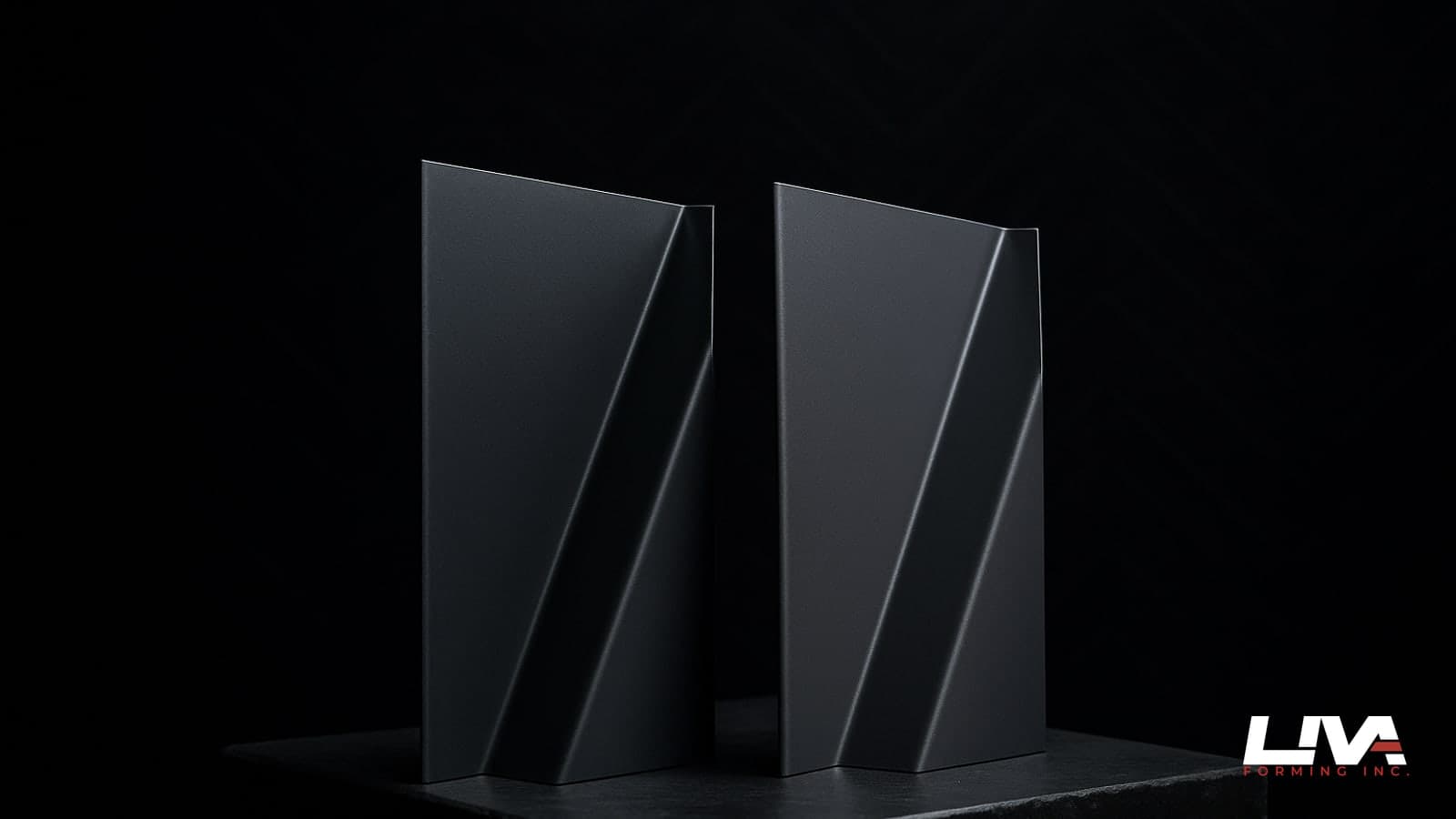
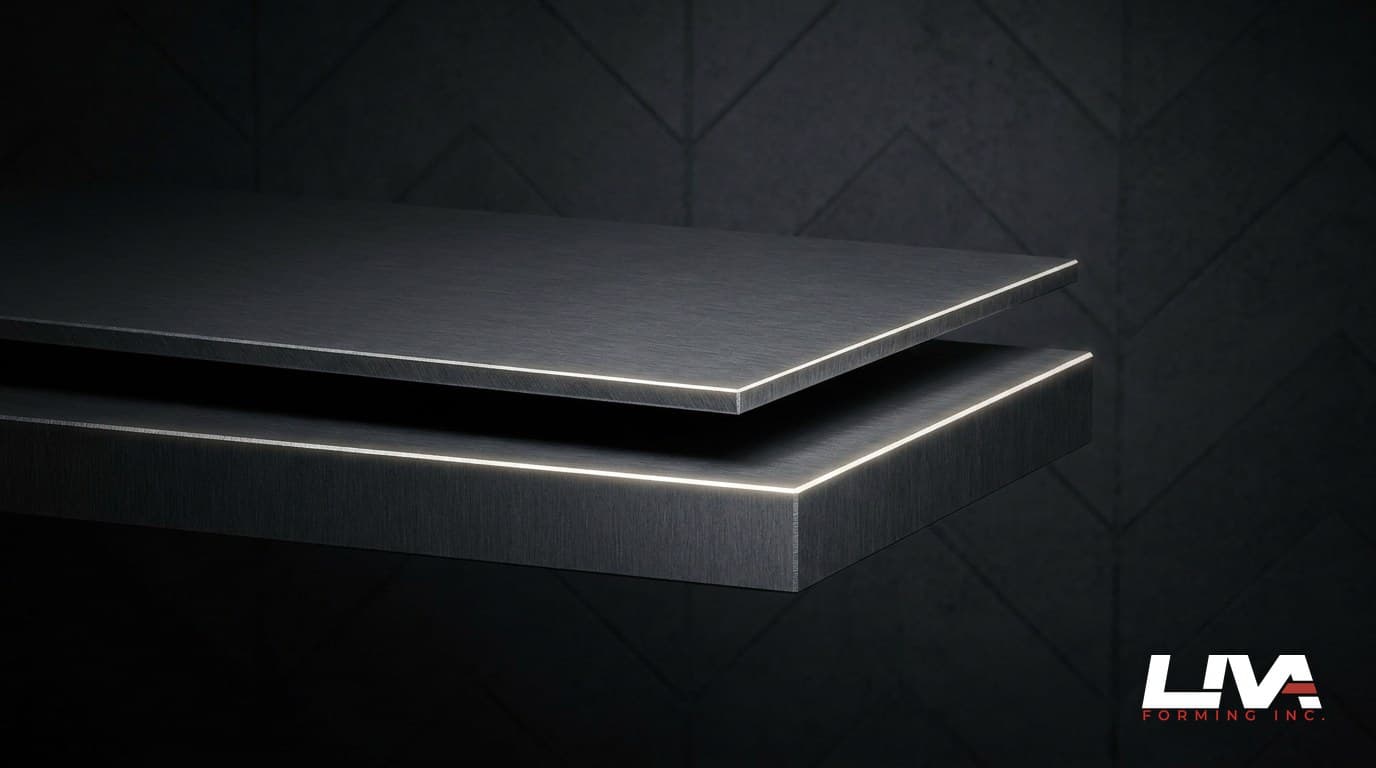
The other thing worth saying: aluminum is the move on architectural panel work where the look matters more than the price. If a designer in Mount Pleasant has spec'd a flush concealed-fastener panel in a deep matte black, aluminum holds that finish flatter and longer than steel. Steel wants to oil-can on big flat fields.
Stainless: a small slice of jobs, but the right slice
Stainless flashing is the one most contractors over-order or under-order. Almost never the right fit for full-elevation work because of cost; almost always the right fit for specific high-exposure details where failure isn't an option.
Current 2026 pricing in our shop: 304 stainless in 26ga or 24ga runs roughly $14-20 per LF for typical flashing profiles. 316 stainless (for direct marine exposure) is $18-26 per LF. Sheet stock when we have it is around $180-240 per 4×10 sheet in 26ga.
Where it wins:
- Chimney flashings on coastal homes where chloride and sulphur both attack the metal
- Through-wall flashings behind masonry where you can't replace it without taking the wall apart
- Heritage restoration work matching original 1920s-1940s stainless or zinc details
- Hot tub and pool deck trims where chlorine spray hits the flashing daily
Where it loses:
- Three to four times the cost of Galvalume
- Harder to work: needs sharper tooling and longer bend allowances on the brake
- Limited colour options. Mill finish, brushed, or paint over (and paint over stainless is an awkward middle ground that rarely looks right after five years)
- Heavy. A stainless drip edge run on a long fascia is genuinely noticeable on a ladder
The honest stainless conversation is usually: "This one piece of flashing, on this one chimney, on a $3M house in West Van, needs to be stainless. The rest of the flashings on the same job are prefinished Galvalume." That's the right split.
Coating systems: PVDF vs polyester, and why we won't quote SMP for BC exteriors
The metal substrate is half the story. The paint system on it is the other half, and contractors who only ask about gauge and material miss the coating question entirely.
PVDF (Kynar 500 / Hylar 5000): the standard for anything we'd put on an exterior wall in BC. Fluoropolymer-based, holds colour 25-30 years on south-facing UV exposure, doesn't chalk badly. This is what every reputable coil supplier in Western Canada coats prefinished sheet with. Vicwest Cascadia, Westform's prefinished lines, Agway: all PVDF on the architectural-grade sheet.
SMP (silicone-modified polyester): cheaper, used heavily in agricultural and budget metal roofing on the prairies. We don't quote it for BC exterior wall flashings. It chalks and fades faster on coastal UV, and the colour warranty drops to 25 years on paper but often looks tired at year 12-15.
Polyester: the bottom-tier coating. Avoid for any exterior flashing on a house your client wants to look right in a decade.
If you're spec'ing a job and the cheaper option you're being quoted is "polyester-coated," that's the corner being cut. Push back and ask for PVDF on the architectural pieces at minimum.
Realistic field lifespan in the Lower Mainland
Here's what we see in actual returns and replacement work, not what the brochure claims:
- 24ga prefinished Galvalume, PVDF coated, inland Lower Mainland (Coquitlam, Maple Ridge, Langley): 30-40 year service life on properly installed flashings. Edge rust visible at year 10-15 on dark colours, cosmetic only.
- 24ga prefinished Galvalume, PVDF coated, coastal (within 1km salt water): 20-30 year service life. Cut edges show rust by year 8-10. Replace at 25 years on a typical refresh cycle.
- .040 prefinished aluminum, PVDF coated, anywhere coastal: 35-50 year service life. Colour fade is the failure mode, not corrosion.
- 304 stainless, mill or brushed: 60+ years inland. 40-50 years coastal. 316 stainless 50-70 years coastal.
These numbers assume the flashings were installed right: clear fasteners, no kinks at hems, proper laps, sealant where it belongs and absent where it doesn't.
The picking-it framework
If you skip everything above and just want a default, here's what we tell BC siding contractors who call asking which way to go:
- Default to 24ga prefinished Galvalume with PVDF coating. This is correct for ~80% of Lower Mainland residential and light commercial flashing work. Quote in this material first.
- Switch to .032 or .040 prefinished aluminum if the building is within 1 km of salt water, or if the architectural look matters and the budget covers it. Plan for 1.6-2x the per-LF cost.
- Add stainless only on the specific details that need it. Chimney saddles, through-wall flashings, marine-exposed trims. Don't blanket-spec stainless across an elevation.
That framework lets you write a quote in five minutes and be right almost every time. The exceptions are the heritage jobs (which we treat as their own conversation) and the architectural commercial work where the designer has a specific finish in mind from the outset.
What to send us so the quote comes back fast
For a same-day quote on a flashing material BC project, the file we want from you has: a sketch or shop drawing with bend angles and leg lengths, the linear footage broken out by profile type, the gauge or our recommendation if you're not sure, the finish (PVDF stock colour, custom colour code, or mill), and the delivery address. Phone photos of a marked-up shop drawing work fine for first-round quoting.
Standard prefinished Galvalume in stock colours ships in 24-48 hours from order approval. Custom colour Cascadia or RAL match runs 3-5 business days if the coil's on the rack, longer if we're ordering material. Stainless and aluminum custom orders run 3-7 business days depending on what's in.
Send the package to our quote page or call the shop and we'll walk through the spec with you. If it's a job we've done a hundred times before, we'll usually steer you toward the option that costs you less and performs the same.
For more on the bending side, our flashing fabrication page covers the profiles we run regularly and the gauge stock we keep on hand.
Frequently asked questions
Is Galvalume the same as galvanized?
No. Galvanized steel is coated in pure zinc. Galvalume carries a 55% aluminum / 43.5% zinc / 1.5% silicon alloy, where the aluminum handles long-term corrosion resistance and the zinc protects cut edges sacrificially. On BC exterior flashings that works out to roughly two to three times the service years of standard galvanized. Still keep it off treated lumber.
Can I use aluminum flashings against treated lumber?
Not directly. Most pressure-treated lumber sold in BC uses copper-based preservatives, ACQ or MCA, and those corrode aluminum wherever the two touch. Put a slip sheet or ice and water shield between them, or move that detail to stainless. Galvalume has the same issue. PT 2×4 strapping needs a slip sheet under either metal.
What gauge of flashing material should I spec for window head flashings?
24ga prefinished Galvalume covers most window head and sill flashings on residential builds. It's the sweet spot for head flashings, J-channel and drip edge. Bump to 22ga on commercial work or on long unsupported spans where you need a stiffer face. Going aluminum? Then .040 is the equivalent thickness, and it handles longer runs without oil-canning.
Do PVDF colours match across manufacturers?
Not exactly. A charcoal from one coil supplier won't look identical to a charcoal from another, even when both are PVDF. If you're matching an existing building, send us a sample piece, or the manufacturer name and colour code, so we coil-order from the same source. Custom colour runs take 3-5 business days when the coil is on the rack.
How long should flashings last in Vancouver weather?
Properly installed 24ga prefinished Galvalume with PVDF gives 30-40 years inland and 20-30 years within 1km of salt water. Aluminum at .040 runs 35-50 years coastal. 304 stainless goes 60+ inland. Failure is usually coating fade or edge corrosion, not structural, and most flashings get replaced because the siding around them is being redone, not because they failed.