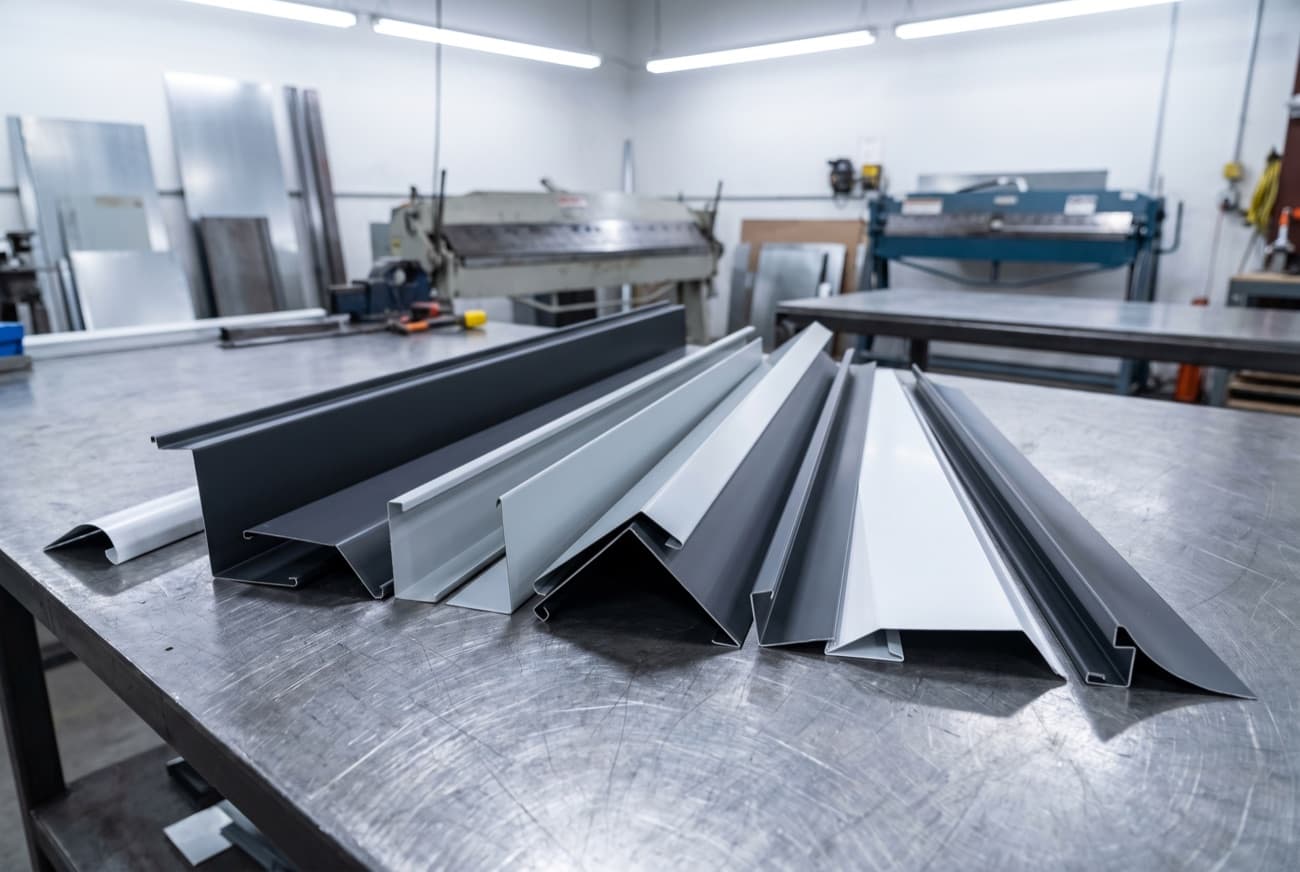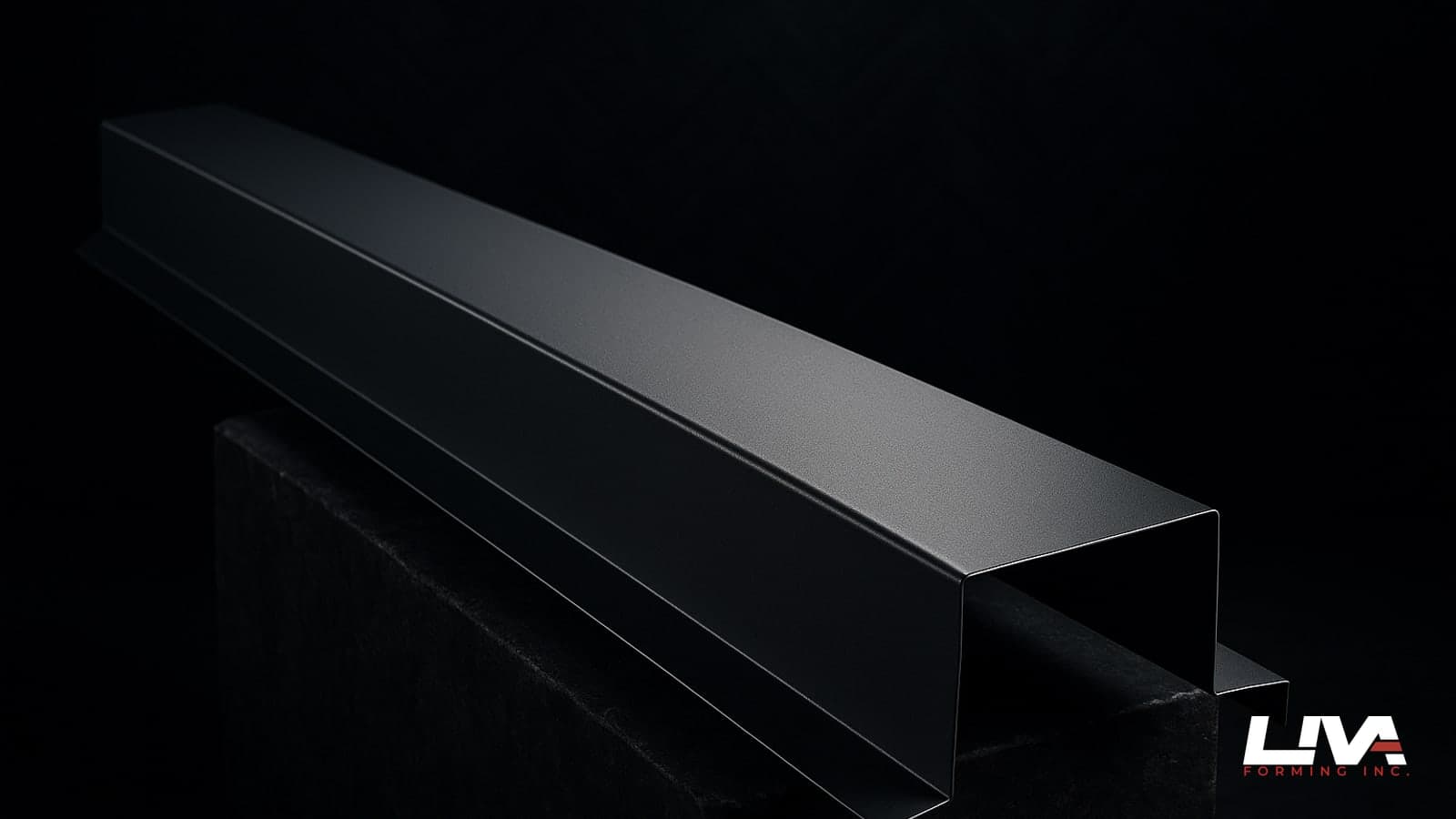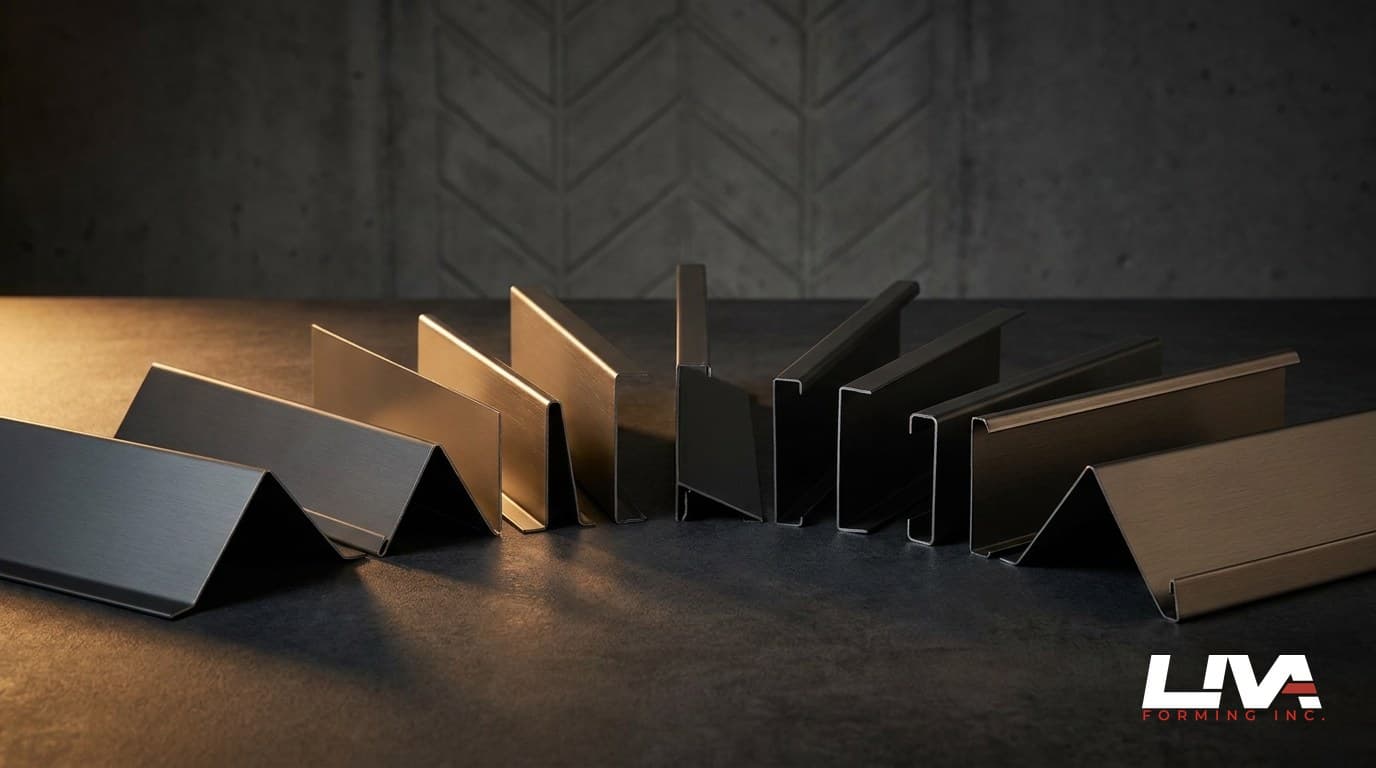
Off-the-shelf metal flashings cover roughly 80% of what goes on a typical Lower Mainland siding job. Drip edge, J-channel, head flashing for windows. Pull from stock, cut to length, install. Costs a buck-fifty to four bucks a linear foot depending on profile. Lead time is the drive from the supplier yard to the site.
So why does anyone order custom flashings at $8-15 a linear foot with a 24-48 hour wait?
Because the 20% that stock doesn't cover is the 20% that ruins your schedule.
This is the practical version of a comparison most articles get wrong. The question isn't which flashing is "better." Stock and custom both work. They work in different situations, and most siding contractors in BC end up running both on the same job. Knowing when to switch saves days on the build calendar.
Why stock is fine for most jobs
Standard profiles exist because they cover real conditions. Drip edges shed water off a roof rake. J-channel terminates panels around windows and doors. Head flashing redirects water away from openings. Z-flashing handles horizontal transitions between siding types. These have been refined over decades. The profiles you pull off the shelf at Convoy or Pacific Building Supplies aren't sloppy. They fit the dimensional standards of every major siding brand.
Three reasons stock wins:
- Cost. A 10-foot J-channel runs $14-22 at most BC suppliers. Custom equivalent? $40-60 for the same length. On a 2,500 square foot residential exterior, you might use 600 linear feet of J-channel. That's a $300 vs $900 line item.
- Availability. You don't wait. Stock is on the shelf when you need it.
- Liability. Stock profiles are tested to brand spec. If a James Hardie or Vicwest installation fails an inspection and you used the manufacturer's recommended metal flashings, you have backup. Custom flashings shift that responsibility to whoever fabricated them, including you if you spec'd them.
For straight runs, square openings, and standard wall assemblies, stock is the right answer almost every time.
Where custom becomes the only option
Then there are the jobs that don't fit the catalog.
Heritage renovation in Mount Pleasant. The original window heads are 9.5 inches tall, splayed at angles that haven't been standard since the 1920s. No stock head flashing fits. Try to make stock work and you get visible gaps that telegraph through the trim, or worse, water finding its way in behind the cladding.
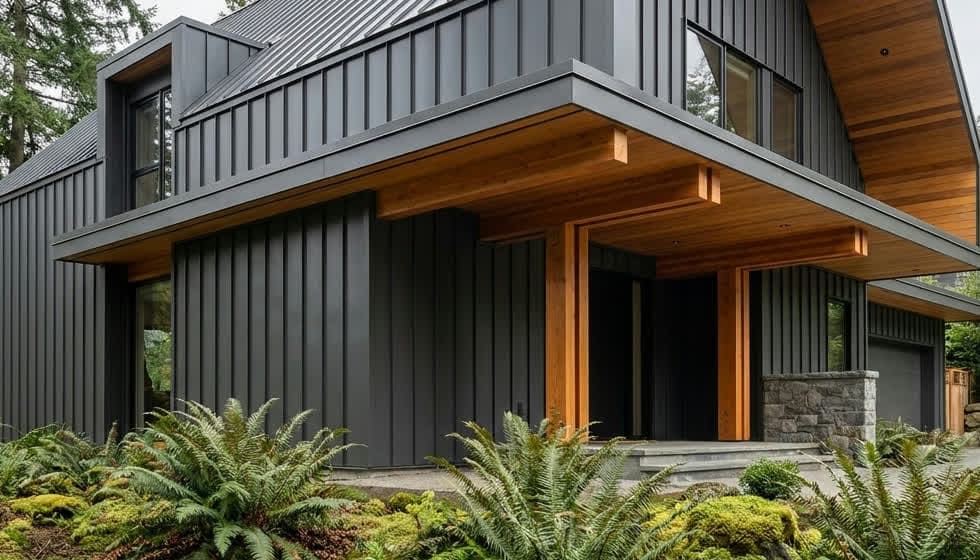
Or: a contemporary build in West Vancouver with horizontal-vertical hybrid siding, board-and-batten on the front, lap siding on the side, meeting at a chamfered outside corner. The transition flashing needs to handle the dimensional change AND the angle AND the differential expansion. Stock corner trim handles one of those at a time.
Or: ranch-style rebuild with a 1.5-pitch roof and 18-inch overhangs. The fascia flashing has to wrap from the soffit return, around a beveled fascia, down to a custom gutter detail. Stock fascia flashings come in two heights and three folds. None of them touch this profile.
These are the jobs where guys try to make stock work, then bend it on site, then bend it again, then end up with something that leaks in three years and they have to come back out. Custom would have cost an extra $400 on a $40,000 build. Coming back out costs four weekends.
How custom actually gets ordered
This part trips up new contractors. They imagine custom flashings as some kind of high-end specialty order with weeks of lead time and unclear pricing.
In practice with a shop set up for it, the workflow is:
- You send a sketch. Could be hand-drawn on graph paper, could be a SketchUp screenshot, could be marked-up dimensions on a photo of the existing condition. We need bend angles, leg lengths, material, gauge, color, and quantity.
- We send back a quote within the same day, sometimes within a couple hours.
- You approve, we fabricate. Most custom flashings are done on a press brake from 24-26 gauge prefinished steel or aluminum. Production time is hours, not days. Lead time from approved quote to ready-for-pickup is typically 24-48 hours for standard materials and finishes.
- You pick up or we deliver. Pickup at our Delta shop is free; delivery to most Lower Mainland sites is included on orders over $500.
The friction most contractors imagine isn't really there once you've done it once. The friction that IS there: the back-and-forth on dimensions. If your sketch is unclear, you'll get a clarifying call. If you spec the wrong gauge for the application, we'll flag it. This isn't slowness — this is preventing you from ordering 200 feet of something that won't work.
Where the pricing actually lands
Let's get specific because vague pricing is what makes contractors avoid custom.
Custom step flashing for a complex roof-to-wall intersection in 24-gauge galvalume runs $6-9 per piece, minimum order 25 pieces. Stock equivalent doesn't exist for the geometry, so the comparison isn't apples-to-apples. You're not paying for "fancy flashing." You're paying for flashing that exists.
Custom 8-inch head flashing in 26-gauge prefinished aluminum, charcoal: $11-14 per linear foot. Stock 6-inch head flashing in similar material: $4-6 per linear foot. Custom is 2x. But the 8-inch height is what your inspector is going to require for the window detail you specified, and stock doesn't make it.
Custom Z-flashing with non-standard return, 16-foot lengths, 24-gauge mill finish steel: $9-12 per linear foot. Stock Z-flashing in 10-foot lengths: $3-5 per linear foot. Custom is 2-3x, but you're getting 6 fewer joints across the building face.
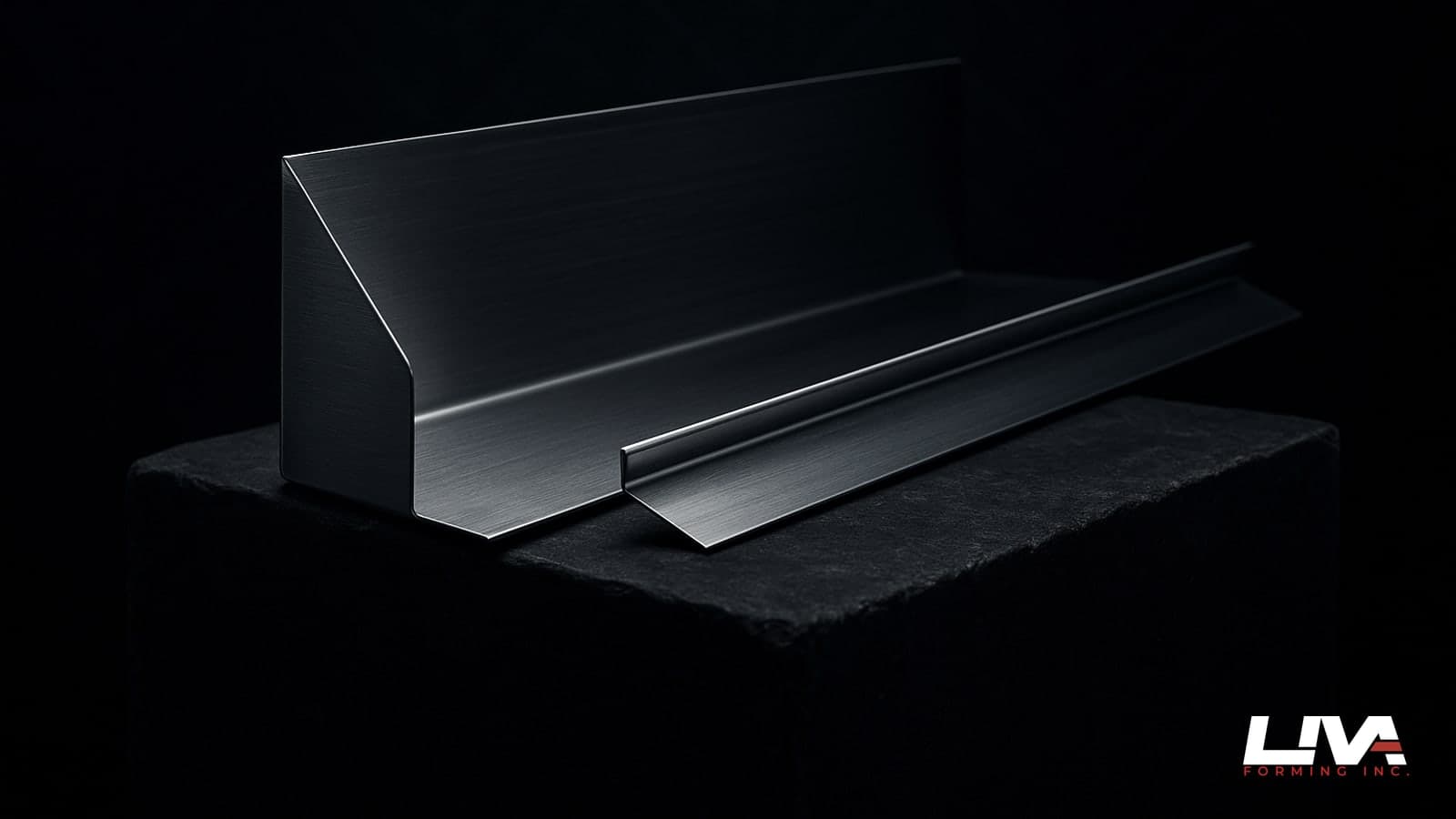
Custom corner trim with chamfered profile to match the architectural drawing: $14-22 per linear foot. Stock corner trim that doesn't match the drawing: $5-8. Custom wins because the stock option fails the architect's spec, full stop.
The pattern: custom isn't 10x markup. It's 2-3x for material plus the cost of fabrication. On a typical 2,000-3,000 sq ft residential exterior in BC, custom flashings account for 5-15% of the total flashing line item. Not 50%, not 80%. Just the parts that need to be custom.
When to switch from stock to custom
Five conditions that almost always require custom:
- Heritage or restoration work. Pre-1960 dimensions, splay angles, soffit returns. Almost nothing in stock fits. Match the existing profile or replace everything.
- Non-standard openings. Anything over 8 inches tall on head flashing. Anything with a splay angle other than 0 or 22.5 degrees. Anything with a return leg longer than 3 inches.
- Mixed cladding transitions. Vertical to horizontal, board-and-batten to lap, metal to fiber cement. The transition piece is almost never stock.
- Architectural detailing. Reveal lines, shadow gaps, chamfered corners, hidden fastener detailing on commercial work. If the drawings call for a specific profile, custom is the only path.
- Long single runs. Stock comes in 10 or 12-foot lengths. If you need 16-foot or 20-foot pieces to reduce joint count on a long elevation, that's a custom order.
If you can't tick any of these boxes, stick with stock. You'll save money and time. For a deeper walkthrough of standard flashing selection, see our guide to choosing flashings for siding projects.
One real example from last quarter
A siding contractor in Burnaby was bidding a 3,400 sq ft heritage rebuild in Mount Pleasant. Original cedar shingles replaced with painted fiber cement. The architect specified 9.5-inch head flashings to preserve the original window proportions, board-and-batten on the upper floor, lap siding below, with a 4-inch reveal band at the transition.
The contractor's first instinct: figure out a way to make stock work. We talked through it. Stock head flashing tops out at 6 inches and would have looked wrong against the existing window trim. The reveal band profile didn't match anything in any catalog. The transition flashing between cladding types needed a non-standard return.
He came back with dimensions for three custom items: head flashings, reveal band, and transition trim. Total custom flashing cost: $1,840. Total flashing line item for the job including all the stock J-channel, drip edge, corner trim, and soffit transitions: $4,200.
That $1,840 of custom flashings prevented a callback. The architect signed off on the first inspection. Owner moved in on schedule. The contractor referred the next custom flashing job to us within six weeks because the math worked.
That's the math. Custom flashings aren't a luxury upgrade. They're the parts of the job that stock can't handle, priced to reflect actual fabrication cost.
The decision rule
Use stock for everything stock fits. Switch to custom the moment you find yourself thinking about how to "make stock work." If you have to bend it, trim it, or cope it on site to fit a condition, you're already past the point where custom would have been the right call.
For BC contractors running mixed residential and light commercial work, the typical split lands at 85% stock, 15% custom on flashing line items. That ratio shifts higher toward custom on heritage, multi-family, and any job with an architect involved.
The shops to avoid are the ones that quote slow and charge 4-5x for material. That's not custom, that's gouging. A reasonable BC fabricator quotes within 24 hours and prices custom at 2-3x stock for the equivalent material and finish.
Need a custom flashing quote? Send us your drawings or describe the condition. We respond within one business day with a detailed price and lead time. Get a quote.
Frequently asked questions
When does a flashing job actually need custom instead of stock?
Five conditions. Heritage or restoration work, head flashing over 8 inches tall or with a splay other than 0 or 22.5 degrees, and return legs longer than 3 inches all push you to custom. So do mixed cladding transitions, architectural details like reveals and chamfered corners, and long single runs past the 10 or 12-foot stock lengths. If none of those apply, stick with stock.
How much more does custom flashing cost than stock?
Usually 2-3x stock for the equivalent material and finish, plus fabrication. Custom 8-inch head flashing in 26-gauge prefinished aluminum runs $11-14 per linear foot, against $4-6 for 6-inch stock. On a typical 2,000-3,000 sq ft BC residential exterior, custom pieces land at 5-15% of the total flashing line item. Not half. A shop charging 4-5x for material is gouging.
How fast can I get custom flashings made?
Send a sketch with bend angles, leg lengths, material, gauge, color and quantity. The quote comes back the same day, sometimes within a couple hours. Once you approve it, lead time to pickup is typically 24-48 hours for standard materials and finishes, because press brake production takes hours rather than days. Pickup in Delta is free. Delivery to most Lower Mainland sites is included on orders over $500.
Is it worth bending stock flashing on site to make it fit?
No. If you have to bend, trim or cope stock on site to fit a condition, custom was already the right call. Crews that bend it, then bend it again, often end up with a detail that leaks in three years and a trip back out. In one case custom would have added $400 on a $40,000 build. Coming back cost four weekends.