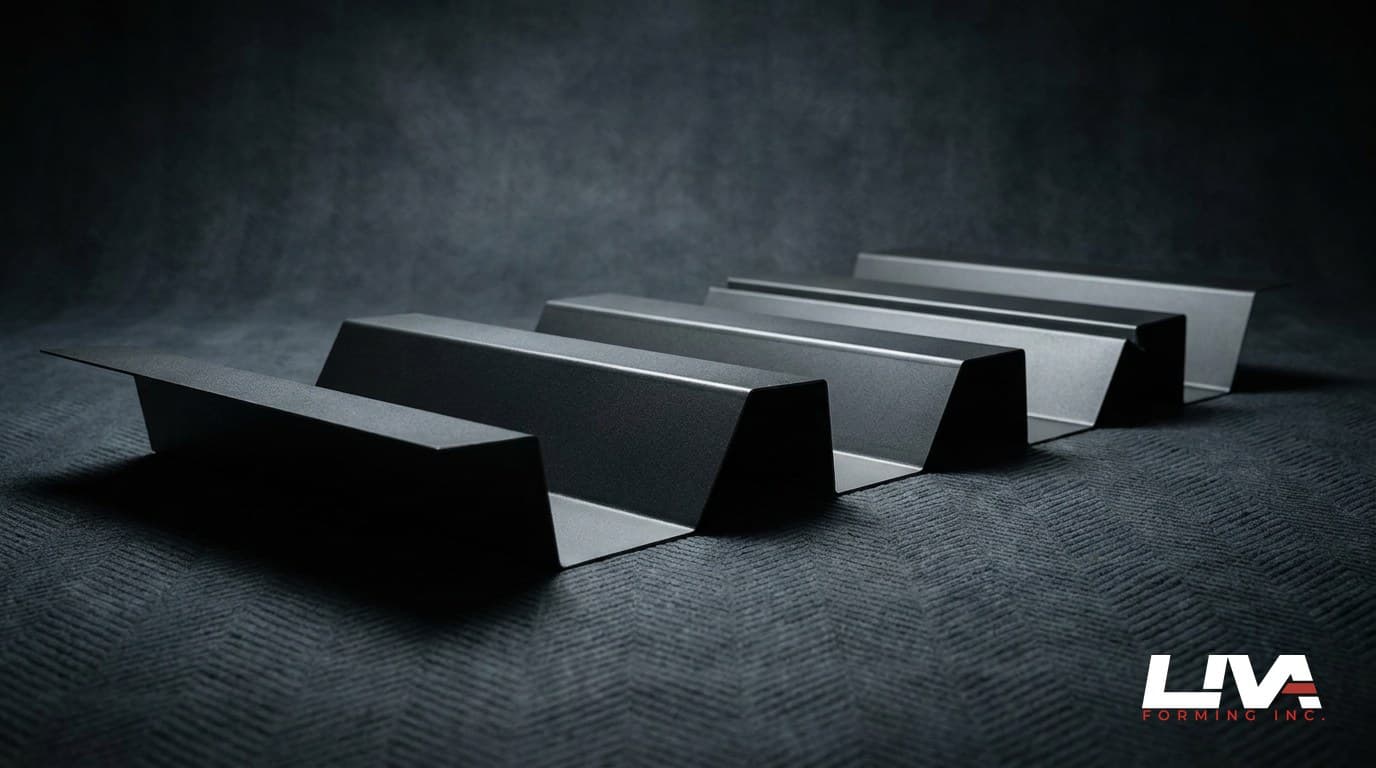
A siding contractor called the shop last Tuesday morning. He was standing on a Mount Pleasant heritage rebuild, looking at a low-slope dormer roof meeting a brick chimney chase. Box of stock 5×7 step flashings in his truck, none of them sitting flat against the masonry. He needed twenty-two pieces by Thursday morning to keep his roofer on schedule. We bent them Wednesday afternoon, delivered Thursday at 7am.
That gap is where custom step flashing earns its keep on BC jobs. Custom step flashing isn't an upgrade. It's what you reach for when the geometry stops cooperating with whatever the supply yard has on the shelf.
What stock step flashing actually covers
Most building supply yards across the Lower Mainland carry step flashing in three sizes:
- 4" x 5" (4" vertical leg, 5" horizontal leg), 26ga galvanized
- 5" x 7", 26ga galvanized or prefinished aluminum
- 7" x 10", same gauges
The bend is a clean 90 degrees. Horizontal leg slides under one course of shingles, vertical leg rides up the wall behind the siding or counter-flashing. On a 6/12 to 9/12 asphalt shingle roof meeting a stud wall with rainscreen and Hardie plank, that 5×7 piece works fine. Quick install, code-compliant, $1.20 to $1.80/LF if you buy a full bundle.
About 70% of roof-to-wall joints in BC residential look like that. The other 30% is where the phone calls come from.
Where the geometry forces custom step flashing
Low-slope roofs
Step flashing relies on slope to shed water past the horizontal leg before it backs up. Pitch under 4/12 and the 5" horizontal isn't long enough. Water sits, capillary pulls it sideways, and you get a wall leak six months later that looks like a window problem.
Custom step flashing for a 2/12 or 3/12 roof typically needs an 8 to 10" horizontal leg with a 1/2" hemmed water-stop on the leading edge. We bend those in 24ga prefinished Galvalume for jobs in North Vancouver and Burnaby most weeks. Wider piece, longer offset, no callbacks the following spring.
Dormers with side cheeks
Standard step flashing assumes a continuous straight wall. A dormer cheek pinches in at the top and the bottom piece has to wrap a corner. Three options on site:
- Cut and bend stock with snips and a seamer (looks rough, leaks at the corner)
- Solder a custom corner (rare nowadays, costs more than ordering custom)
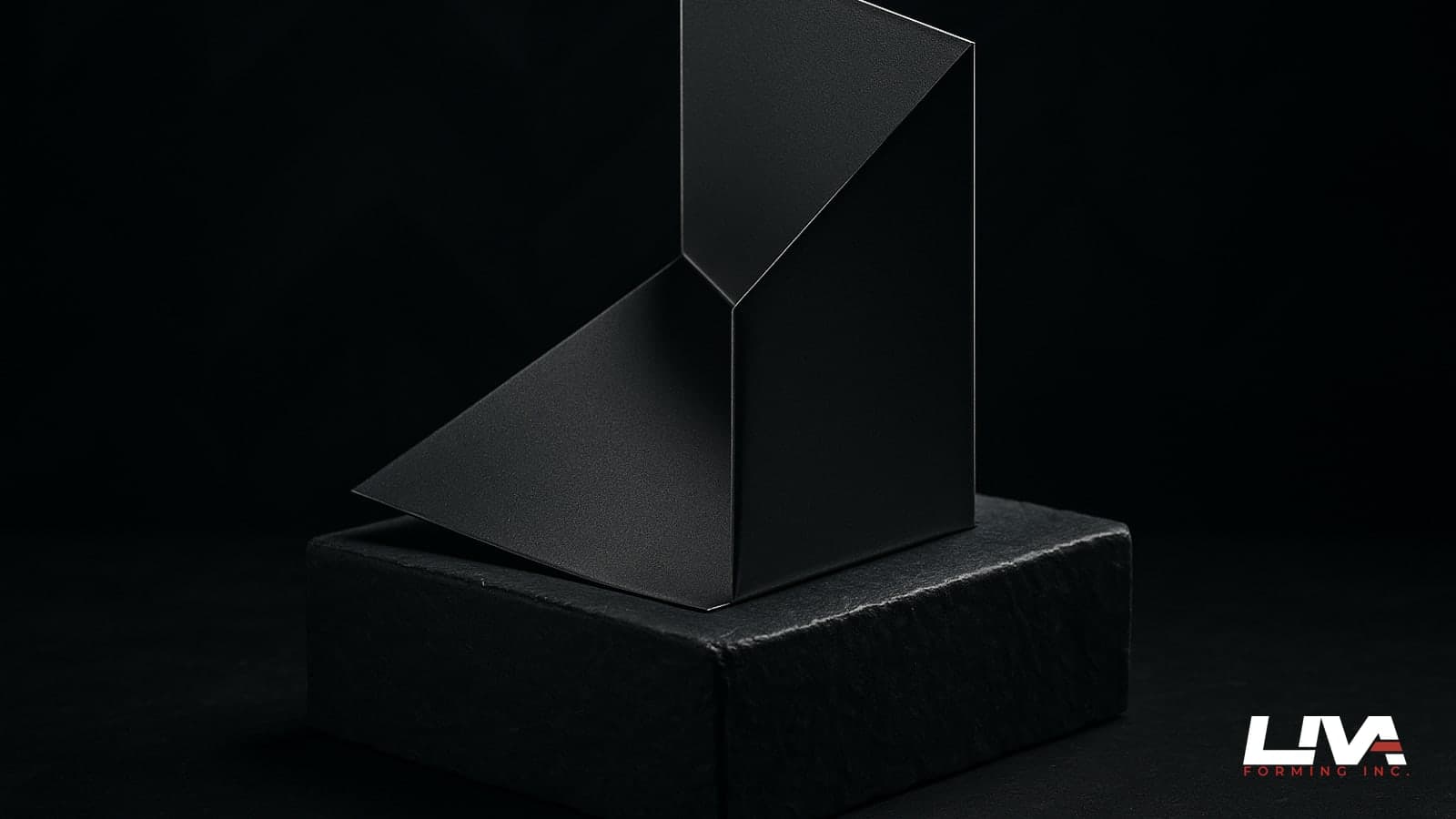
- Order custom step flashing with the corner pre-bent on the brake
We see a lot of dormer-cheek work from Surrey townhome rows where the architect drew the dormer 24" wide and the framer built it 22.5". Off-the-shelf pieces don't account for that kind of field variance. Custom does, and the pre-bent corner reads clean on the inspector's walk-through.
Masonry walls (chimneys, brick veneer, stucco chases)
Brick and stucco need counter-flashing built into a reglet or saw-cut. Step flashing tucks behind it. The reglet height varies by mason, and stock step flashing's 4-5" vertical leg often won't reach. We make custom step flashing with 7-9" vertical legs and a tighter top hem so the counter-flashing seats clean against the masonry without bowing.
Heritage Mount Pleasant work is the obvious case. We've also done a lot of stucco chimney chases on 1990s-era Port Coquitlam homes getting reroofed for the second time, where the original step flashing was undersized for the actual reglet depth.
Standing seam panel roofs
Step flashing for standing seam is a different animal entirely. The horizontal leg has to clear the seam height (1.5 to 2"), and the bottom edge often needs a hem that locks under the panel rib. Stock step flashing doesn't have either feature. Every standing seam roof package we ship out includes custom step flashing in the matching coating, sized to the specific panel profile we ran.
The material mismatch that costs callbacks
The single most common mistake I see on roof-to-wall details: contractor uses stock galvanized step flashing behind prefinished aluminum siding. Within two seasons, the galvanized starts oxidizing where it meets the aluminum cut edge. That's galvanic corrosion, and it streaks down the siding face, especially on south-facing walls catching UV plus the salt air drift you get anywhere within ten kilometres of the water.
Fix is straightforward. Match the step flashing material to the siding and the counter-flashing system. If the siding is prefinished aluminum, the step flashing should be aluminum too, ideally from the same coil. If the counter-flashing is copper, step flashing goes copper. If the whole assembly is prefinished Galvalume in matte black, run step flashing from the same coil and the joint disappears.
We keep most of the common BC siding finishes in stock at the shop and can match within a day. Specific color codes (RAL, NCS, or the contractor's siding sample) we coil-order, which adds 3 to 5 business days but eliminates the color-mismatch callback.
Sealant compatibility, quickly
Three sealant categories show up on flashings work and they don't all play nice with every metal coating.
Butyl: sticky, never fully cures, used at the back of step flashing to bed against sheathing or WRB. Compatible with every common metal coating.
Polyurethane: most common exterior caulk on BC jobs. Works with aluminum, Galvalume, prefinished steel. Avoid on raw copper because it stains the patina.
Tripolymer or silicone hybrid: for masonry-to-metal joints (counter-flashing into stucco reglet). Works with all metals but read the data sheet if you're tying into PVDF-coated coil. A couple of low-grade silicones break down PVDF over a few years.
When in doubt, write the sealant brand into the spec on your RFQ and we'll flag anything that looks off when we quote.
What custom step flashing costs in BC (May 2026)
Honest ranges from current shop pricing:
- 26ga prefinished aluminum, custom 5×7 with one bend: $3.50-4.50/LF in batch quantities (50+ pieces)
- 24ga prefinished Galvalume, custom 8×10 with hem: $5.50-7.00/LF
- 22ga prefinished steel, custom step with corner bend (dormer cheek): $8-12 per piece depending on complexity
- Raw copper, custom step: $14-22/LF at current scrap-driven coil pricing
Below 25 pieces we apply a small-run premium because the brake setup time doesn't change much for short orders. Above 100 pieces, prices drop another 10-15%.
Stock galvanized 5×7 at most BC supply yards runs $1.20-1.80/LF. So custom is a two-to-three-times premium on the part cost alone. The math still works because:
- Stock that doesn't fit means site cutting and sealant patching, and the labor cost on that dwarfs the material premium
- Callbacks for leaks at bad step flashing run $400-1,200 per visit once you factor in mobilization
- Architects writing tight specs reject site-bent stock on the final walk-through, which means redoing it anyway
Lead time across the Lower Mainland
For bread-and-butter sizes (4×5, 5×7, 6×8 with one or two bends) in common gauges and stock finishes, we turn custom step flashing in 24 to 48 hours. Drop the drawing in the morning, pick up next day after lunch or have it on the truck for delivery.
Push to 3-5 business days when:
- Custom color, RAL or NCS code that needs a coil order
- 22ga or 20ga work (we stock less of the heavier gauges)
- Run sizes over 100 pieces
- Corner-bent or compound pieces that need a fresh brake setup
Longer when material is back-ordered. PVDF Galvalume in some custom colors has had 4-6 week lead times from the coil supplier through 2025 and into 2026. We flag that on the quote so nobody gets surprised on the schedule.
What a "ready to quote" RFQ looks like
A clean RFQ on step flashing has six things on it:
- Quantity (linear feet or piece count)
- Dimensions (vertical leg, horizontal leg, any third dimension for corners)
- Bend angle (assume 90° unless the drawing says otherwise)
- Gauge (26ga, 24ga, 22ga)
- Material and finish (aluminum, Galvalume, prefinished steel, plus the color code or a photo of the sample)
- Sealant or counter-flashing system you're tying into
A phone photo of a sketch on graph paper works. CAD works. A photo of a stock piece with the changes annotated in pen works. What slows a quote down is missing the finish callout or the gauge, because then we have to call back and lose half a day.
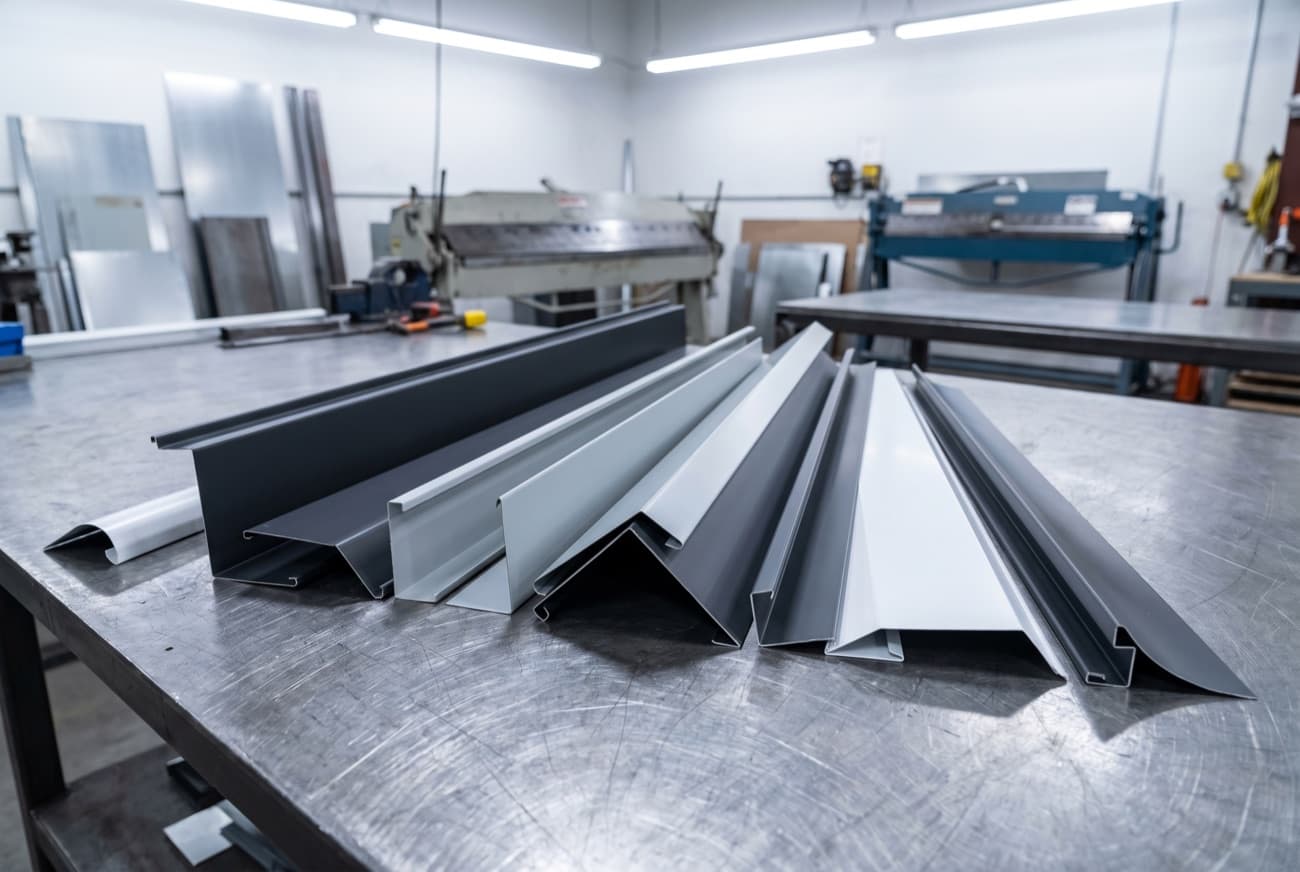
The shop's been bending custom flashings for BC siding and roofing contractors for over twenty years. Most weeks we run a few hundred linear feet of step flashing alongside the J-channel, drip edge, and counter-flashing work that ships out daily. Lower Mainland delivery is built into how we schedule production: Burnaby, Surrey, Delta, North Vancouver, Richmond, and Abbotsford on a regular weekly rotation, Port Coquitlam and Vancouver proper most days.
If you've got a roof-to-wall detail where the stock step flashing isn't sitting flat, send the dimensions and a phone photo of the joint. Get a quote and we'll come back same-day with a price and a lead time. For the full range of custom flashings we run out of the shop, see the flashings page.
Frequently asked questions
When does a roof-to-wall joint need custom step flashing?
Stock pieces are clean 90 degree bends that handle about 70% of BC residential joints. The other 30% is low-slope roofs, dormer cheeks, masonry walls and standing seam roofs. Start with pitch. Under 4/12, the 5" horizontal leg is too short and water sits. A 2/12 or 3/12 roof typically needs an 8 to 10" horizontal leg with a 1/2" hemmed water-stop on the leading edge.
Why does galvanized step flashing streak aluminum siding?
Galvanic corrosion. Put stock galvanized step flashing behind prefinished aluminum siding and within two seasons it oxidizes where it meets the aluminum cut edge, then streaks down the siding face. South-facing walls near the water get it worst. The fix is matching materials. Aluminum siding gets aluminum step flashing, ideally off the same coil, and copper counter-flashing means copper step flashing.
What does custom step flashing cost in BC?
In batches of 50+ pieces, 26ga prefinished aluminum at a custom 5×7 with one bend runs $3.50-4.50/LF. A 24ga Galvalume 8×10 with a hem is $5.50-7.00/LF, and a 22ga dormer corner piece is $8-12 each. That's two to three times stock. Still cheaper. A leak callback runs $400-1,200 per visit, and site-cut stock means labor and sealant patching.
How fast can custom step flashing be turned around?
Bread-and-butter sizes like 4×5, 5×7 and 6×8 with one or two bends, in common gauges and stock finishes, turn in 24 to 48 hours. Expect 3-5 business days for a color that needs a coil order, 22ga or 20ga, runs over 100 pieces, or corner-bent pieces. PVDF Galvalume in some custom colors has had 4-6 week coil lead times. That gets flagged on the quote.