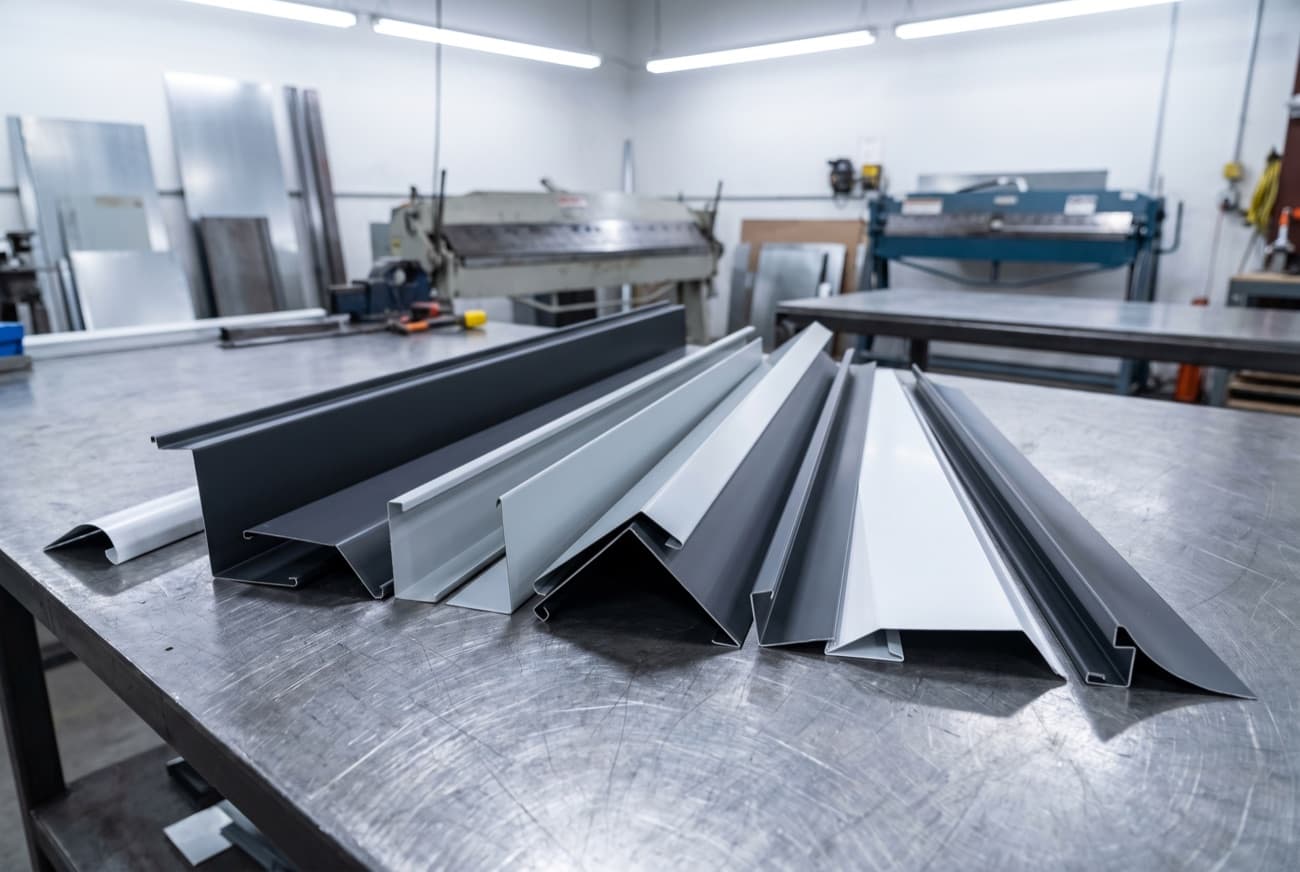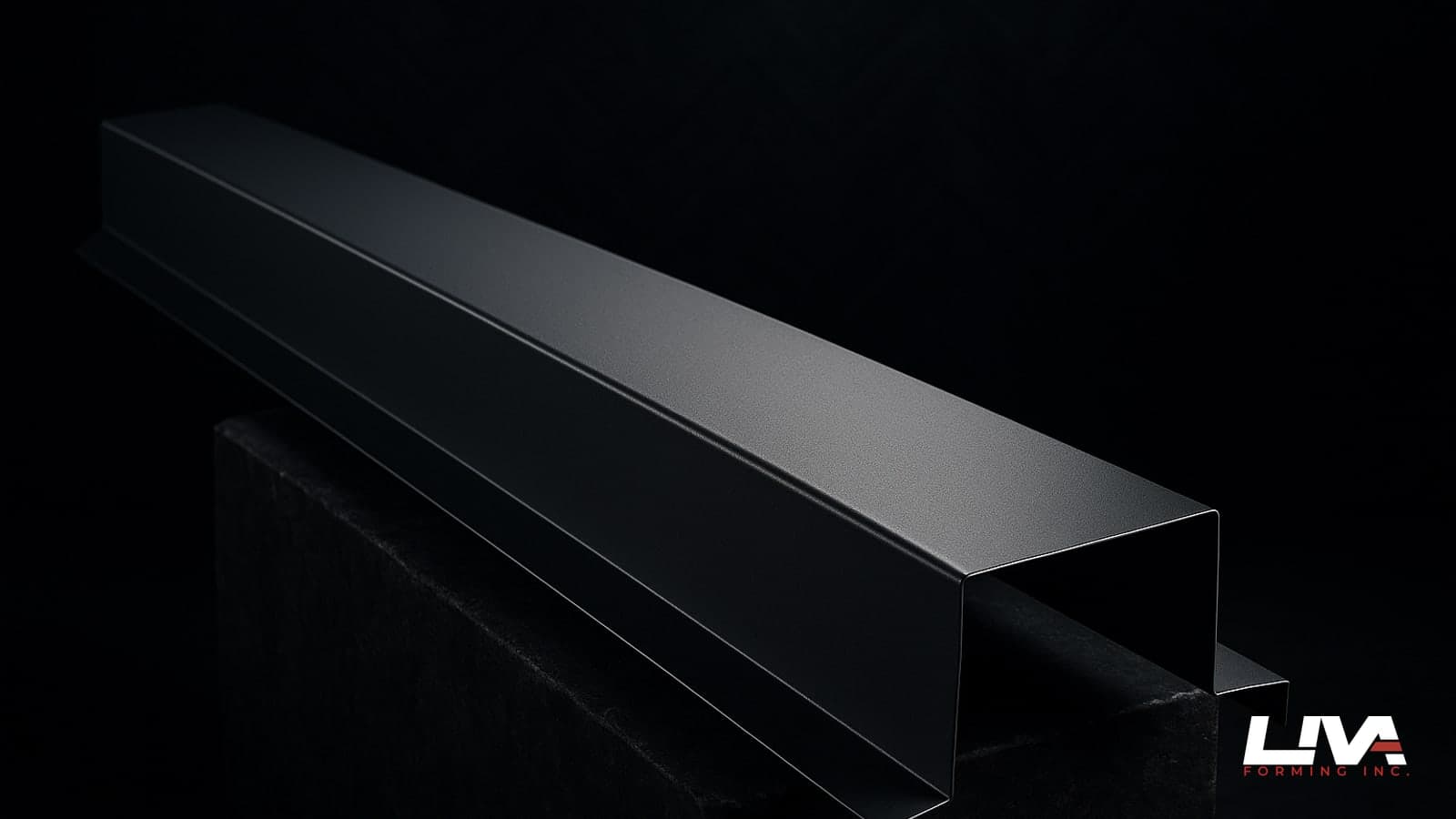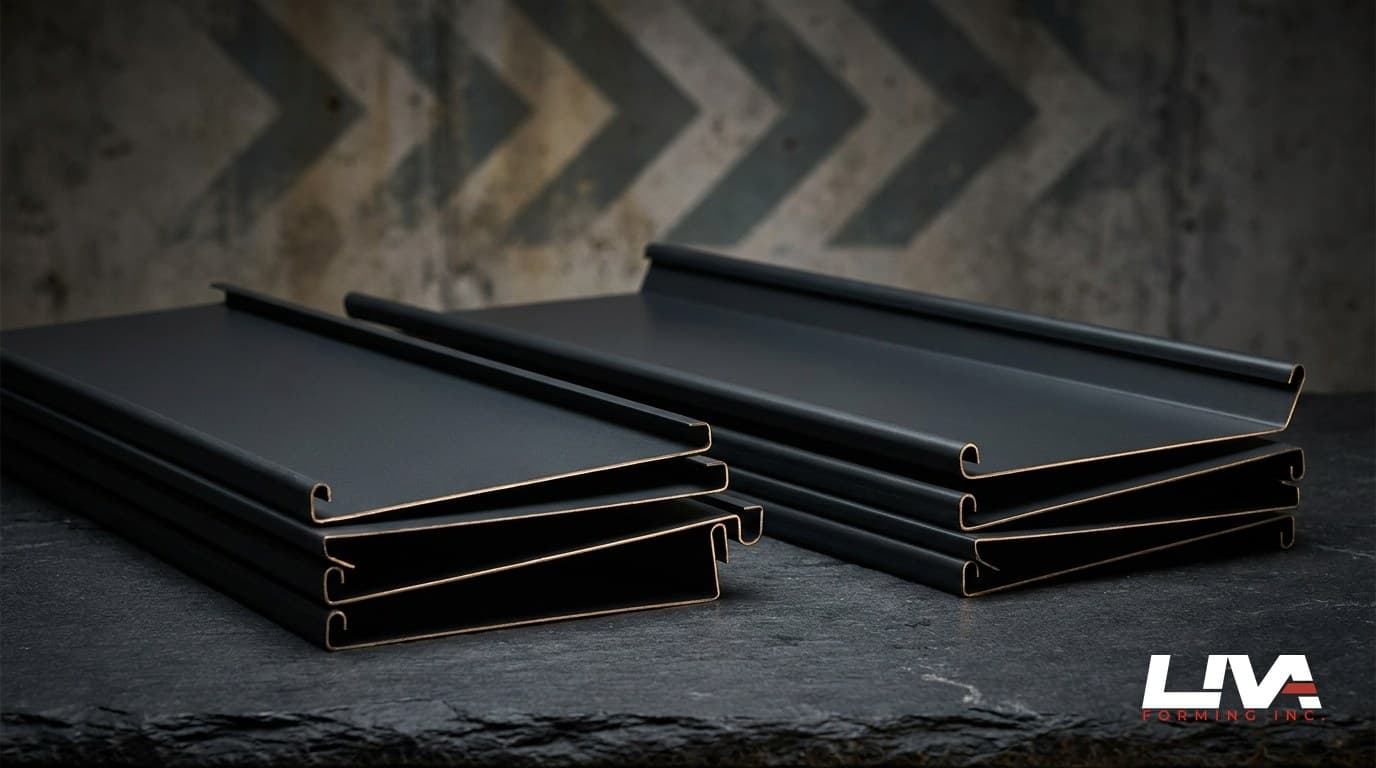
The counter guy at the supply house checks his screen twice, then tells you the drip edge you need is a special order. Two to three weeks. Your siding crew is scheduled for Monday. This happens on BC jobs constantly, and it's the main reason contractors start ordering custom drip edge flashing from a fabrication shop instead of waiting on a distributor's catalog. A profile that doesn't exist as a stocked SKU is a 15-minute setup on a folding machine. The metal doesn't care whether the profile is standard.
After 20-plus years forming flashings for siding contractors around the Lower Mainland, I can tell you the profiles that get requested most often are rarely the ones sitting on the rack. Racks hold the middle of the bell curve. Your job sits on the edge of it.
What actually counts as "non-standard"
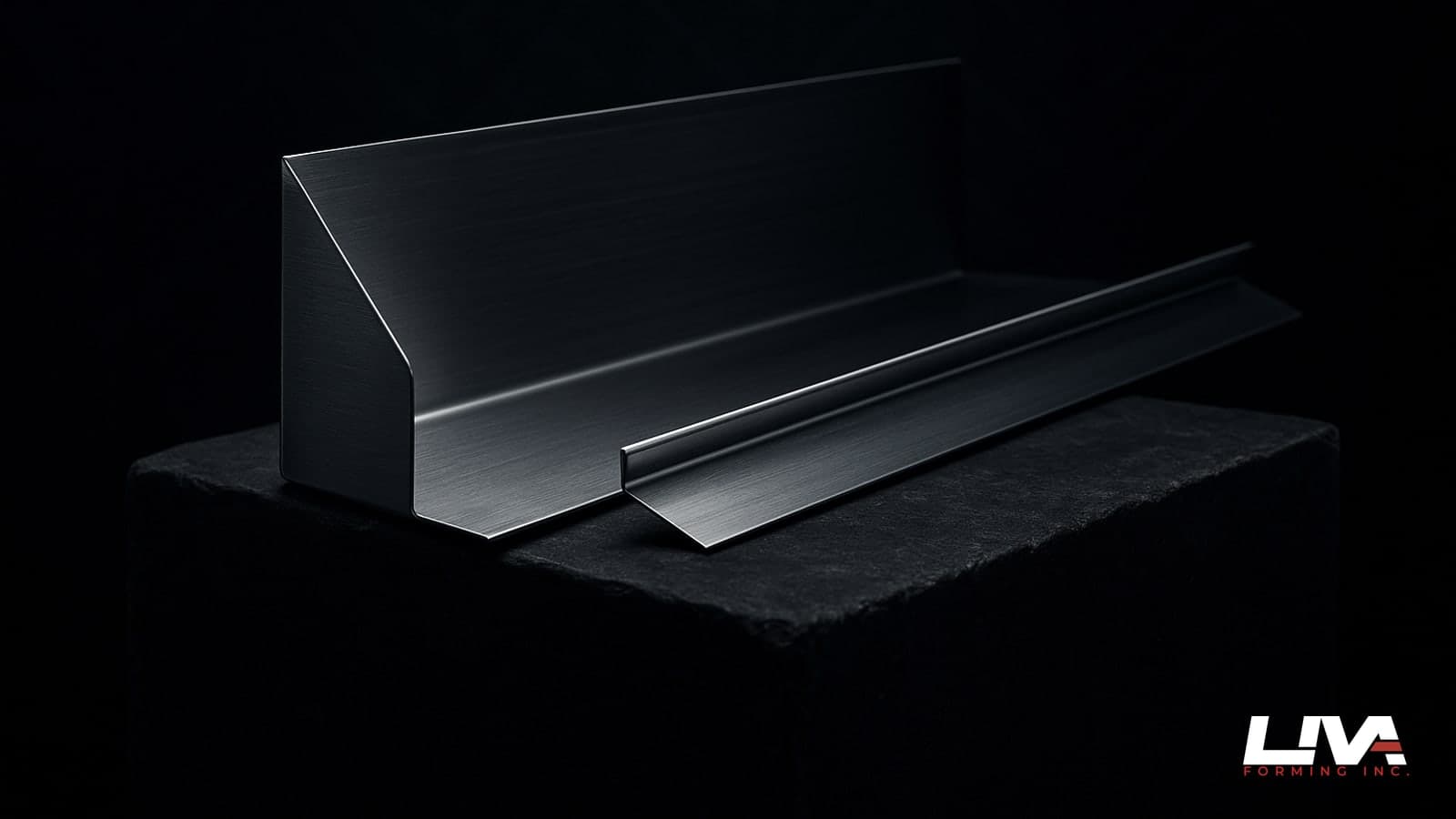
Stock drip edge in BC is built around a few assumptions: a 90 or 105 degree face angle, a 2" to 3" roof leg, a 1-1/2" face, and a small kick at the bottom. Stock J-channel assumes a 3/4" or 7/8" pocket for vinyl, sometimes 1" for fiber cement trim applications.
Step outside any of those numbers and you're in special-order territory:
- Odd face angles. A 4:12 shed roof meeting a parapet wants something between 95 and 135 degrees depending on the detail. Stock gives you two choices; your roof plane doesn't care about either.
- Deep hems. Architects on North Vancouver rebuilds have been drawing 3/4" open hems on visible edges for a cleaner shadow line and a stiffer edge. Stock drip edge carries a 3/8" hem at best, and most of it is just a raw cut edge.
- Non-standard reveals. Panel systems with a 1-1/2" reveal need J-channel with a pocket and return sized to that reveal, not to vinyl siding dimensions from a catalog printed years ago.
- Longer legs. High-wind exposure zones out toward Delta and Richmond flats often need a 4" roof leg for fastener placement past the sheathing edge. Good luck finding that stocked in the color you need.
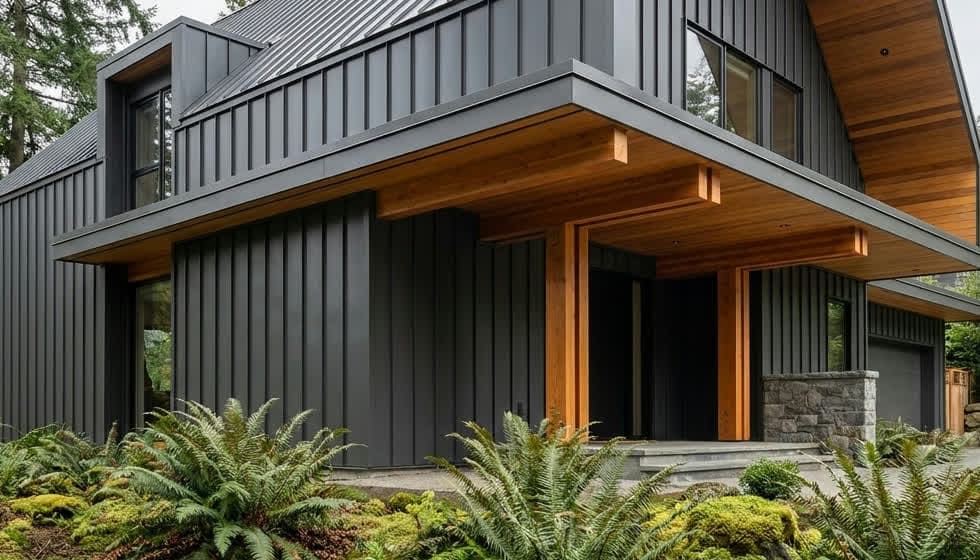
- Color and gauge pairings. The supply house may stock the profile in 26ga white but not in 24ga matte black, which is what half the Mount Pleasant infill duplexes are wearing right now.
None of these are exotic. They're normal responses to real details on real buildings. They just don't fit a distribution model built on high-volume SKUs.
The special-order trap
Here's what "special order" usually means at a big distributor: your request goes to a regional warehouse or a rollforming plant out of province, gets batched with other orders, gets produced when the line changes over, and ships when a truck fills. Two weeks if you're lucky. Four if the coil color is back-ordered.
Meanwhile a custom shop takes the same profile, shears blanks from coil stock on hand, and folds it the same day or the next. Standard bends at our Delta shop run 24 to 48 hours. Custom color or gauge that we need to bring in adds 3 to 5 days. That's the whole gap: the distributor is waiting on a production schedule, the fabricator is waiting on nothing.
The cost difference is smaller than most contractors expect, and I'll put numbers on it below. The schedule difference is what wins jobs. A siding crew standing around at $95/hour per man because trim didn't show up burns the savings from cheap stock flashing in about an hour.
How cut-and-fold handles profiles nobody stocks
The process behind custom drip edge flashing is simple enough to explain at the counter. We start with prefinished coil, typically 24ga or 26ga Galvalume with a polyester or PVDF paint system, in coil widths up to 48". The coil gets slit or sheared into blanks at the developed width of your profile, meaning all the legs, faces, hems, and kicks unfolded flat plus a small bend allowance.
Then the blank goes to the folding beam. Each bend is a programmed stop, so a five-bend drip edge with a deep hem takes marginally longer than a three-bend stock profile. The machine holds bend angles within about 1 degree and leg dimensions within 1/16" over a 10-foot length. That's tighter than anything coming off a high-speed rollformer, where profile drift over a production run is a known fact of life.
Practical limits worth knowing before you sketch:
- Length: 10-foot standard sticks; longer runs are possible but check first, since handling and delivery get awkward past 12 feet.
- Minimum leg: roughly 3/8" on a folded leg. Below that the metal wants to crush rather than bend.
- Hems: open or closed, up to about 1" deep. Closed hems on 24ga stiffen a face noticeably and hide the cut edge.
- Gauge: 26ga covers most siding trim. Go 24ga when a face is over 4" wide or the detail will take ladder contact and foot traffic during install. The upcharge is around $0.40 to $0.60/LF and it saves oil-canning complaints on wide faces.
If you want more detail on profile capabilities, the flashing page covers what we form day to day, and the standard trims we keep priced are in the product catalog.
What your sketch needs to show
You don't need CAD. A phone photo of a pen sketch quotes fine if it shows five things:
- Every leg length, measured along the metal, not the projection.
- Every angle, or a note like "match 6:12 pitch" and we'll do the math.
- Hem callouts, open or closed, and which edges get them.
- Material, gauge, and color, e.g. "24ga prefinished Galvalume, matte black" or a manufacturer color code off the siding order.
- Quantity in pieces or LF.
Sketches missing angles are the number one reason a quote bounces back with questions instead of a price. Second is quantity given in "enough for the house," which nobody can price. A clean sketch gets a same-day quote; that's been our standard since long before it was a marketing line.
What it costs: stock vs custom in BC
Current Lower Mainland numbers for custom drip edge flashing and J-channel, and I'll keep them honest rather than optimistic:
- Stock drip edge, 26ga painted, supply house: $2.50 to $3.50/LF off the rack.
- Custom drip edge, 26ga prefinished Galvalume, polyester finish: $4 to $5/LF in typical siding-job quantities (150+ LF).
- Custom in 24ga or PVDF finish: $5 to $6.50/LF. PVDF is the right call on dark colors facing south, where standard polyester chalks and fades years earlier. On coastal exposures out toward White Rock and the Delta waterfront, the better paint system plus Galvalume substrate is cheap insurance against salt-air edge creep.
- Custom J-channel runs similar per-LF money; deep-pocket or double-bend versions land at the upper end.
- Small orders carry a shop minimum, ours is modest, so bundle the odd profiles from a job into one order rather than trickling them in.
So the custom premium over stock is roughly $1.50 to $2.50/LF. On a typical house needing 200 LF of drip edge, that's $300 to $500 against a schedule you control and a profile that actually fits the detail. Against a two-week special order at nearly the same money, it's not a close decision.
The mistake that causes callbacks
The one I see most from siding crews ordering J-channel: sizing the pocket to the panel thickness with no allowance. A 7/8" panel in a 7/8" pocket has zero room for expansion, so the panel either won't seat or it buckles in July when a dark wall in Abbotsford hits 60°C surface temperature. Pocket depth should run panel thickness plus 1/4" minimum, plus more on long horizontal runs of metal panel.
On drip edge, the equivalent sin is a short roof leg. A 2" leg on a job where the fascia was furred out means fasteners land in plywood edge or in air. Water tracks back along the underside, finds the fascia top, and eighteen months later there's a rot callback that eats the margin on the entire siding contract. Measured legs, drawn on the sketch, cost nothing.
We flag both of these when they show up in an RFQ. A fabricator who forms flashings for Burnaby and Surrey contractors every week has seen the callback patterns, and catching a short leg at the quote stage is worth more to the relationship than the $80 upsell of just building what was drawn.
Ordering the profile the rack doesn't have
If you've got a drip edge or J-channel profile the supply house can't produce on your schedule, sketch it with legs, angles, hems, gauge, color, and quantity, then send it through for a quote. Photos of a pen drawing are fine. Standard-color orders form in 24 to 48 hours; custom color or gauge adds a few days for coil. If the profile is more of a one-off bracket or transition than a linear flashing, our fabrication side handles those under the same roof. And if the same job carries a run of facade metal, the same shop forms the matching custom cladding panels in the same finish lot.
The rack is for the middle of the bell curve. Your job isn't there, and it doesn't have to wait two weeks because of it. Custom drip edge flashing formed to your sketch costs a dollar or two more per foot and shows up when your crew does. That trade has paid off for every contractor who's made it with us.
Frequently asked questions
How fast can a non-stock drip edge profile be formed?
Standard bends at the Delta shop run 24 to 48 hours. A custom color or gauge that has to be brought in adds 3 to 5 days. Compare that with a distributor special order, which gets batched, produced when the line changes over and shipped when a truck fills. Two weeks if you're lucky. Four if the coil color is back-ordered. Setting up a profile nobody stocks is a 15-minute job on the folding machine.
What does custom drip edge cost compared with stock?
Stock 26ga painted drip edge runs $2.50 to $3.50/LF off the rack. Custom 26ga prefinished Galvalume with a polyester finish is $4 to $5/LF in typical siding-job quantities, and 24ga or PVDF lands at $5 to $6.50/LF. So the premium is roughly $1.50 to $2.50/LF. On 200 LF that's $300 to $500. What you get for it is a profile that fits and a schedule you control.
What does a sketch need to show to get a same-day quote?
No CAD required. A phone photo of a pen sketch works if it shows every leg length measured along the metal, every angle, hem callouts, material with gauge and color, and quantity in pieces or LF. Missing angles are the number one reason a quote comes back with questions instead of a price. Close behind is "enough for the house" as a quantity. Nobody can price that.
Which sizing mistakes cause callbacks on drip edge and J-channel?
On J-channel, it's sizing the pocket to the panel thickness with no allowance. A 7/8" panel in a 7/8" pocket has no room to expand, so it won't seat or it buckles in July. Run panel thickness plus 1/4" minimum. On drip edge, watch the roof leg. A 2" leg on furred-out fascia puts fasteners into plywood edge or air, and water tracks back to rot the fascia top.