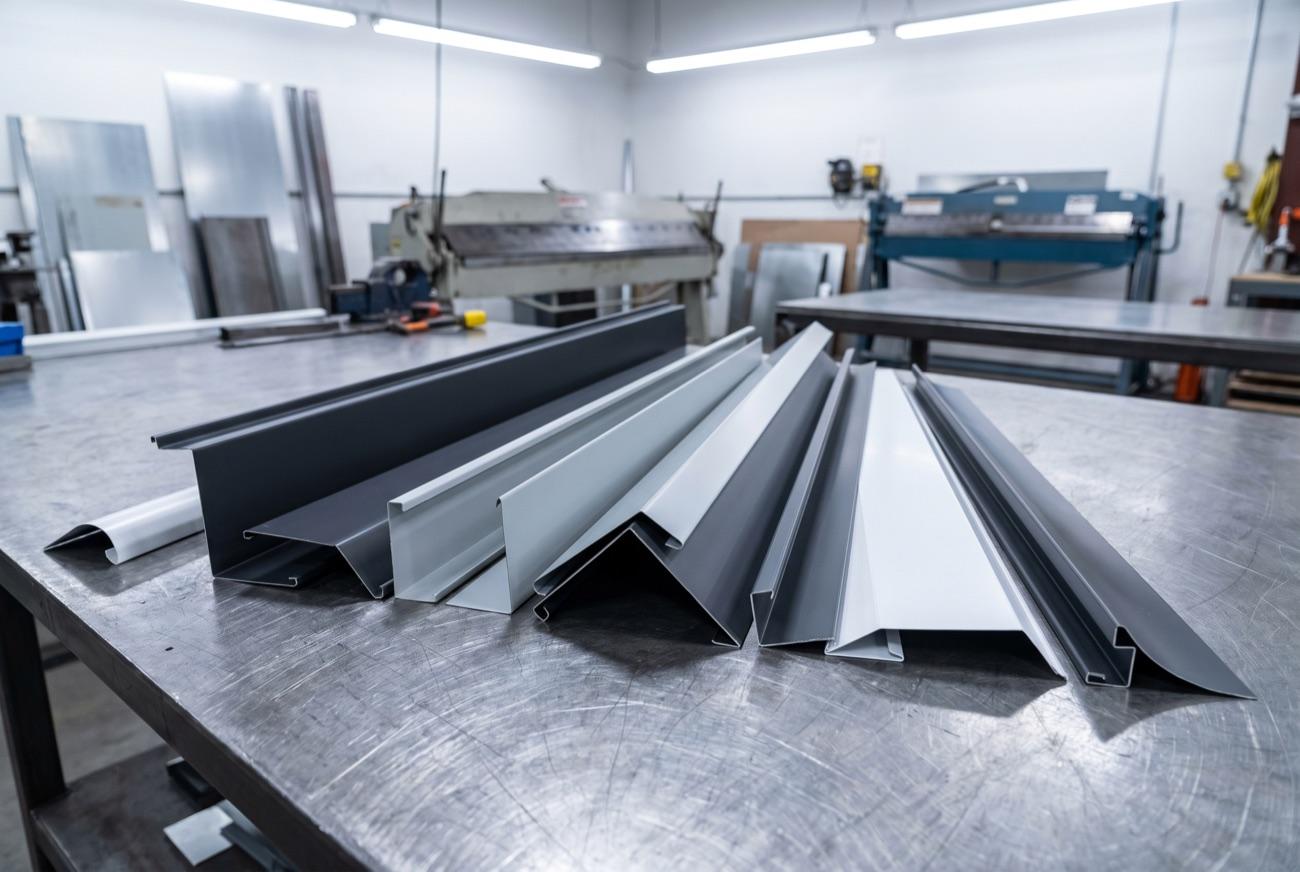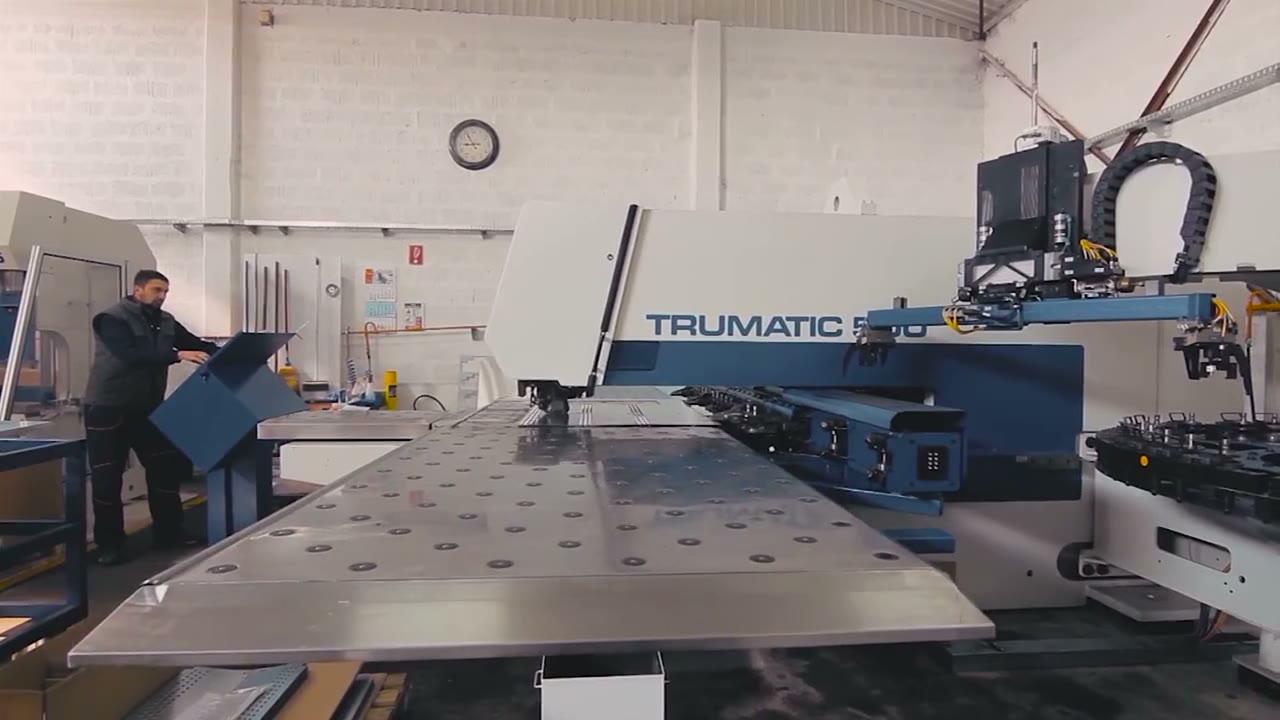
Every spring we get the same phone call. A siding crew is staged, the weather finally turned, and the super wants drip edge and Z-flashing on site by Thursday. Problem is, nobody settled the profiles back in November. That is the whole case for custom flashing order planning in BC: do the boring part in December and January, and spring just runs. The flashing is almost never the hard part of the job. It is the part that gets ignored until it is the only thing standing between your crew and a start date.
We are a sheet metal shop in Delta. We watch this pattern every year, and it is almost always avoidable.
Flashing is the thing that stalls a spring start
Siding and panel material usually gets ordered early because everyone knows it has a supply chain behind it. Flashing gets treated as an afterthought, something to figure out "closer to the date." But flashing is custom-bent metal, made to your profile, your gauge, your length. If you wait until the crew is standing in the driveway to think about your drip edge and parapet caps, you have built a gap into your own schedule. Winter has no such pressure. Use it.
December and January are dead weeks on most job sites anyway. That is exactly when a flashing schedule costs you nothing but an afternoon at a desk, and pays you back in March when everyone else is scrambling.
Build the schedule off the drawings, not off memory
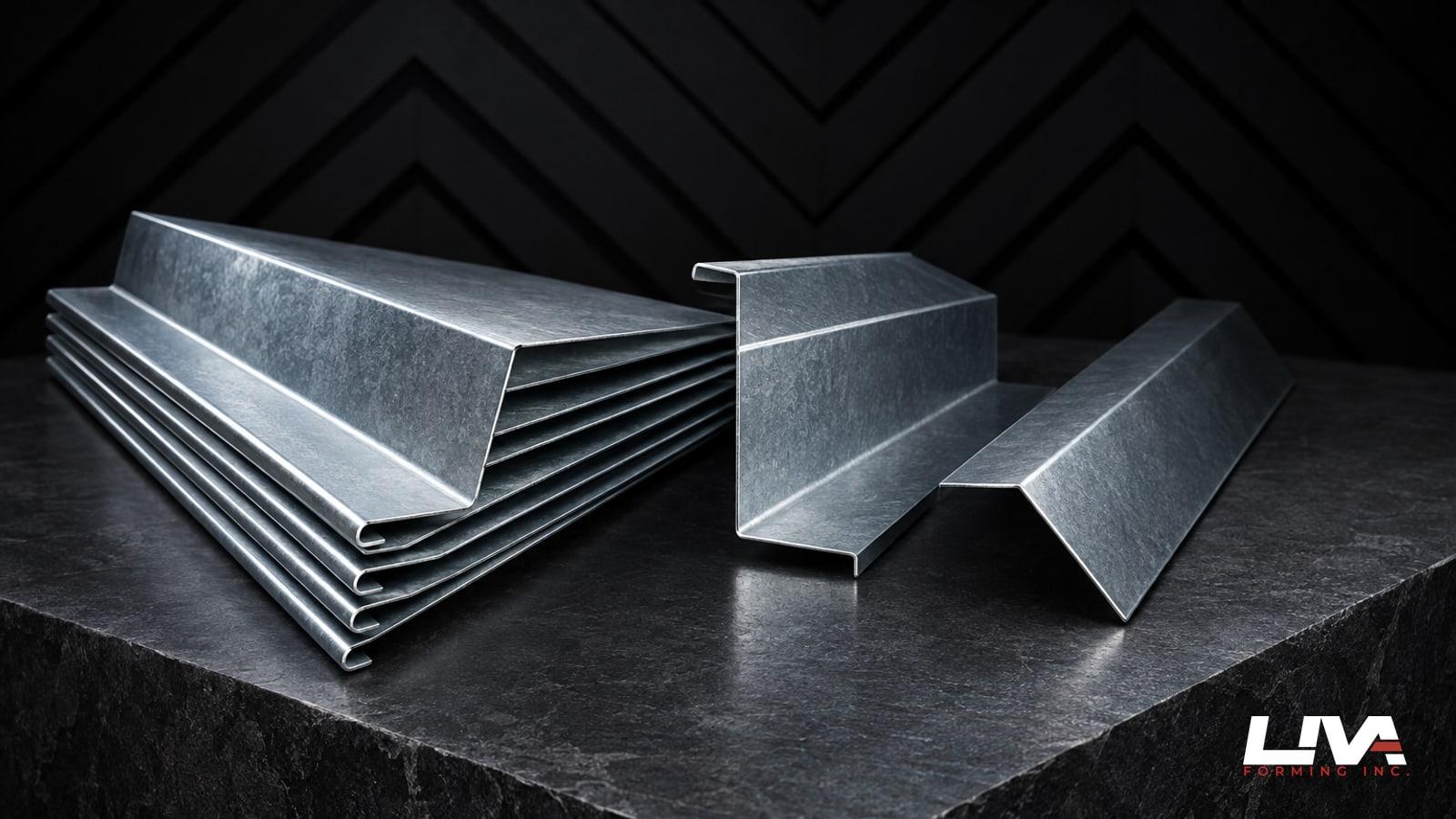
Start with a walk of the job, or the drawing set if the building is not framed yet. For every wall and roof transition, write down four things: profile, location, count, and length. Drip edge at the eaves. Z-flashing above window and door heads. Kick-out at the roof-to-wall junctions. Parapet cap on the flat sections. Counterflashing where the cladding meets masonry or a chimney. Soffit and fascia trim wherever the roofline is exposed. This sounds obvious written out. It is still the step almost nobody does properly, because it means actually counting pieces instead of guessing a lump sum. Once you have that list, you have a real flashing schedule, not a feeling.
If you want a deeper walkthrough on kick-outs specifically, we have covered why stock pieces fail at roof-to-wall junctions and what a custom-cut piece needs instead. Worth a read before you finalize that part of the schedule.
Lock the profile once, repeat it forever
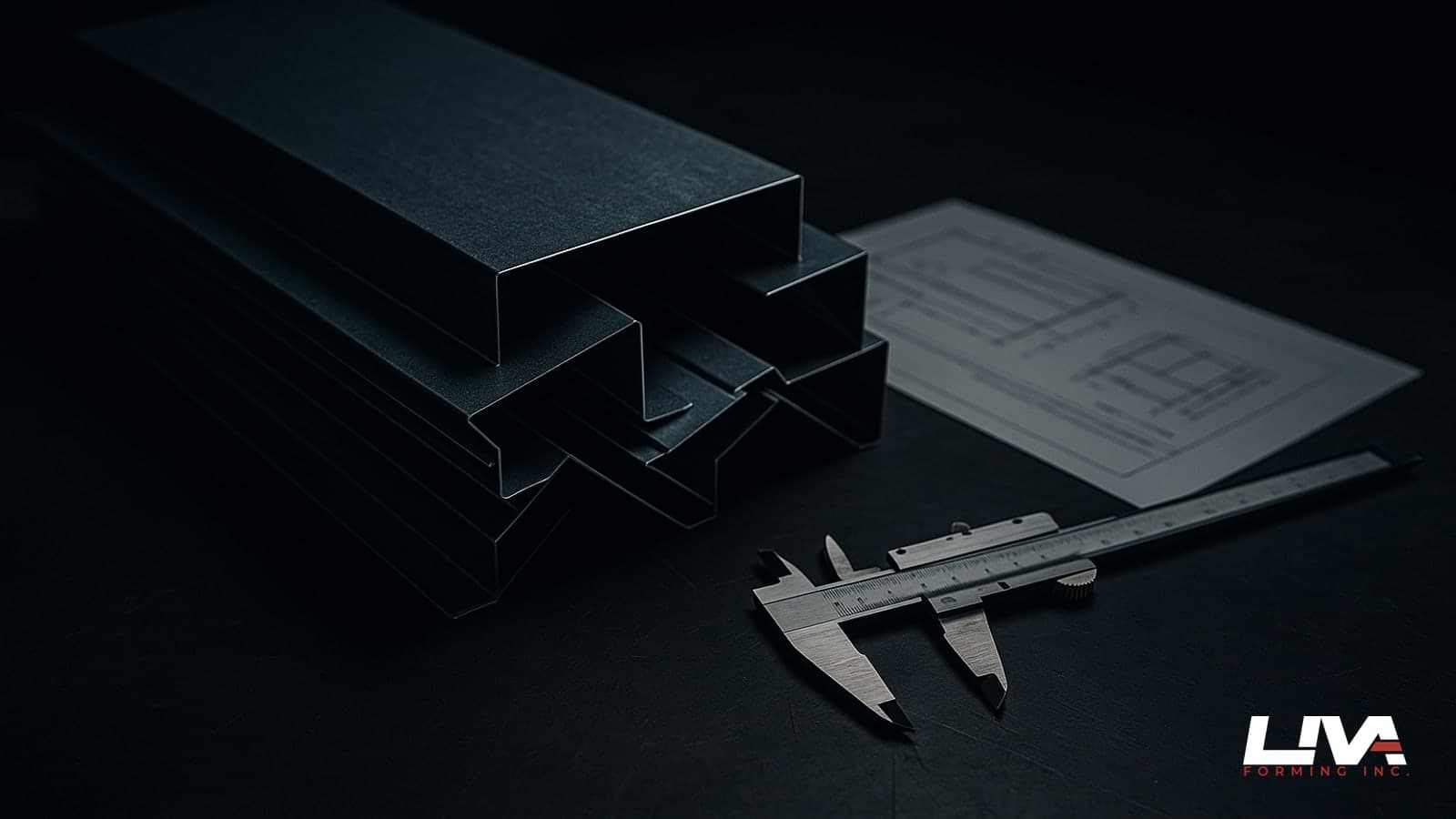
Here is the part that actually saves you money and headaches: lock each profile now, with a sketch, a PDF, or a DXF file, so the exact same piece gets made again on the next phase or the next job without anyone re-explaining it. We run custom fabrication off whatever drawing you give us. A phone sketch with dimensions is enough. A PDF from your drawing set is enough. A DXF is ideal if you have one. Say a 10 ft parapet cap needs a 2 in overhang and a hemmed drip leg on both sides. Draw that once, correctly, and every future order for that same cap is a repeat, not a renegotiation. That is the value of locking it in winter when nobody is rushing you.
If you are not sure how to describe a profile precisely, use our Liva Sketch tool at /sketch. It lets you draw the cross-section right on your phone, with legs and hems marked, and it is built specifically for contractors who know the shape but not the drafting language. That sketch becomes the reference for every repeat order after.
Choosing gauge, material and colour before spring, not during it
Material and gauge decisions belong in winter too. We work in prepainted steel, commonly 24, 26, or 29 gauge, with 22 gauge available on request. Galvalume and galvanized steel cover the unpainted and structural side, including 16 to 20 gauge stock for hat track and Z-girt. Prepainted aluminum comes in 0.032 in and 0.040 in, plus a perforated aluminum option for screening and venting details. If you are weighing 24 against 26 gauge for a specific flashing run, that comparison is worth its own read: 24 vs 26 Gauge Flashing: Which Gauge for Which Part breaks down where the heavier gauge actually earns its keep.
Colour is the easy decision, and it is the one contractors agonize over anyway. We pull from three charts: Classic SMP with 40 colours, Signature PVDF with 35 finishes, and a Printed Series with 22 wood and metal looks. SMP and PVDF both carry a 40 year limited finish warranty, polyester runs 20 years. Here is the part worth repeating to whoever is holding the budget: colour does not change the price. The quote is driven by developed width and gauge, not by which chip off the chart you picked. So there is no reason to delay a colour call to save money. Pick it when you pick the profile, and move on.
All our flashing work, including the profiles, materials, and finish selection above, lives under custom flashing if you want the full rundown of what we cut and fold.
One order per building beats five small ones
Once your schedule is built and your profiles are locked, decide how you want to batch the order. For a single building, one combined order covering every flashing type on that structure is almost always the right call. It is one delivery, one invoice, and one shop run instead of five separate ones trickling in over three weeks. For a multi-phase project, a per-phase order makes more sense: you are not carrying material for phase three while phase one is still being framed. What you want to avoid is the habit of ordering flashing piecemeal, a dozen drip edge pieces this week, six Z-flashings next week, because someone remembered mid-install. Small reactive orders are how shops end up juggling your job against everyone else's, and how your crew ends up standing around waiting on a piece that could have shipped with everything else.
Holiday closures: ask, don't guess
Every shop in the Lower Mainland closes for some stretch around the holidays. Nobody standardizes it, and nobody posts it six months in advance. The fix is simple: when you send in your quote request in December, ask directly for our open dates over the holidays. Do not assume, and do not order on the last working day before a closure expecting a miracle turnaround. Build your order date around the answer, not the other way around. This is the single most avoidable scheduling mistake we see every winter. A five-minute question prevents a two-week surprise.
Delivery or pickup, and when to lock it in
We deliver to job sites across the Lower Mainland: Delta, Surrey, Burnaby, Richmond, North Vancouver, Abbotsford, White Rock, Coquitlam, wherever the work is. Pickup in Delta is also an option if your crew is already routed through here. Once your flashing schedule is built and your order is placed, tell us the delivery window you need and we will work the run against it. Standard runs ship in 3 to 5 business days once ordered, and quotes themselves usually go out the same day you send the take-off. That means if you get your schedule finished in January, you can have real ship dates in hand before February, not a vague promise.
What we need from you to turn a plan into numbers
A same-day quote needs specifics, not a verbal description. Send us the profile (sketch, PDF, or DXF), the material and gauge you want, the colour or finish if you have picked one, the length of each piece, and the count. If a run is longer than 12 ft, know going in that it will take a joint, a lap, an S-lock, or a horizontal trim break, so plan that into your elevation now rather than discovering it on install day. The more of this you have nailed down in your winter planning session, the faster the quote turns into a locked number, and the faster that number turns into a ship date you can hand to your super.
For a plain-language walk through what a quote actually contains line by line, see How to Read a Metal Fabricator's Quote: Line Items, Gauge, and Finish Codes. It pairs well with the planning work above, especially if this is your first season ordering flashing on this scale.
The payoff in March
None of this is complicated. It is mostly a checklist and a willingness to spend a cold afternoon counting flashing runs instead of waiting for spring to force the issue. Shops get busy the second the weather breaks, and so does every trade ahead of you on the schedule. The contractors who walked their jobs in January, locked their profiles, and placed batched orders ahead of any closure are the ones whose crews are cutting siding in April instead of waiting on a Z-flashing that should have shipped weeks earlier.
If you have a job list building up for spring, start now. Sketch the profiles, note the gauges and colours, and send your sketch for a quote so you have real numbers and a real ship date before the rush even starts.
Frequently asked questions
When should we start planning flashing orders for spring siding jobs in BC?
December and January are the right window. Job sites are quiet, so you can walk the job or the drawings, build a flashing schedule of profile, location, count and length, and lock every profile with a sketch, PDF or DXF before anyone is under pressure. Quotes usually go out the same day, so a winter planning session turns into real ship dates well before spring.
Does choosing a colour or finish change the price of custom flashing?
No. Pricing is driven by the developed width of the profile and the gauge, per length, not by the colour chosen. You can pick from Classic SMP, Signature PVDF or Printed Series charts without affecting cost, so there is no reason to delay that decision to save money. Lock the colour at the same time as the profile.
Should we place one flashing order per building or several small ones?
For a single building, one combined order covering every flashing type is usually better than ordering piecemeal, since it means one delivery and one shop run instead of pieces trickling in over weeks. For multi-phase projects, a per-phase order makes more sense so you are not carrying material for a phase that is not framed yet.
What information does a shop need to give us a same-day flashing quote?
Send the profile as a sketch, PDF or DXF, the material and gauge, the colour or finish if decided, plus the length and count of each piece. Runs longer than 12 ft need a joint such as a lap, S-lock or horizontal trim break, so plan that into the elevation ahead of time rather than discovering it during install.