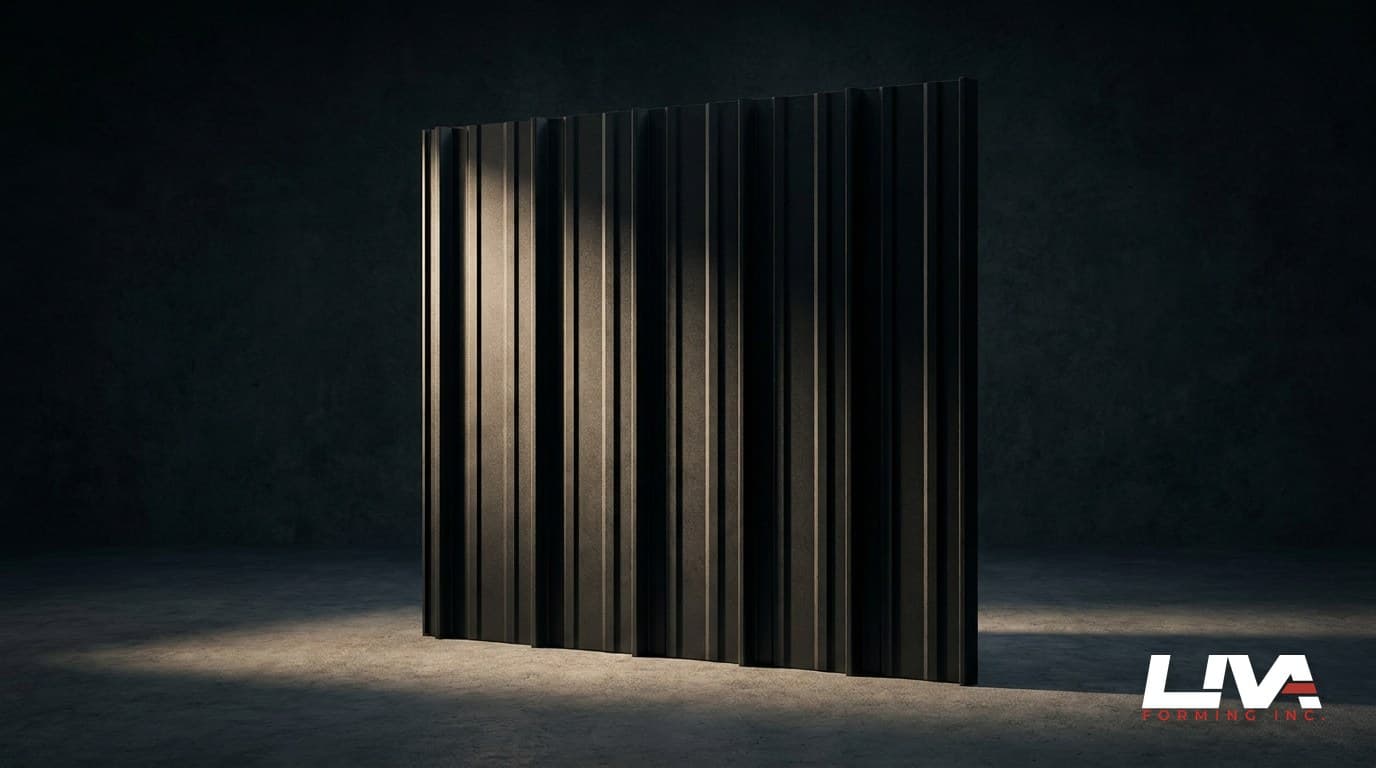
A modern farmhouse client wants vertical metal siding with a 1-inch proud batten every 12 inches. The architect drew it as a continuous run, 18 feet tall, with no horizontal joints visible from the street. Your local distributor has 3 stock B&B profiles, none of them match, and the project starts framing in six weeks.
That's roughly the call I get two or three times a month from siding contractors across the Lower Mainland. Board and batten metal siding in BC has moved from a niche request to a regular ask, and the gap between what's on the truck at the big suppliers and what designers are actually drawing keeps widening. This guide walks through how to spec it so you get a quote back the same day and a panel that installs clean on the wall.
Where board and batten metal siding lands on a BC project
Three project types drive most of the volume I see:
- Modern farmhouse residential. Usually a 1,800–3,500 sq ft custom build in places like North Vancouver, South Surrey, or the Fraser Valley. Architect wants the vertical batten look in standing-seam metal instead of cedar, mostly for fire resistance and maintenance.
- Heritage-adjacent rebuilds. Mount Pleasant infills, character homes in Kitsilano, where the planner wants vertical board-batten massing to match the street but the owner doesn't want wood. Custom profile matches the original board width.
- Light commercial and agricultural-style retail. Wineries, breweries, garden centres in Langley and Abbotsford. Long runs, big panels, board and batten metal siding BC fabricators handle in 24 or 22 gauge for the wind exposure.
In every one of these, the contractor has a choice: pick a stock B&B profile from a national supplier and live with the proportions, or have a custom profile brake-formed locally. The economics tip toward custom faster than most contractors expect.
Stock B&B metal panel profiles and where they fail
The two stock board and batten metal panels you'll see on most BC supplier shelves run a 12-inch board width with a 1-inch batten projection, or a 16-inch board with a 1.5-inch batten. Both are typically 26 gauge prefinished steel, snap-lock or nail-strip, and they ship in 12, 16, and 20-foot lengths.
They work fine when the design tolerates them. They fail when:
- The batten depth in the drawing is shallower than 1 inch (a lot of contemporary designs call for a 5/8 reveal that reads cleaner from 20 feet away)
- The board width needs to align with window mullions or column spacing that isn't a multiple of 12 or 16
- The wall height runs past 20 feet and the designer doesn't want a horizontal seam
- The required color isn't on the stock chart and the supplier minimums for custom-color stock panels run 2,000+ LF
- The job is in a coastal Delta or Steveston location and the stock 26 gauge prefinished steel doesn't have the right coating for salt-air exposure
When two or more of those land on the same project, custom usually wins on both fit and total install cost.
Custom board and batten metal siding: what changes
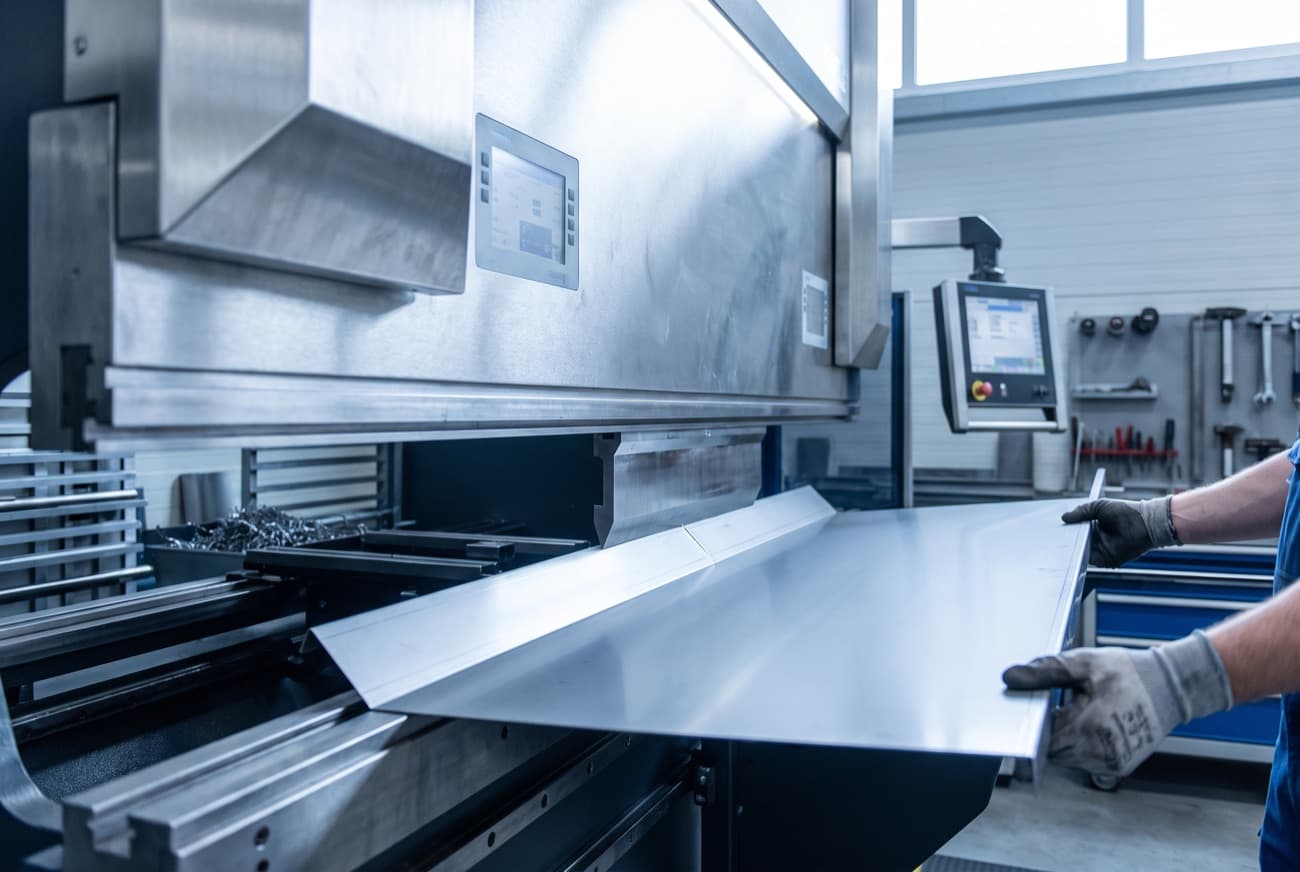
Custom board and batten in our shop is a brake-formed panel, not a roll-formed one. The press brake bends each board to spec, batten cap goes on as a separate piece or as an integrated rib depending on the profile. That gives the contractor four things the stock panel doesn't:
- Any board width from 6 inches to about 22 inches. Pick whatever lands on the framing or the architectural module.
- Batten depth from 1/2 inch to 2 inches. Deeper batten reads as more traditional, shallower as more modern.
- Custom panel length up to about 24 feet in 22 gauge, 20 feet in 24 gauge. Long runs without a horizontal seam.
- Any finish the coil house carries. PVDF, polyester, Galvalume, prefinished aluminum, Cor-Ten. Color matched to a sample, RAL number, or an existing siding pull.
The cost difference vs stock B&B runs about $1.50–$3.00 per LF of finished panel for residential gauges, less than that as the run size grows. On a typical 2,800 sq ft modern farmhouse in South Surrey we'd be talking $4,200–$8,400 of premium for the custom profile vs the stock equivalent. Most contractors recover that on install labor alone because the panel actually lands where the drawing says it should.
How to spec custom board and batten metal siding BC fabricators can quote same-day
When the RFQ comes in with the four pieces of information below, I can have a quote back in 3–4 hours. When any of them are missing, the file sits in the takeoff pile until I get the contractor on the phone.
1. Board width and batten profile
Give me the finished face dimensions, not the flat blank width. Specifically:
- Board face width (the flat between battens)
- Batten projection depth (how far the batten stands proud of the board face)
- Batten cap width (the visible top of the batten)
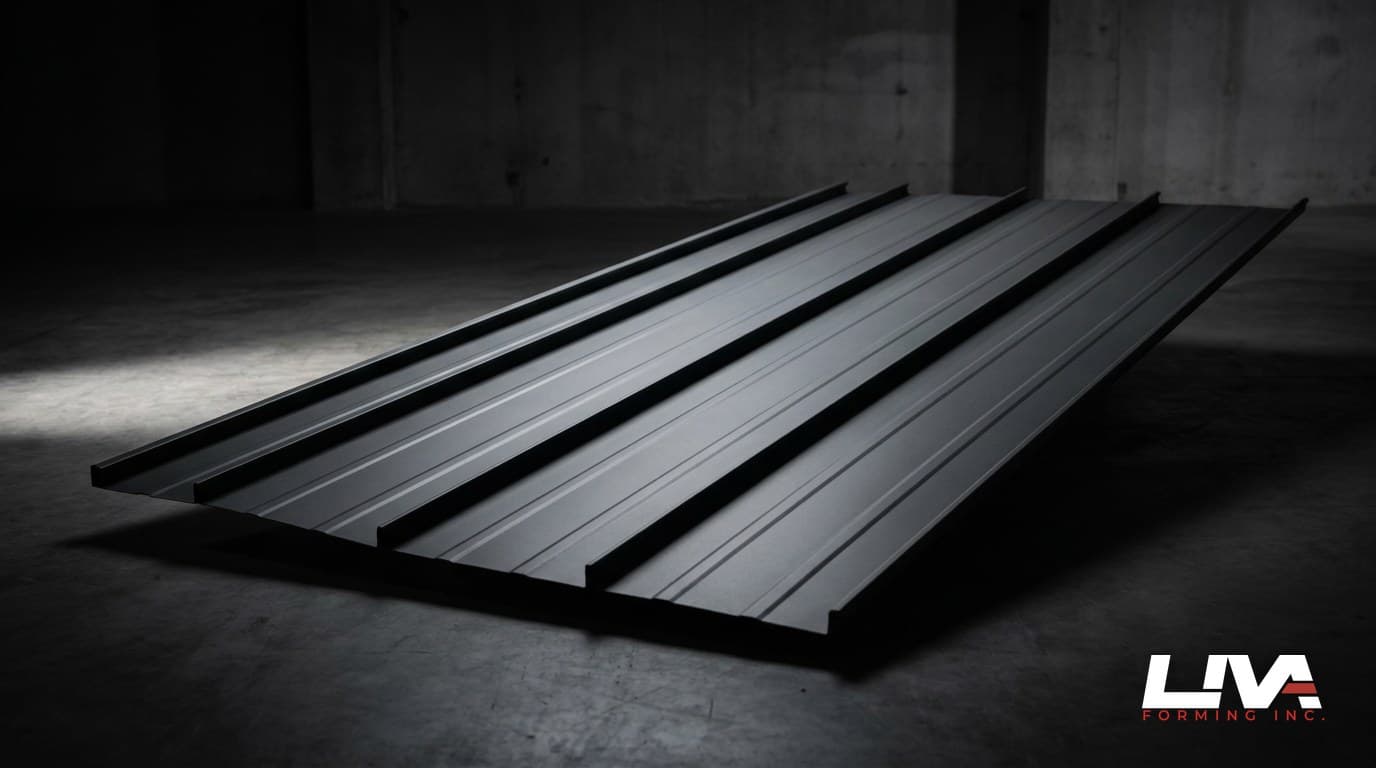
- Whether the batten is integral (formed as a hat-rib in the panel) or applied (separate snap-on cap)
A sketch on a napkin works. A PDF section detail works. A SketchUp screenshot works. What doesn't work is "make it look like the one on Pinterest."
2. Wall heights and panel run lengths
Two numbers: the longest single panel you need and the total LF of board across the project. The longest single panel determines material gauge and coil width. The total LF determines whether a custom run makes economic sense (it almost always does past about 800 LF; below 400 LF the tooling and setup time start to eat the savings).
3. Material, gauge, and finish
For BC exposure, the practical menu for board and batten metal siding looks like this:
- 24 gauge prefinished steel, PVDF coating. Most common for residential, runs $4.50–$6.50 per LF of finished panel in standard colors. PVDF holds color for 30+ years, including the south elevations in the Okanagan and the salt-exposed faces on the Sunshine Coast.
- 22 gauge prefinished steel, PVDF. Commercial and high-wind sites like exposed Squamish or Whistler builds. About $5.50–$8.00 per LF. The extra thickness keeps oil-canning down on wider boards.
- 0.040 prefinished aluminum, PVDF. For true coastal exposure (Tsawwassen, White Rock waterfront, Bowen Island). $6.50–$9.00 per LF. Won't red-rust at fastener heads, which is the typical failure on stock steel B&B at 10–12 years on the coast.
- 24 gauge Galvalume, mill finish or clear-coat. For industrial-modern aesthetic. Runs $4.00–$5.50 per LF. Patinas over 5–8 years; client needs to actually want that look.
I won't quote 26 gauge custom B&B for residential walls past 12 feet. It oil-cans on wide boards and the inspectors in Surrey and Langley have started writing it up.
4. Fastener pattern and trim package
This is the spec that gets skipped most often and creates the most install headaches. Two pieces:
- Fastener type and exposure. Concealed clip or exposed pancake-head? If exposed, what spacing and what color cap? Most BC modern-farmhouse jobs want concealed fasteners, which means integral hat-batten panels with clips behind the boards.
- Trim package. J-trim or open hem at jambs, drip cap at heads, kickout flashing at roof intersections, inside and outside corner profiles. If we're bending panels we'll bend the matching trim from the same coil, which kills color-match issues that show up when contractors mix our panels with stock trim from a different supplier.
The matching trim is where a lot of board and batten metal siding installs lose their tight look at year three. Same coil, same finish run, same shop. See our custom flashing capabilities for the trim side of the package.
Color matching: what actually works on a custom run
Three color-spec scenarios cover most BC requests:
Manufacturer standard color from the coil chart. Easiest. Quote turns around in hours, lead time on raw coil is usually 2–3 weeks if it's not in stock at the regional warehouse in Surrey or Coquitlam.
RAL or NCS number. Doable on most PVDF lines if the order quantity hits the coil minimum (usually 2,500–5,000 lbs depending on the coil house). For a typical residential B&B job that's about 4,500–9,000 LF of panel. Above that, custom color is no premium; below, expect $0.40–$0.80 per LF surcharge and a 5–7 week lead time.
Match to an existing sample. Send a 4x4 inch piece of the original siding or trim. The coil house runs a spectro match and sends back a sample for sign-off before the production run. Adds about a week to lead time. Works well for additions to heritage homes in Mount Pleasant or Strathcona where you're tying into the original color.
A note on metallics and micas: they look different at different viewing angles, so the panel orientation on the wall matters. Coil-coated metallic panels need to all run the same direction. Plan it before you cut, or you'll have one wall that reads silver and one that reads charcoal.
Forming process: brake vs roll
Most custom board and batten metal siding in BC comes off a press brake. The reason is volume: a typical residential job sits between 1,500 and 4,500 LF of finished panel, below the break-even point where roll-form tooling pays back. Press brake setup is about an hour for a new profile; roll-form tooling is $15,000–$40,000 plus a 6–10 week lead time.
For runs over about 8,000 LF on a single profile (large multifamily, commercial), roll-forming starts to win on labor cost and consistency. We do both in our shop, and on jobs that hit the threshold we'll quote both options so the contractor sees the real economics. More on the process decision in our metal forming guide.
Lead times you can actually plan around
Realistic numbers for board and batten metal siding from a Lower Mainland custom shop:
- Same-day quote if the four spec items above are in the RFQ
- 3–5 business days for production once a sample/proof is signed off, on in-stock standard-color coil
- 3–4 weeks total from order to delivery on custom-color PVDF runs (the coil-coating run drives the schedule)
- 5–7 weeks on coastal-grade aluminum custom color, because the aluminum coil supply runs longer than steel
If a contractor calls me 8 weeks out from a planned install date, we can hit it with custom color and custom profile in either steel or aluminum. Inside 4 weeks, we're either using stock-color coil or a stock-color custom profile. Inside 2 weeks, we're doing a stock profile in a stock color with the best color match we can offer.
For 20+ years I've been telling contractors the same thing on lead time: it's not the bending that takes the time, it's the coil. Order coil early on custom-color jobs and the rest follows.
What a "ready to quote" board and batten RFQ looks like
Pulled from an actual contractor email last month, paraphrased. This RFQ got a quote back in under 4 hours:
Hi, working on a residence in North Van. Need ~2,400 LF custom B&B metal siding plus matching trim package. Board face width 11", batten depth 5/8", integral hat-batten with concealed clips. Material: 24ga prefinished steel, PVDF, color match to attached sample (custom green from the existing garden shed). Longest panel run is 18'. Site delivery to North Vancouver, need on-site by July 15. Trim package: jamb trim, drip cap, inside and outside corners, bend from same coil. Can you quote?
That email has every piece of information needed. The contrast with the RFQ that bounces back with five questions:
Need custom board and batten metal siding for a job, ~2,000 sq ft of wall. Can you give me a budget number?
The second one isn't a quote request, it's the start of a conversation. The contractor who sends the first one gets a real number in hours and walks into the client meeting with a hard quote.
When stock B&B is still the right call
I'll talk a contractor out of custom B&B when the total wall area is under about 600 sq ft (small accent walls), when the design tolerates 12 or 16-inch boards and the architect doesn't care about millimeter-level batten depth, or when the timeline is tight enough that custom-color coil won't land in time. For everything else, custom usually wins on the install side even before the aesthetic argument.
Working with a local custom shop
We've been bending custom flashings and custom cladding panels in BC for 20+ years out of our Delta shop. Board and batten panels run alongside our custom standing seam panels and the custom flashing work, on the same press brakes, with the same coil suppliers. That means same-coil trim packages, same finish runs, and lead times measured against what actually happens on Lower Mainland job sites instead of what the spec sheet from a national distributor says.
If you've got a board and batten metal siding spec coming up, send the four pieces above and we'll have a quote back same-day. Send your spec for a quote with your sketch or PDF and we'll take it from there.
Frequently asked questions
When does custom board and batten beat a stock B&B panel?
Stock panels come as a 12-inch board with a 1-inch batten or a 16-inch board with a 1.5-inch batten, usually 26 gauge. They fail when the batten needs to be shallower, the board width has to land on a module that isn't a multiple of 12 or 16, the wall runs past 20 feet with no seam, or the color isn't on the chart. Two of those on one job? Custom usually wins.
What gauge and material should I spec for metal board and batten in BC?
For residential, 24 gauge prefinished steel with PVDF, roughly $4.50 to $6.50 per LF. Commercial and high-wind sites go to 22 gauge. True coastal exposure calls for 0.040 prefinished aluminum, which won't red-rust at fastener heads the way stock steel B&B does at 10 to 12 years on the coast. We won't quote 26 gauge custom B&B for residential walls past 12 feet. It oil-cans.
How long does a custom board and batten order take?
Quotes come back same-day when the RFQ covers the four spec items: profile, run lengths, material and finish, fasteners and trim. Production is 3 to 5 business days on in-stock standard-color coil once the proof is signed off. Custom-color PVDF runs 3 to 4 weeks total. Coastal-grade aluminum in a custom color takes 5 to 7 weeks. The coil sets the schedule, not the bending.
How much more does a custom profile cost than stock?
About $1.50 to $3.00 per LF of finished panel at residential gauges, and less as the run grows. On a typical 2,800 sq ft modern farmhouse that's $4,200 to $8,400 of premium over the stock equivalent. Most contractors recover it on install labor. Below 400 LF, setup time starts eating the savings. Past about 800 LF, custom almost always makes sense.