Last spring, a North Vancouver contractor called me at 7:30 a.m. about a re-roof on a 1947 heritage off Lonsdale. The original roof was a custom-formed standing seam, 1.5" rib, mechanical lock, with sections that ran nearly dead flat where the eyebrow dormer flared out. The supply yard had offered him a 1" snap-lock off the shelf and he was about to order it before he called one more shop for a quote.
That call is what most of these snap-lock vs mechanical seam decisions look like in the Lower Mainland. The contractor knows what was on the building. The supply yard knows what's in stock. Nobody on the call has actually run both systems on a steep, slow-water roof through a full BC winter. So the wrong panel gets quoted, the install crew tries to make it work, and three winters in there's a leak above the kitchen.
This is a working contractor's decision guide for choosing between snap-lock and mechanical seam panels on real BC jobs. Pitch limits, watertightness numbers, install labor reality, what the panel actually costs in CAD per LF, and when custom-forming a mechanical lock pays off versus running stock snap-lock from a yard.
The two systems in shop terms
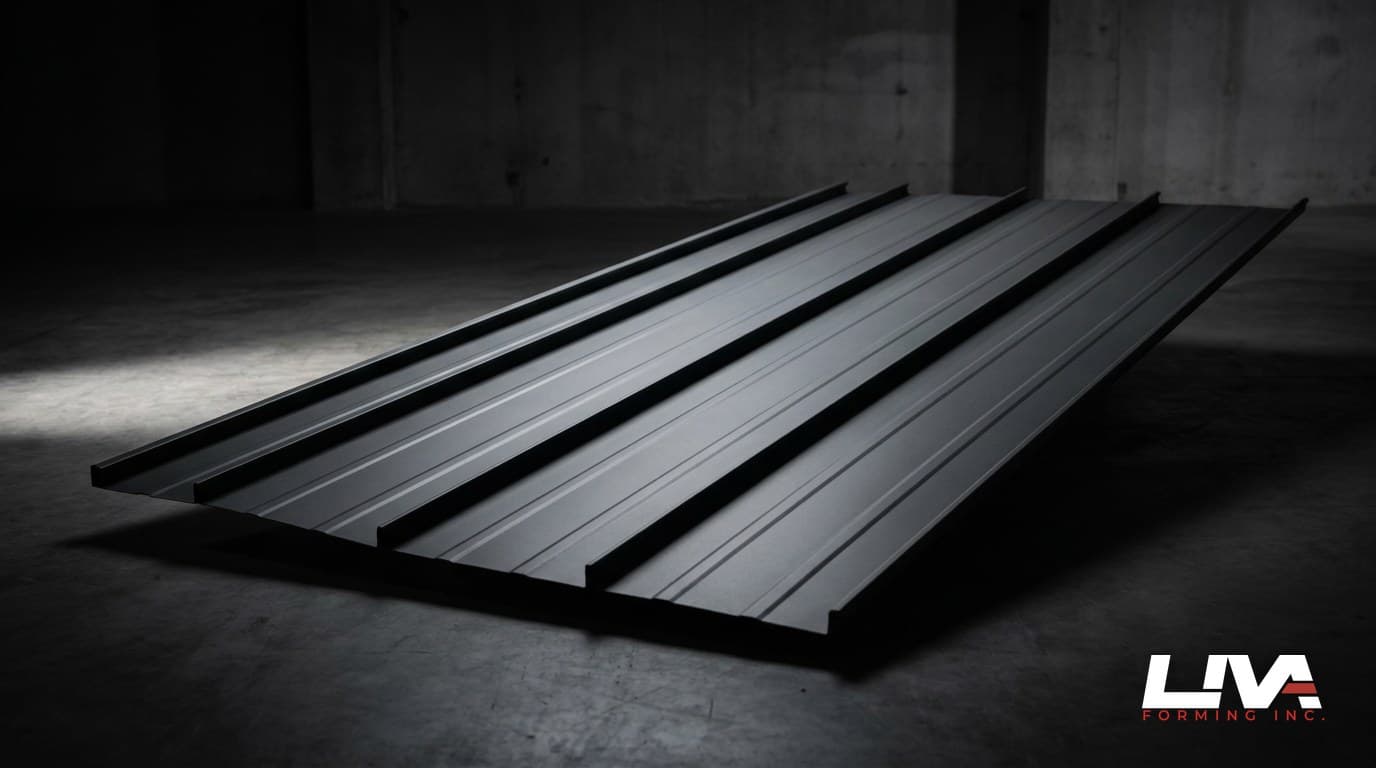
A snap-lock panel is exactly what it sounds like. The male leg on one panel snaps into the female leg of the next panel by hand or with a rubber mallet. No seamer, no second pass. Most stock profiles run 1" or 1.5" rib height, 12" to 18" effective panel width, 24 or 26 gauge prefinished steel or Galvalume.
A mechanical seam panel has a male and female leg that get folded over each other after the panel is fastened down. Single-lock is a 90° fold. Double-lock is the 180° version where the seam is closed over itself twice. You need a hand seamer or a powered seamer running down the rib to make it. Rib height is usually 1.5" or 2", panel widths are similar to snap-lock, and gauge runs from 24 down to 22 on commercial work.
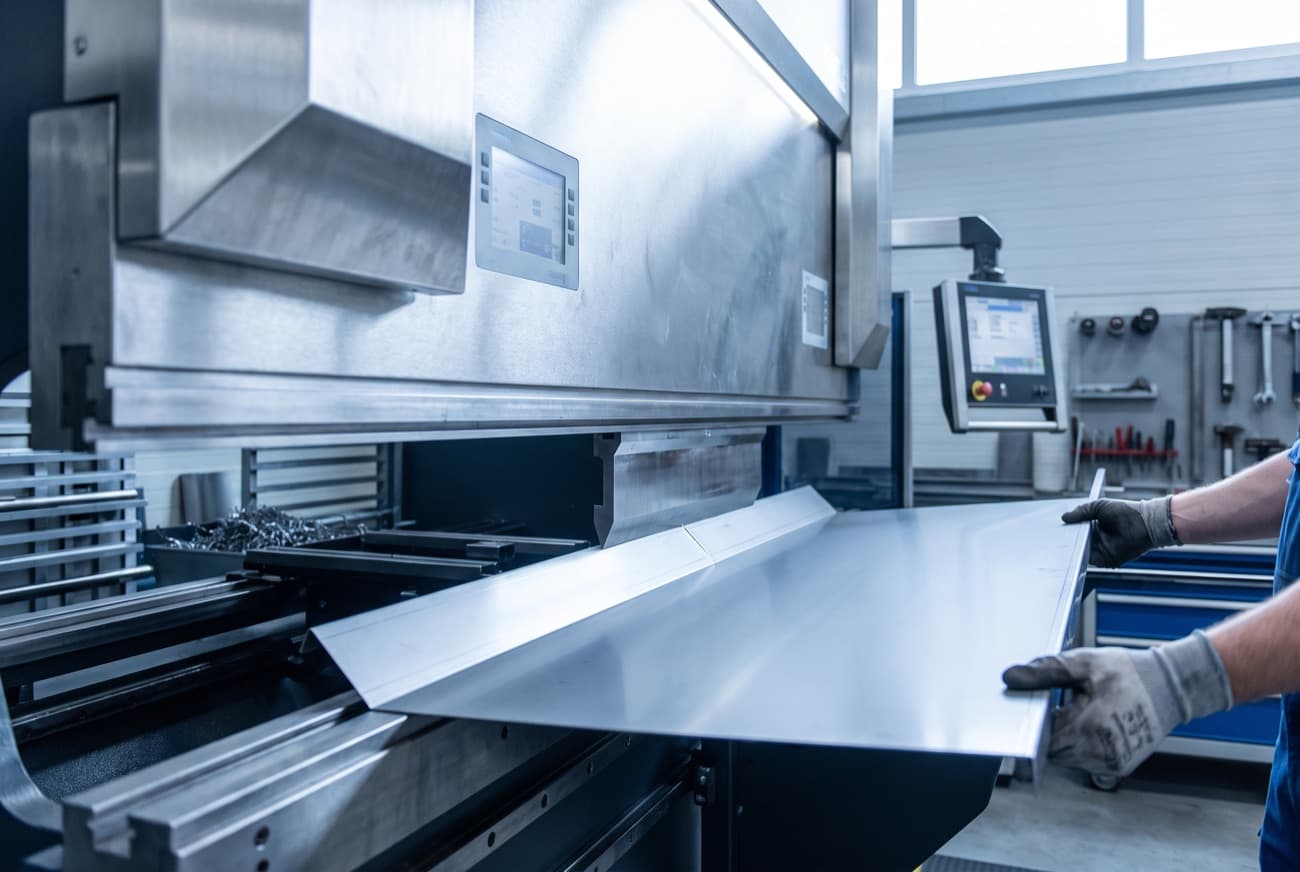
On the shop floor, both panels come off a coil. Snap-lock runs through a roll former, mechanical seam goes the same way for stock profiles or a long press brake for custom shapes. Same coil stock, same finishes available. The cost difference shows up in two places: the seam itself (mechanical adds tooling and a labor pass on the roof) and the way each handles water at low pitches.
Pitch limits: the number that decides most jobs
This is where most BC contractors get steered wrong by counter staff who haven't read the manufacturer's installation literature in a while.
Snap-lock panels are rated for 3:12 minimum pitch by most manufacturers. Some 1.5" profiles will go to 2:12 with butyl sealant in the rib. The reason is geometry: the snap engagement leaves a small horizontal shelf where water can sit. Above 3:12 it sheds before capillary action pulls it under. Below 3:12 it doesn't.
Mechanical single-lock is rated for 2:12 minimum in most manufacturer specs. The 90° fold breaks the horizontal shelf and adds enough resistance to handle slower water.
Mechanical double-lock with in-seam sealant goes down to 0.25:12, basically flat. This is the only field-formed metal roof you can put on a 1/4-in-12 commercial deck and reasonably expect to hold up.
For BC, this matters more than it does in drier climates. The Lower Mainland gets 1,500 to 1,800 mm of rain a year on the coast. A 2:12 snap-lock in Burnaby will hold water on the rib shelf for the wet season and the sealant will eventually fail. A mechanical double-lock on the same building gets you through the winter every time.
Watertightness ratings
Independent ASTM E1646 and E1680 testing puts the systems in clear order:
- 1" snap-lock, no sealant: water-shedding only. Fine above 4:12 in BC.
- 1.5" snap-lock with butyl: light water-resistant. OK at 3:12.
- Mechanical single-lock with sealant: water-resistant. Good at 2:12.
- Mechanical double-lock with sealant: water-tight under static head. Down to 0.5:12 reliably.
Most BC inspectors don't ask for the test data on residential jobs. On commercial work in Surrey, Richmond, and the Port Coquitlam industrial parks, they will, especially for any low-slope re-roof where the building envelope inspector has been burned before.
Installation labor: what each system costs in crew hours
A two-person crew running 1.5" snap-lock on a clean gable in Cloverdale will hit 400 to 500 LF of panel per day after the first day. Setup, eaves trim, and ridge cap eat the first morning. Day two onward is fast.
The same crew on mechanical single-lock with a powered seamer: 250 to 350 LF per day. The seamer adds a pass. Setup also takes longer because each panel has to be square before the seam is closed. You can't slide it after.
Mechanical double-lock: 200 to 300 LF per day. Two seamer passes, slower walking speed, more attention on alignment.
At a Lower Mainland labor cost of roughly $75 to $95/hour fully loaded for a finish roofing crew, that delta is real money. A 4,500 LF job (about 45 squares) of standing seam runs roughly:
- Snap-lock install labor: $5,000 to $7,500
- Mechanical single-lock: $7,500 to $11,000
- Mechanical double-lock: $9,000 to $14,000
Material isn't the main variable on a job that size. Labor is.
Tolerance reality on custom-formed panels
This part matters when you're calling a custom shop instead of pulling stock off the rack.
Roll-formed snap-lock holds ±1/16" on panel width across a 40-foot panel. The rib height holds ±1/32". That's tight enough for snap engagement to work consistently down the run.
Press-brake mechanical seam panels, the kind you'd order for a heritage match or a non-standard rib profile, hold ±1/32" on rib height at the press but can drift to ±3/32" on panel width across a 30-foot panel because of brake bed deflection. Anything longer than 30 ft, you order in two pieces and seam them on the roof.
Stock manufacturers don't usually quote those tolerances. A custom forming shop does, and you should ask. On a heritage match where the existing rib is 1-7/16" and not 1-1/2", that ±1/32" decides whether your new seam sits flush against the old one or stands proud by a hair.
Run-length break-even: when custom-forming makes sense
Stock snap-lock from a yard in Annacis Island or Surrey runs about $4.50 to $6.50 per LF in 24ga prefinished Galvalume, ready to pick up. No tooling, no setup, no minimum.
Custom-formed mechanical seam from a shop is roughly $6 to $9 per LF in the same gauge and finish once you're past the setup cost. Setup runs $200 to $400 depending on profile complexity. The coil minimum is usually 1,000 to 1,500 LF on a custom run.
So the break-even math: if your job is under 800 LF and stock snap-lock will pass code at your pitch, you almost always go stock. If your job is over 1,200 LF or the pitch forces you into mechanical lock, the custom shop wins on per-LF cost even after setup.
The dead zone is 800 to 1,200 LF on a 3:12 to 4:12 roof. That's where the call is judgment: what does the contractor want to install, what does the architect want to see, and how rare is the rib profile on the building.
Finish quality: where the systems differ visually
Snap-lock has a small horizontal shoulder at the snap point. From the ground at 30 ft you don't see it. From a deck below the roofline you do, and on architectural projects where the panel is on a vertical wall it shows up under raking light.
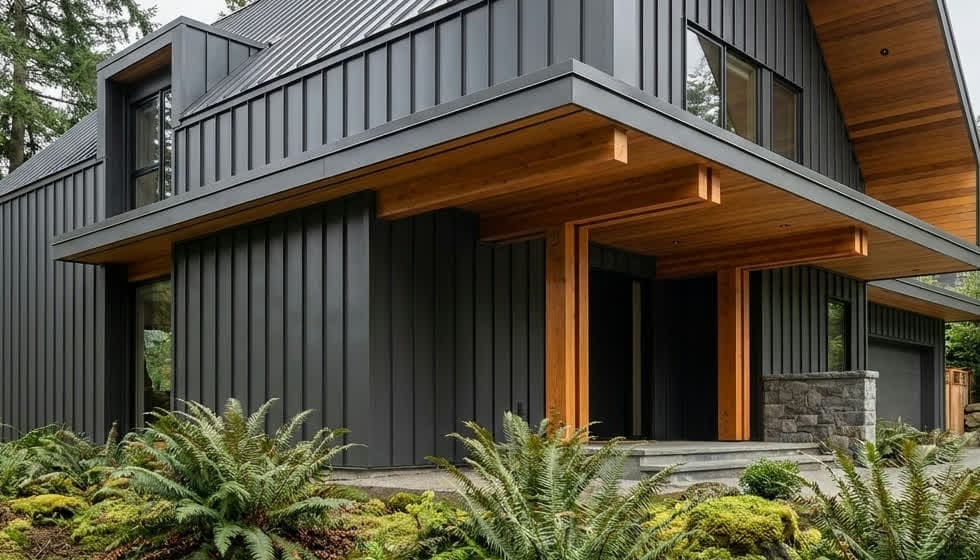
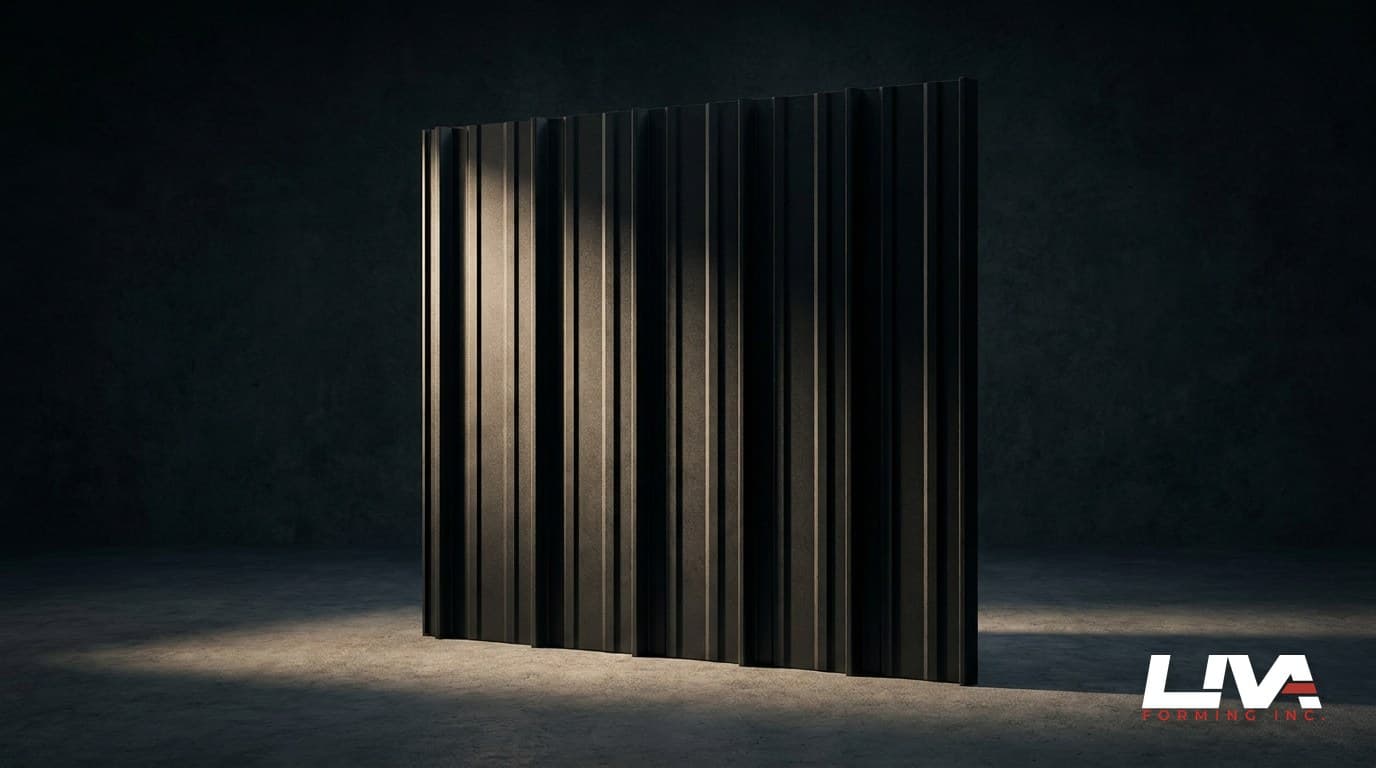
Mechanical seam, especially double-lock, gives a cleaner vertical line. The fold sits flush against the panel face. On a Mount Pleasant infill with exposed metal cladding, that visual difference is the reason the architect specified it on the drawings. When the panel moves off the roof and onto the wall, you're into custom cladding panel territory, and the seam choice becomes a facade decision as much as a weather one.
Coating systems are the same across both. PVDF (Kynar 500) for 30+ year color retention, polyester for budget jobs with 10 to 15 year color. Galvalume substrate either way. The seam choice doesn't change what's on the metal. Color samples and finish codes are the same conversation regardless of which system you pick.
Repair-ability: the long view
Snap-lock is the only standing-seam system you can take apart panel by panel without destroying the seam. Pop a strip off, replace a damaged panel, snap the new one in. Useful on hail damage or where one valley leak needs a single-panel swap.
Mechanical seam is one-way. Once the seam is closed, you cut the panel out to replace it, and the adjacent seams have to be re-formed against the replacement. On a 20-year-old roof, finding a panel that matches the existing finish for a single replacement is also a problem. Most contractors on mechanical seam re-roofs end up doing whole-slope replacements at end of life rather than chasing color matches on a 5×10 patch.
This isn't always a snap-lock win. Mechanical seam roofs last longer between any kind of failure to begin with, so the repair-ability advantage of snap-lock matters less on Pacific NW climate exposure than it would in a hail belt. Most snap-lock and mechanical seam roofs in the Lower Mainland age out at 35 to 50 years on the coating, not at the seam itself.
BC project types where each one wins
Snap-lock wins:
- Residential gable roofs 4:12 and steeper. Burnaby, Surrey townhome rows, North Van rebuilds with straightforward geometry.
- Anywhere a stock profile is acceptable and the job is under about 1,000 LF.
- Wall cladding above eye level where the snap shoulder isn't visible.
- Jobs where the contractor's crew doesn't own a powered seamer and the schedule won't carry one rental.
Mechanical seam wins:
- Low-slope commercial. Port Coquitlam light-industrial, Richmond warehousing, Delta agricultural builds.
- Heritage matches in Mount Pleasant, Strathcona, parts of New Westminster, where existing roofs are 1930s-1950s standing seam.
- Architectural cladding on infill housing where the panel face matters visually.
- Anything below 3:12 pitch with real weather exposure.
The trust on a job like this comes from running both systems for 20-plus years and knowing where each one falls down in the field. We've custom-formed mechanical-lock heritage matches for projects in Mount Pleasant and Strathcona, and run stock-profile snap-lock for siding contractors all over the Lower Mainland. The wrong panel on the wrong building is the most expensive mistake on a metal roof. It shows up two winters in and there's no fix short of stripping the slope and starting over.
What to send for a same-day quote
A real RFQ on a standing-seam job doesn't need much:
- Total roof area or LF of run
- Pitch (or pitches if you have multiple slopes)
- Panel orientation (which way the seams run)
- Substrate (deck type, insulation if any)
- Rib height and profile preference, or "match existing" with a clear photo of the existing seam
- Gauge and finish (24ga prefinished Galvalume is the default; call out if you need 22ga or a specific PVDF color)
- Quantity of accessories: ridge cap, eaves drip, gable trim, valley flashing
- Delivery address and the date you need it
That's enough for us to come back within a few hours with a real number. Browse the stock profiles and trims in the product catalog, then send the job through the quote form or call the shop. If your 6:12 gable doesn't need mechanical seam, we'll say so on the call and save you a few thousand on labor before the order goes in.
Frequently asked questions
What is the minimum pitch for snap-lock versus mechanical seam?
Most manufacturers rate snap-lock at 3:12 minimum, and some 1.5" profiles go to 2:12 with butyl in the rib. Mechanical single-lock is rated for 2:12. Double-lock with in-seam sealant goes down to 0.25:12, basically flat. The snap leaves a small horizontal shelf where water sits. On the coast, a 2:12 snap-lock will eventually fail.
How much more labor does mechanical seam add on the roof?
A lot. A two-person crew runs 400 to 500 LF a day of 1.5" snap-lock after day one. Single-lock with a powered seamer drops to 250 to 350 LF and double-lock to 200 to 300 LF, since each seam needs extra passes and panels must be square first. On a 4,500 LF job that's roughly $5,000 to $7,500 in install labor versus $9,000 to $14,000.
When does custom-formed mechanical seam beat stock snap-lock on cost?
Stock snap-lock runs about $4.50 to $6.50 per LF in 24ga prefinished Galvalume, no setup. Custom mechanical seam is roughly $6 to $9 per LF once you're past a $200 to $400 setup. Under 800 LF with snap-lock passing at your pitch, go stock. Over 1,200 LF, or when pitch forces mechanical lock, custom wins. Between those, it's judgment.
Can a mechanical seam panel be replaced like a snap-lock panel?
No. Snap-lock is the only standing-seam system you can take apart panel by panel, so a damaged strip pops off and a new one snaps in. Mechanical seam is one-way. You cut the panel out and re-form the adjacent seams against the replacement, and matching the finish on a 20-year-old roof is its own problem. Most crews end up replacing whole slopes.